Jueces 13
Tupàn ze'eg · Toca un versículo para ver sus referencias cruzadas.
Zàxàw izexak kar haw
1Uzapo wi Izaew iaiw ma'e Tupàn henataromo wà kury. A'e rupi nupytywà kwaw wà. Umur kar zauxiapekwer Piri ywy rehe har a'e pe wà. Upuraraw kar ma'erahy wanupe wà. Umumaw 40 kwarahy ma'erahy ipuraraw pà wà.
2Amo Nà zuapyr Manoa her ma'e wiko Zora tawhu pe a'e. Hemireko nupuner kwaw umemyr haw rehe. 3Amo 'ar mehe amo Tupàn heko haw pe har uzexak kar wà hemireko pe. — Nerepuner pixik kwaw nememyr haw rehe. A'e rupi nereiko kwaw teko wahy romo. Ko 'ar rehe nepuru'a putar nehe kury. Uzexak kar putar awa newe nememyr romo nehe. 4E'u zo ma'ywa uwà her ma'e tykwer nehe. E'u zo kàwiahy nehe. E'u zo temi'u ikatu 'ym ma'e nehe no. 5Ta'e nepuru'a putar nehe xe. Uzexak kar putar nememyr awa a'e nehe. Emonohok zo ni pitài i'aw nehe. Ta'e uzemonokatu putar Tupàn pe nehe. Nazirew za'e izupe. Izexak kar haw 'ar henataromo emonohok zo i'aw izuwi nehe. Utua'u mehe uzypyrog putar Izaew wapyro pà Piri ywy rehe har wanuwi a'e nehe, i'i izupe.
6A'e rupi kuzà wekar umen oho. — Amo awa Tupàn hemiruze'eg uze'eg wà kwez ihewe kury. Nuzuawy kwaw Tupàn heko haw pe har a'e. Akyze katu hexak mehe. — Ma'e wi erezur, na'e kwaw izupe, ta'e akyze izuwi ihe 'y. Numume'u kwaw uwer ihewe. 7— Nepuru'a putar nehe. Nememyr putar nehe. Kwaharer awa uzexak kar putar newi nehe, i'i kwez ihewe. — E'u zo uwà tykwer nehe, i'i ihewe. — E'u zo kàwiahy nehe. E'u zo temi'u ikatu 'ym ma'e nehe, ta'e kwarer uzemonokatu putar Tupàn pe a'e nehe xe, Nazirew romo a'e nehe xe, u'ar nànàn a'e nehe xe, i'i kwez ihewe, i'i umen pe.
8Na'e Manoa uze'eg Tupàn pe kury. — O Tupàn Tuweharupi Wiko Ma'e, emur kar wi a'e awa neremimur karer nehe. Nezewe mehe umume'u putar ureremiapo ràm kwarer izexak kar mehe àràm urewe nehe, i'i Manoa Tupàn pe.
9Uzapo Tupàn ma'e Manoa ze'eg rupi. Heko haw pe har uzexak kar wi kuzà pe kaiwer pe iapyk mehe a'e kury. Imen nuiko kwaw huwake a'e 'ar mehe. 10A'e rupi uzàn umen heko haw pe na'arewahy kury. — A'e awa ihewe uze'eg ma'e kwer karumehe arer ur wi ihewe uze'eg pà kutàri kury, i'i izupe.
11Upu'àm Manoa. Oho wemireko rupi kury. Uhem a'e awa heko haw pe kury. Upuranu hehe. — Aipo ne heremireko pe uze'eg ma'e kwer romo ereiko ne, i'i izupe. — Ihe kwez, i'i Manoa pe.
12— Neremimume'u kwer izeapo mehe nehe, ma'e romo kwarer wiko putar nehe. Ma'e uzapo putar nehe, i'i izupe.
13Tupàn heko haw pe har uze'eg izupe. — Tuwe neremireko uzapo ma'e heremiapo kar upaw rupi nehe. 14Nu'u kwaw uwà inuromo har nehe. Nu'u kwaw uwà tykwer nehe no. Nu'u kwaw kàwiahy nehe no. Nu'u kwaw temi'u ikatu 'ym ma'e nehe no. Tuwe uzapo ma'e paw heze'eg rupi katete nehe, i'i izupe.
15Manoa nukwaw kwaw Tupàn heko haw pe har romo heko haw. — Eho zo tàrityka'i nehe, i'i izupe. — Epytu'u nehe. Urumuin putar àràpuhàrànetea'yr ho'o kwer newe nehe, i'i izupe. — Aze apyta nehe, na'u kwaw penemi'u nehe, i'i Tupàn heko haw pe har izupe. — Aze nepurumur wer hehe nehe, apy a'e temi'u Tupàn henataromo izupe imono pyr romo nehe, i'i Tupàn heko haw pe har izupe.
17Uze'eg wi Manoa izupe. — Ma'e nerer. Aze urukwaw nerer nehe, urupuner nemuwete haw rehe neremimume'u kwer izeapo mehe nehe, i'i izupe.
18— Màràzàwe tuwe nepurukwaw wer herer rehe, i'i izupe. — Ma'e ikwaw pyr 'ym, herer romo ihe, i'i izupe. 19Na'e Manoa upyhyk àràpuhàrànetea'yr kury. Upyhyk arozràn no. Omono Tupàn ikwaw pyr 'ym wazar pe kury, ita 'aromo hapy pà henataromo kury.
20Tatareny kwer uzeupir ma'ea'yr hapy haw wi. Izeupir mehe we Manoa a'e, hemireko a'e no, wexak Tupàn heko haw pe har ywak rehe izeupir mehe tatareny kwer myter pe wà. A'e rupi wapyk upenàràg rehe wà, uwa imuhyk pà ywy rehe wà. 21A'e re Manoa a'e, hemireko a'e no, nuexak pixik kwaw a'e Tupàn heko haw pe har a'e wà. Ukwaw Manoa Tupàn heko haw pe har romo heko haw kury. 22A'e rupi uze'eg wemireko pe. — Zàmàno putar nehe, ta'e xixak Tupàn zane xe, i'i izupe.
23Uze'eg hemireko izupe. — Aze mo Tupàn ipuruzuka wer zanerehe, na'ikatu iwer mo a'e ma'e zaneremiapy kwer izupe a'e. Na'ikatu iwer mo a'e arozràn zaneremimono kwer izupe a'e. Nuexak kar iwer mo a'e ma'e paw zanewe. Numume'u iwer mo a'e ma'e paw, i'i izupe.
24Amo 'ar mehe uzexak kar imemyr awa kury. Omono Zàxàw her romo izupe wà. Itua'u a'e. Tupàn umukàg kar Zàxàw a'e, heko haw imukatu pà a'e. 25Na'e awa romo hekon kury. Amo 'ar mehe Nà izuapyapyr waiwy rehe wiko mehe, Zora tawhu Etao tawhu wamyter pe wiko mehe, ukwaw Tupàn rekwe upy'a pe heko haw a'e kury. Tupàn rekwe uzypyrog ma'e iapo kar pà izupe.
¿Sabías que…?
El nacimiento y la vocación de Sansón
- Sansón es la primera persona en las Escrituras descrita como nazareo desde el vientre materno. Aunque los votos según la ley de Moisés podían asumirse por un período temporal, el ángel ordenó que Sansón observara estas restricciones, entre ellas no consumir vino, evitar alimentos impuros y no cortarse el cabello, durante toda su vida.Fuentes: Samson · el propio texto bíblico
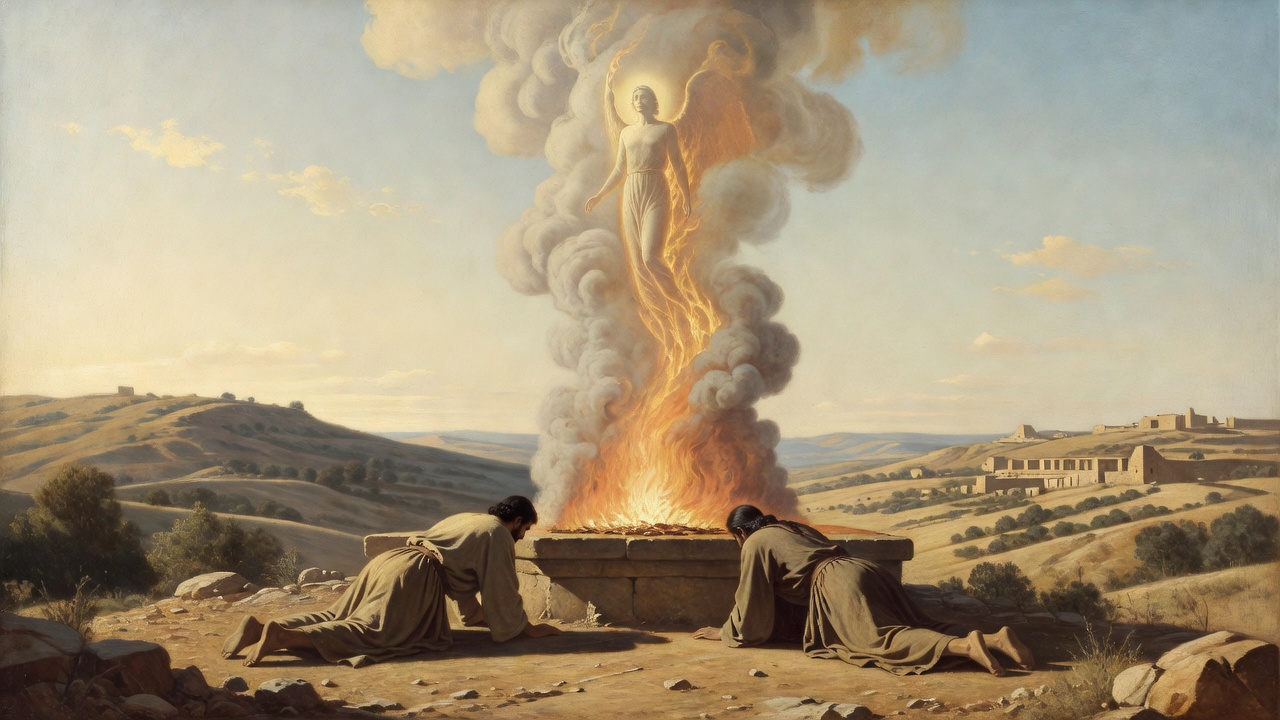
- El padre de Sansón, Manoa, pertenecía a la tribu de Dan y vivía en Zora, una ciudad en las colinas que dominaba el valle de Sorec. Junto con la vecina Estaol, Zora sirvió como un importante asentamiento danita durante un período de cuarenta años bajo el dominio de los filisteos.Fuentes: Manoah · Zorah · Eshtaol · el propio texto bíblico
- El capítulo concluye en Mahaneh-dan, nombre que significa el campamento de Dan, situado entre Zora y Estaol. Este sitio señala el lugar donde el Espíritu del Señor comenzó a manifestarse en Sansón durante su juventud.Fuentes: Mahaneh-dan · el propio texto bíblico
Notas escritas con ayuda de IA a partir de fuentes abiertas (Theographic Bible Metadata, CC BY-SA 4.0; Easton’s Bible Dictionary, dominio público) y revisadas antes de publicarse.
Créditos y licencia de esta traducción
Tupàn ze'eg
Bible without Deuterocanon in Guajajára (BR:gub:Guajajára)
copyright © 2007 Wycliffe Bible Translators, Inc.
Language: Guajajára
Translation by: Wycliffe Bible Translators, Inc.
Guajajára [gub], Brazil
Copyright Information
© 2007, Wycliffe Bible Translators, Inc. All rights reserved.
This translation text is made available to you under the
terms of the Creative Commons License: Attribution-Noncommercial-No Derivative Works.
( http://creativecommons.org/licenses/by-nc-nd/3.0/ )
In addition, you have permission to port the text to different file formats, as long as you
do not change any of the text or punctuation of the Bible.
You may share, copy, distribute, transmit, and extract portions
or quotations from this work, provided that you include the above copyright
information:
You must give Attribution to the work.
You do not sell this work for a profit.
You do not make any derivative works that change any of the actual words or punctuation of the Scriptures.
Permissions beyond the scope of this license may be
available if you contact
us with your request.
Printed book ISBN 9788531109713
The Bible without Deuterocanon
in Guajajára
© 2007, Wycliffe Bible Translators, Inc. All rights reserved.
This translation is made available to you under the terms of the
Creative Commons Attribution-Noncommercial-No Derivatives license 4.0.
You may share and redistribute this Bible translation or extracts from it in any format, provided that:
You include the above copyright and source information.
You do not sell this work for a profit.
You do not change any of the words or punctuation of the Scriptures.
Pictures included with Scriptures and other documents on this site are licensed just for use with those Scriptures and documents.
For other uses, please contact the respective copyright owners.
2020-03-30
Fuente: http://ebible.org/gubBl/ · eBible.org