Isaías 47
Tupàn ze'eg · Toca un versículo para ver sus referencias cruzadas.
Mawiron ipyro haw
1Tupàn Tuweharupi Wiko Ma'e uze'eg nezewe a'e.
— Mawiron, ereapyk tuwihawete henaw rehe. Ewezyw a'e wi nehe.
Eapyk ywy imuku'i pyrer rehe nehe.
Ereiko kuzàwaza awa puhe oho 'ym ma'e ài,
ipuràg eteahy ma'e ài, uma'ereko pixik 'ym ma'e ài. Ereiko heruze'eg pyr 'ym ài.
Aze awa uzapo kar wazyr hemimutar paw izupe, umuaiw a'e.
Peiko agwer kuzàwaza imuaiw pyrer ài kwehe mehe.
Napeiko pixik kwaw nezewe nugar romo nehe kury.
2Peiko amo pe uma'ereko e ma'e romo kury.
Pepyhyk arozràn imuku'i haw nehe kury. Pemuku'iku'i arozràn nehe kury.
Penuhem pàn penuwa imimaw nehe. Peupir penopoz nehe.
Peahaw yrykaw penetymà purupe hexak kar pà nehe.
3Teko paw penexak putar penopoz 'ym mehe a'e wà nehe.
Pepyta putar topoz 'ym pà kamir 'ym pà azeharomoete nehe.
Azepyk putar penehe nehe.
Ni amo nupuner kwaw hemupytu'u kar haw rehe penehe hezepykaw rehe wà nehe, i'i Tupàn wanupe.
4Zanepyro har wiko Tupàn Upuner Wera'u Ma'e romo a'e, Izaew wazar Ikatuahy Ma'e romo a'e.
5Uze'eg nezewe Mawiron wanupe.
— Peapyk peze'eg 'ym pà nehe.
Peho amo tatainy heta 'ymaw pe nehe,
ta'e ni amo nuze'egatu pixik kwaw penehe wà nehe xe.
— Ywy nànànar wanuwihawete kuzà romo peiko pe, ni'i pixik kwaw peme wà nehe.
6Aikwahy heremiaihu wanupe ihe,
heremiruze'eg heremixamixak kwer wanupe ihe.
A'e rupi amuigo kar teko ikàg 'ym ma'e romo ihe wà.
Amono pepo pe ihe wà no.
Napekatu kwaw heremiaihu wanupe. Nan.
Te tua'uhez ma'e wanupe te ihya'uhez ma'e wanupe pepuraraw kar ma'erahy.
7— Uruiko ywy nànànar wanuwihawete kuzà romo tuweharupi ure nehe, peze pezeupe.
Napezekaiw kwaw uzeapo ma'e a'e 'ar rehe arer rehe.
Napema'enukwaw kwaw pemumaw pàwàm rehe.
8Pezamutar katu ikatu 'ym ma'e iapo haw.
— Ni amo nuzepyk kwaw zanerehe wà nehe, peze pezeupe.
— Naheta kwaw amo upuner ma'e zanezàwenugar a'e wà, peze pezeupe.
— Naheta kwaw zanezàwenugar wà.
Nazaiko pixik kwaw kuzà imen umàno ma'e kwer ài nehe. Ni pitài zanera'yr numàno kwaw wà nehe, peze pezeupe.
Pezeapyaka katu heze'eg rehe nehe kury.
9Pekwaw tekwe ikatu 'ym ma'e wanupe ma'e henoz taw.
Pekwaw ikatu 'ym ma'e iapo kar haw wanupe. Akwaw penemigwaw ihe.
Nezewe rehe we pezemumaw putar nehe.
Na'arewahy, pitài 'ar mehe,
peiko putar kuzà imen umàno ma'e kwer ài nehe. Pena'yr umàno putar wà nehe no.
10Pezeruzar penemiapo ikatu 'ym ma'e rehe.
— Ni amo nazanerexak kwaw a'e ma'e iapo mehe wà, peze pezeupe. Nan kwaw nezewe.
Pezeruzar pema'ekwaw paw rehe, pema'e iapo haw ikwaw paw rehe no, a'e ae nuzawy kwaw peme hemu'em ma'e a'e wà.
Nezewe peze'eg pezeupe pepy'a pe.
— Naheta kwaw teko upuner ma'e zanezàwenugar a'e wà, peze pezeupe.
11A'e rupi iaiw paw u'ar putar penehe a'e nehe kury.
Tekwe ikatu 'ym ma'e wanupe peze'egaw napepyro kwaw a'e iaiw haw wi nehe.
Pemumaw pàwàm uhem iko.
Napepuner kwaw izuwi pehemaw rehe nehe.
Uhua'u putar a'e iaiw haw nehe. Napepuner kwaw hehe pema'enukwaw paw rehe nehe.
— Nur kwaw nehe, peze putar amo 'ar mehe nehe. A'e 'ar mehe uhem putar nehe.
12Peze'eg wi wi tekwe wanupe.
Penoz wi wi ma'e wanupe.
Pekwàkwàmo mehe arer we pezapo agwer ma'e.
Aze ru'u pepytywà putar wà nehe. Aze ru'u nezewe mehe pemuzàn kar putar peàmàtyry'ymar pe wà nehe,
13Heta tetea'u peneruze'egar peinuinuromo wà.
Nezewe rehe we napehem kwaw pezemumaw pàwàm wi nehe.
Tuwe zahytata rehe uzemu'e ma'e oho pepyr wà nehe. Tuwe pepytywà a'e wà nehe.
Uzemu'e ywak rehe wà. Ume'egatu zahytata rehe wà.
Zahy nànàn umume'u peme uzeapo ma'e ràm wà.
14Nuzawy kwaw ka'a huwer uxinig ma'e wà.
Tata wapy putar a'e zahytata kwaw par wà nehe.
Nupuner kwaw uzepyro haw rehe wà nehe,
ta'e nan kwaw tata pixika'i ma'e a'e xe.
Teko uzapo tata pixika'i ma'e uzemuaku haw romo wà. Wapyk huwake wà. A'e tata wanapy àràm napixika'i kwaw a'e nehe.
15Nezewe haw uzeapo putar uzeapo ma'e ràm imume'u har pepyr har wanupe nehe.
Izypy mehe arer we pepuranu wanehe.
A'e paw oho putar pewi wà nehe.
Pitàitàigatu oho putar wape rupi wà nehe, iapo pyràm hekar pà wà.
Ni amo a'e teko nupuner kwaw pepyro haw rehe wà nehe.
¿Sabías que…?
La caída de Babilonia
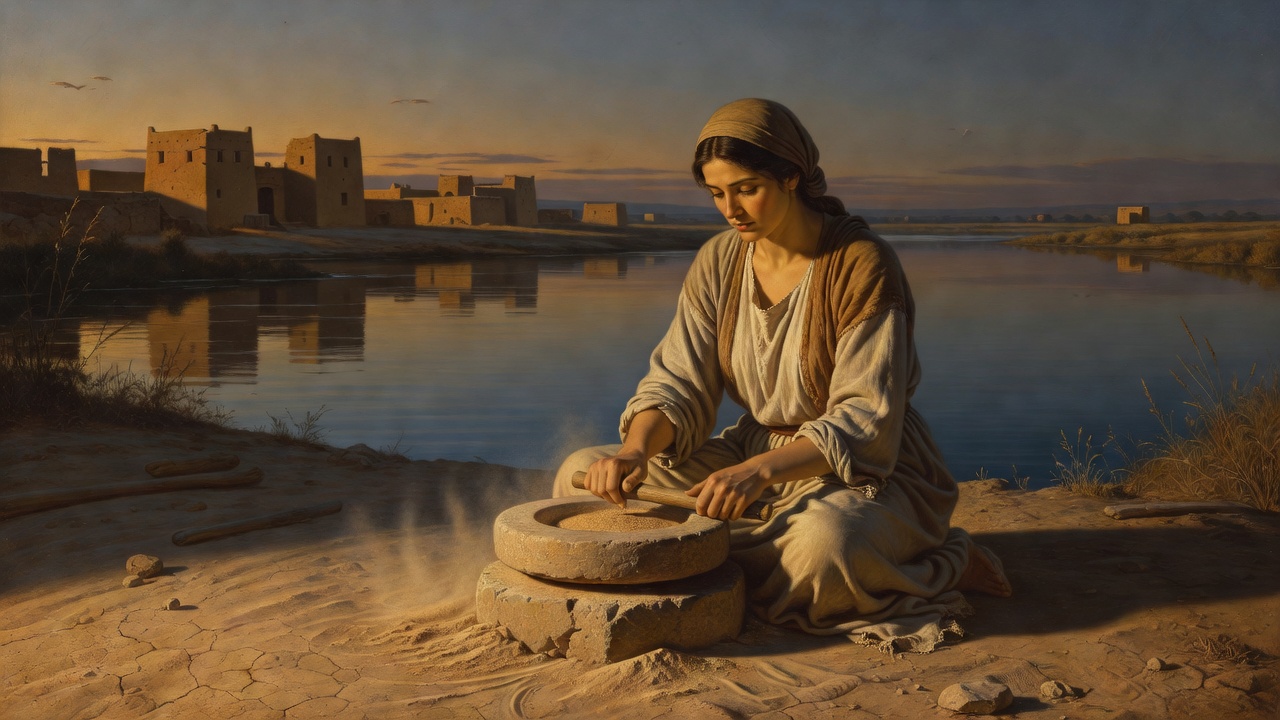
- Babilonia es personificada como una reina consentida e hija noble que es humillada súbitamente. En lugar de sentarse segura en un trono de lujo, se le ordena sentarse en el polvo y realizar el trabajo servil de moler harina con piedras de molino.Fuentes: el propio texto bíblico
- El capítulo resalta la dependencia de Babilonia de las prácticas ocultas y la observación de las estrellas. El profeta desafía a los astrólogos, hechiceros y pronosticadores mensuales de la ciudad a presentarse, declarando que sus artes arderán como rastrojo y no podrán evitar la ruina repentina.Fuentes: el propio texto bíblico
- Babilonia, situada a orillas del río Éufrates en Caldea, había recibido autoridad para dominar al pueblo de Dios como instrumento de juicio. Sin embargo, el texto reprende al imperio por no mostrar misericordia, señalando que impuso yugos pesados incluso sobre los ancianos.Fuentes: Babylon · el propio texto bíblico
Notas escritas con ayuda de IA a partir de fuentes abiertas (Theographic Bible Metadata, CC BY-SA 4.0; Easton’s Bible Dictionary, dominio público) y revisadas antes de publicarse.
Lugares de este capítulo
Solo aparecen lugares identificados con alta confianza (90 % o más según las fuentes académicas reunidas por OpenBible). Mapa de la época: DARE (Digital Atlas of the Roman Empire), CC BY 4.0; mapa actual: © colaboradores de OpenStreetMap; lugares: OpenBible.info (CC BY 4.0).
Créditos y licencia de esta traducción
Tupàn ze'eg
Bible without Deuterocanon in Guajajára (BR:gub:Guajajára)
copyright © 2007 Wycliffe Bible Translators, Inc.
Language: Guajajára
Translation by: Wycliffe Bible Translators, Inc.
Guajajára [gub], Brazil
Copyright Information
© 2007, Wycliffe Bible Translators, Inc. All rights reserved.
This translation text is made available to you under the
terms of the Creative Commons License: Attribution-Noncommercial-No Derivative Works.
( http://creativecommons.org/licenses/by-nc-nd/3.0/ )
In addition, you have permission to port the text to different file formats, as long as you
do not change any of the text or punctuation of the Bible.
You may share, copy, distribute, transmit, and extract portions
or quotations from this work, provided that you include the above copyright
information:
You must give Attribution to the work.
You do not sell this work for a profit.
You do not make any derivative works that change any of the actual words or punctuation of the Scriptures.
Permissions beyond the scope of this license may be
available if you contact
us with your request.
Printed book ISBN 9788531109713
The Bible without Deuterocanon
in Guajajára
© 2007, Wycliffe Bible Translators, Inc. All rights reserved.
This translation is made available to you under the terms of the
Creative Commons Attribution-Noncommercial-No Derivatives license 4.0.
You may share and redistribute this Bible translation or extracts from it in any format, provided that:
You include the above copyright and source information.
You do not sell this work for a profit.
You do not change any of the words or punctuation of the Scriptures.
Pictures included with Scriptures and other documents on this site are licensed just for use with those Scriptures and documents.
For other uses, please contact the respective copyright owners.
2020-03-30
Fuente: http://ebible.org/gubBl/ · eBible.org