Ezequiel 31
Tupàn ze'eg · Toca un versículo para ver sus referencias cruzadas.
Ezit nuzawy kwaw ywyràkàxigyw a'e
1Uruikuwe ipyhyk pyrer romo amo ywy rehe ure. 11 haw kwarahy rehe 3 haw zahy rehe pitài haw 'ar mehe Tupàn Tuweharupi Wiko Ma'e uze'eg wi ihewe kury.
2— Awa ta'yr, Emume'u ko ma'e Ezit wanuwihawete pe nehe, hemiruze'eg wanupe nehe no.
— Erepuner katu ne.
Ma'e wiko nezàwe.
3Ereiko ywyràkàxigyw Irimano ywy rehe har ài.
Neràkàgwer ipuràg eteahy. Tynehem huwer pupe.
Ereiko ywyra aiha ma'e ài. Erehem ywak rehe.
4Heta 'y netua'u mehe.
Heta 'y ywy iwy pe har newe no.
Teko omono 'y ywyra henaw pe wà.
Umuyryk kar yrykaw ywyra ka'a pe har nànàn wà.
5Heta 'y izupe.
A'e rupi ywyràkàxigyw aiha wera'u amo ywyra wi.
Hàkà uhua'u wà. Ipukua'u wà no.
6Wiràmiri xiroxirogatu hexakaw hereko har uzapo waipy hàkà rehe wà.
Miar hehaite ma'e imemyr iwype wà no.
I'àgwer rehe teko ywy nànànar upytu'u wà.
7Ipuràg eteahy a'e ywyra.
Aiha katu. Ipuku hàkà wà.
Hapo uhem oho yrykaw ywy iwy pe har pe wà.
8Ni amo ywyràkàxigyw Tupàn ima'etymaw pe har na'ikatuahy kwaw a'e ywyra ài a'e wà.
Ni amo ywyra Xipere pe har nahàkà kwaw izàwe wà.
Ni amo pi 'yw ka'a pe har nahàkà kwaw izàwe wà.
Ni amo ywyra Tupàn ima'etymaw pe har ipuràg eteahy a'e ywyra ài a'e wà.
9Ihe amupuràg eteahy nezewe ihe.
Amono hàkà tetea'u izupe no.
Tupàn ima'etymaw En her ma'e pe
ywyra paw hewyrowyroahy hehe wà.
10Ihe pezar Tuweharupi Wiko Ma'e amume'u putar uzeapo ma'e ràm ihe nehe kury. Itua'u a'e, te uhem ywàkun pe. Itua'u mehe umume'ume'u ikatu wera'u haw no. 11A'e rupi aityk a'e ywyra. Aeityk kar putar amo ywy rehe har wanuwihawete pe nehe. Iaiw a'e. A'e rupi a'e tuwihawete uzapo putar iaiw ma'e izupe nehe no. 12Amo ywy rehe har ma'erahy ipuraraw har weityk putar wà nehe. Wezar putar wà nehe no. Hàkàgwer imonohok pyrer u'ar putar ywyàpyznaw nànàn nehe, ywytyruhu a'e ywy rehe har nànàn nehe no. Teko paw i'àgwer rehe wiko ma'e oho putar a'e wi wà nehe. 13Wiràmiri wapyk putar ywyra u'ar ma'e kwer rehe wà nehe. Miar ipuruzukaiwahy ma'e wata putar hàkàgwer rehe wà nehe. 14Ko 'ar henataromo ni amo ywyra na'itua'u kwaw a'e ywyra ài wà nehe. Nuhem kwaw ywàkun pe wà nehe. Teko upuner 'y tetea'u imono haw rehe izupe wà nehe. Nezewe rehe we na'itua'u kwaw izàwe wà nehe. Paw rupi umàno putar teko umàno ma'e ràm ài wà nehe. Uzemono'og putar umàno ma'e kwer wanehe we wapyta haw pe wà nehe.
15Zanezar Tuweharupi Wiko Ma'e umume'u ko ma'e.
— Amo 'ar mehe a'e ywyra wezyw putar umàno ma'e kwer wapyta haw pe nehe. A'e 'ar mehe azupyk kar putar 'y ywy iwype har pe nehe, zemumikahy haw hexak kar pà nehe. Amupytu'u kar yrykawhu wawyryk ire ihe wà. Heta tetea'u yrykaw wà. Namuyryk kar kwaw a'e 'ar mehe ihe wà nehe. Ywyra umàno. A'e rupi arur putar ipytunahy haw ywytyr Irimano ywy rehe har wanehe ihe nehe. Amuxinig putar ywyra ka'a pe har paw ihe wà nehe no. 16Umàno ma'e kwer wapyta haw pe imono kar mehe nehe, i'ar haw iànoànogaw umuryryryryz kar putar ywy paw wà nehe. Ywyra En rehe har paw wà nehe, Irimano rehe har paw wà nehe no, ipuràg eteahy wera'u ma'e wà nehe, 'y tetea'u hereko har wà nehe no, ywy iwy pe har wà nehe no, hurywete putar i'ar awer rehe wà nehe. 17Oho putar hupi umàno ma'e kwer wapyta haw pe wà nehe. Uzemono'og putar u'ar ma'e kwer wanehe we wà nehe. I'àgwer rehe wiko ma'e kwer uhàuhàz putar ywy nànàn wà nehe.
18A'e ywyra a'e, wiko Ezit ywy rehe har wanuwihawete romo a'e. Wiko hemiruze'eg teko paw wà no. Ni ywyra En rehe har aiha katu izàwe wà. Ipuràg eteahy a'e no. Ko 'ar rehe wezyw putar umàno ma'e kwer wapyta haw pe ywyra En rehe arer wanehe we wà nehe. Uzemono'og putar uzeruzar 'ym ma'e wanehe we wà nehe. Uzemono'og putar zeàmàtyry'ymawhu pe umàno ma'e kwer wanehe we wà nehe no. Ihe pezar Tuweharupi Wiko Ma'e aze'eg kwez kury.
¿Sabías que…?
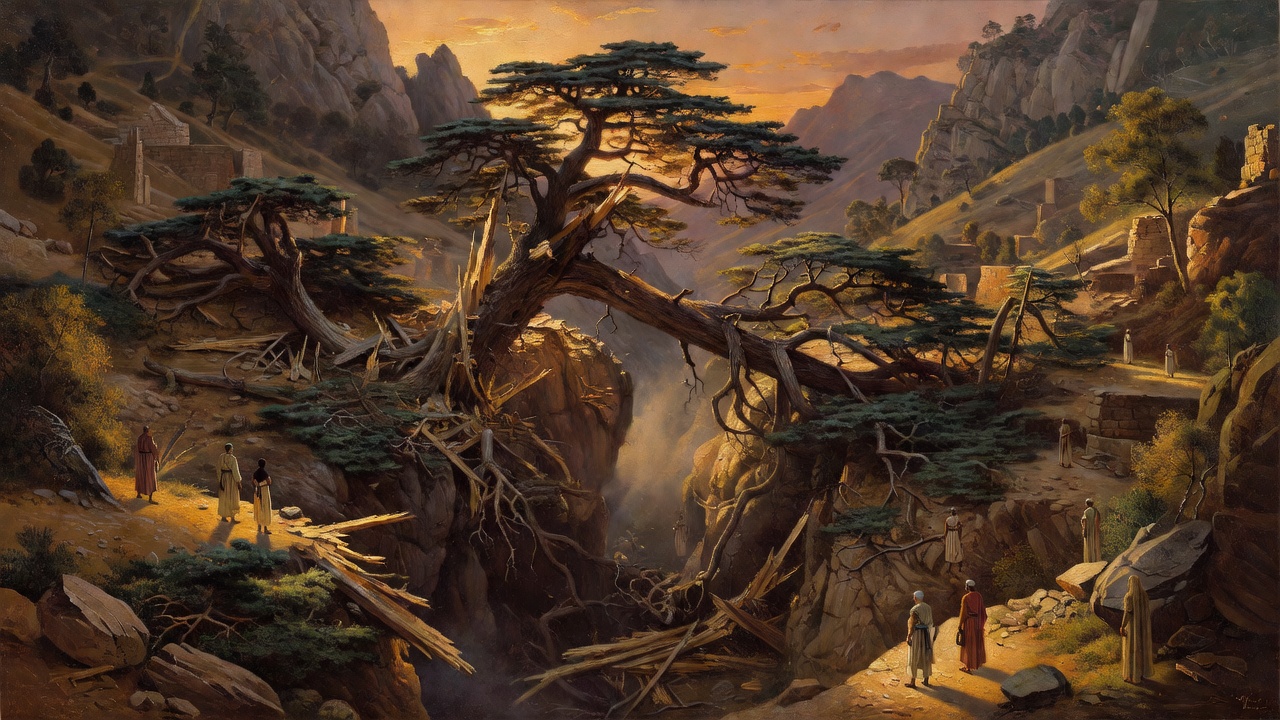
El cedro caído del Líbano
- Ezequiel emplea la metáfora de un imponente cedro del Líbano —una célebre cordillera en Siria— para ilustrar la grandeza y el repentino colapso del imperio asirio como advertencia directa al faraón y a Egipto.Fuentes: el propio texto bíblico · Lebanon · Assyria · Pharaoh
- La alegoría describe el majestuoso árbol como superior en altura y esplendor a todos los árboles del jardín de Dios, o Edén, una antigua región fértil situada a lo largo de los grandes ríos de Asia occidental.Fuentes: el propio texto bíblico · Eden
- A causa de su orgullo, el gran árbol es talado por despiadados conquistadores extranjeros y arrojado al Seol, demostrando que ningún imperio o gobernante terrenal está exento de la mortalidad y del juicio.Fuentes: el propio texto bíblico · Pharaoh
Notas escritas con ayuda de IA a partir de fuentes abiertas (Theographic Bible Metadata, CC BY-SA 4.0; Easton’s Bible Dictionary, dominio público) y revisadas antes de publicarse.
Lugares de este capítulo
- Egypt · 30.129, 31.308 · versículos 2, 10, 18
- Assyria · 36.359, 43.153 · versículos 3, 15
- Lebanon · 33.540, 35.584 · versículos 3, 15, 16
Solo aparecen lugares identificados con alta confianza (90 % o más según las fuentes académicas reunidas por OpenBible). Mapa de la época: DARE (Digital Atlas of the Roman Empire), CC BY 4.0; mapa actual: © colaboradores de OpenStreetMap; lugares: OpenBible.info (CC BY 4.0).
Créditos y licencia de esta traducción
Tupàn ze'eg
Bible without Deuterocanon in Guajajára (BR:gub:Guajajára)
copyright © 2007 Wycliffe Bible Translators, Inc.
Language: Guajajára
Translation by: Wycliffe Bible Translators, Inc.
Guajajára [gub], Brazil
Copyright Information
© 2007, Wycliffe Bible Translators, Inc. All rights reserved.
This translation text is made available to you under the
terms of the Creative Commons License: Attribution-Noncommercial-No Derivative Works.
( http://creativecommons.org/licenses/by-nc-nd/3.0/ )
In addition, you have permission to port the text to different file formats, as long as you
do not change any of the text or punctuation of the Bible.
You may share, copy, distribute, transmit, and extract portions
or quotations from this work, provided that you include the above copyright
information:
You must give Attribution to the work.
You do not sell this work for a profit.
You do not make any derivative works that change any of the actual words or punctuation of the Scriptures.
Permissions beyond the scope of this license may be
available if you contact
us with your request.
Printed book ISBN 9788531109713
The Bible without Deuterocanon
in Guajajára
© 2007, Wycliffe Bible Translators, Inc. All rights reserved.
This translation is made available to you under the terms of the
Creative Commons Attribution-Noncommercial-No Derivatives license 4.0.
You may share and redistribute this Bible translation or extracts from it in any format, provided that:
You include the above copyright and source information.
You do not sell this work for a profit.
You do not change any of the words or punctuation of the Scriptures.
Pictures included with Scriptures and other documents on this site are licensed just for use with those Scriptures and documents.
For other uses, please contact the respective copyright owners.
2020-03-30
Fuente: http://ebible.org/gubBl/ · eBible.org