1 Timoteo 4
Tupàn ze'eg · Toca un versículo para ver sus referencias cruzadas.
Uze'eg upurumu'e ma'e hemu'em ma'e wanehe xe a'e kury
1Tupàn Hekwe a'e, nezewe i'i a'e. — Ko 'ar ipaw etea'i mehe amo uzeruzar ma'e a'e wà nehe, upytu'u putar Zezuz rehe uzeruzar ire a'e wà nehe. Weruzar putar tekwe purupe hemu'em ma'e wà nehe. Weruzar putar Zurupari hemiruze'eg tekwe wapurumu'e haw a'e wà nehe no. A'e rupi upuir putar Zezuz rehe uzeruzar haw wi a'e wà nehe. 2Ta'e amo awa hemu'em ma'e a'e wà nehe xe, hemu'em putar a'e uzeruzar ma'e wanupe a'e wà nehe xe, Tupàn hape iawy kar pà wanupe a'e wà nehe xe. Kwehe ikatu 'ym ma'e uzapo waiko wà. A'e rupi ko 'ar rehe nukwaw kwaw ikatu 'ym ma'e iapo re upytu'u haw wà kury. 3Nezewe uze'eg mua'u oho waiko purupe wà, — Penemireko zo nehe, i'i waiko awa kwer wanupe wà. — Ta'e Tupàn uputar nezewe haw a'e xe, i'i mua'u wanupe wà. Pezekwaku nehe, ko temi'u i'u 'ym pà nehe, i'i wanupe wà. — Nan kwaw ty, a'e newe kury. Ma'e paw Tupàn uzapo a'e, uzapo miar paw a'e wà no. Aze teko uzeruzar Zezuz rehe wà nehe, aze ukwaw ize'eg azeharomoete har wà nehe, — Nekatu Tupàn, ta'e eremur ko temi'u ihewe ne xe, aze i'i Tupàn pe wà nehe, a'e mehe upuner wyzài ma'e i'u haw rehe wà nehe, uzekwaku 'ym pà wà nehe. 4Tupàn hemiapo kwer paw ikatu a'e wà. — Zazekwaku amo ma'e i'u 'ym pà nehe, ere zo nehe. Tuweharupi zaze'eg Tupàn pe zaneremi'u ikatu haw rehe zane nehe, ma'e paw i'u zanune nehe. 5Aze zaze'eg Tupàn pe zanemai'u zanune nehe, zapuner wyzài ma'e i'u haw rehe zane nehe, ta'e Tupàn ze'eg umume'u ikatu haw zanewe a'e xe.
Pawru uze'eg Ximot Tupàn pe uma'ereko ma'e romo heko haw rehe xe a'e kury
6Aze eremume'u ko ze'eg uzeruzar ma'e wanupe nehe, a'e mehe Zezuz pe uma'ereko ma'e ikatu ma'e romo ereiko putar ne nehe. Emugeta zanezeruzar haw rehe ze'egaw eho iko tuweharupi nehe, a'e ze'eg zanewe Tupàn hemimur kwer rehe nehe. Ereho iko purumu'e haw azeharomoete har rupi tuweharupi ne kury. Eho wiwi iko hupi nehe no ty. 7Aze teko uze'eze'eg wàmuzgwer wanemiapo kwer tetea'u rehe wà nehe, ezekaiw zo waze'eg rehe nehe. Aze Tupàn ze'eg 'ym rehe uze'eze'eg wà nehe, ezekaiw zo waze'eg rehe nehe, ta'e uze'eze'eg e waiko a'e wà xe. Ezemu'e iko Tupàn ze'eg rupi neho haw rehe nehe, hemiapo putar haw rehe nehe no. 8Aze xiapo nezewe nehe, aze zama'ereko katu nehe, a'e mehe ikatu zanewe nehe, ta'e zaneretekwer ikàg putar zanewe nehe xe. Aze ximugeta Tupàn ze'eg tuweharupi nehe, aze zaze'eg izupe tuweharupi nehe, a'e mehe ikatu wera'u putar zanewe nehe, ta'e zaiko katu putar ko 'ar rehe nehe xe, a'e re zaiko putar Tupàn pyr nehe no xe. 9Ko heze'eg azeharomoete ihe. Tuwe teko wenu katu a'e wà nehe, hehe uzeruzar katu pà a'e wà nehe no. 10Zazeruzar Tupàn wikuwe ma'e rehe zane, xiàro ipyr zaneho àwàm zaiko zane. A'e teko paw wamonokatu har romo hekon a'e, uzeruzar ma'e wapyro har romo hekon a'e no. A'e rupi xiagaw hemiapo putar haw iapo pà. A'e rupi zama'ereko katu zaiko izupe no.
11Ezapo kar ma'e uzeruzar ma'e wanupe nehe, ko ze'eg heruzar kar pà wanupe nehe. Epurumu'e eho iko ko ze'eg rehe nehe no. 12Kwàkwàmo romo ereiko, Ximot. A'e rupi amo uzeruzar ma'e a'e pe har a'e wà nehe, nuzekaiw katu kwaw neze'eg rehe a'e wà nehe. Ta'e nereiko kwaw tua'uete ma'e romo ne xe. Nan kwaw pa. Tupàn nemono kar a'e pe wanupe a'e, uze'eg imume'u kar pà newe a'e. Neze'eg mehe nehe, eze'egatu nehe, a'e rupi nerenu har uze'eg putar ne ài a'e wà nehe no. Eho iko Tupàn ikatu haw rupi nehe, a'e rupi ikatu haw rupi oho putar waiko a'e wà nehe no. Epuruamutar katu eho iko nehe no, a'e rupi nerenu har uzeamutamutar putar waiko a'e wà nehe no. Ezeruzar katu Zezuz rehe nehe no, a'e rupi nerenu har uzeruzar katu putar hehe ne ài a'e wà nehe no. Etyryk ikatu 'ym ma'e wi nehe, a'e rupi nerenu har utyryk putar ikatu 'ym ma'e wi a'e wà nehe no, ne ài a'e wà nehe no. 13Nepyr heho 'ym mehe we emugeta Tupàn ze'eg teko wanuwa rupi tuweharupi nehe. Emume'u ize'eg eho iko teko wanupe nehe, hehe wamu'e pà nehe no. 14Amo 'ar mehe uzeruzar ma'e waneruze'egar a'e wà, opokok neàkàg rehe a'e wà. A'e 'ar mehe we Tupàn ze'eg imume'u har a'e wà no, nezewe uze'eg newe a'e wà no. — Tupàn umur ukàgaw kwez newe a'e kury, nemuma'ereko kar pà uzeupe a'e kury, i'i newe wà. Ihe a'e newe ihe kury. — Epytu'u zo izupe nema'ereko re nehe ty, a'e newe kury.
15Eho iko ko heze'eg rupi nehe kury ty. Ezapo tuwe a'e ma'e newe heremiapo karer nehe. A'e rupi teko paw rupi a'e wà nehe no, wexak putar neremiapo kwer ikatu ma'e paw rupi a'e wà nehe no. 16Ezeruze'egatu nehe. Nepurumu'e mehe xo ze'eg azeharomoete har rehe zo epurumu'e nehe. Neremu'em zo nehe. Eho iko ko ze'eg rupi nehe, ko ma'e iapo pà nehe. A'e mehe ereiko putar Tupàn pyr nehe. Nerenu har a'e wà nehe no, wiko putar ipyr a'e wà nehe no.
¿Sabías que…?
Falsa enseñanza y entrenamiento en la piedad
- El capítulo dice que el Espíritu declara expresamente que, en tiempos posteriores, algunos abandonarán la fe para seguir espíritus engañosos y enseñanzas de demonios. Estarán influidos por la hipocresía de mentirosos, cuya conciencia ha sido cauterizada con un hierro candente, y prohibirán el matrimonio y exigirán abstenerse de ciertos alimentos.Fuentes: el propio texto bíblico
- La carta responde a esas exigencias diciendo que Dios creó esos alimentos para que los reciban con acción de gracias quienes creen y conocen la verdad. Toda creación de Dios es buena, y nada de lo que se recibe con acción de gracias debe rechazarse, porque es santificado por la palabra de Dios y la oración.Fuentes: el propio texto bíblico
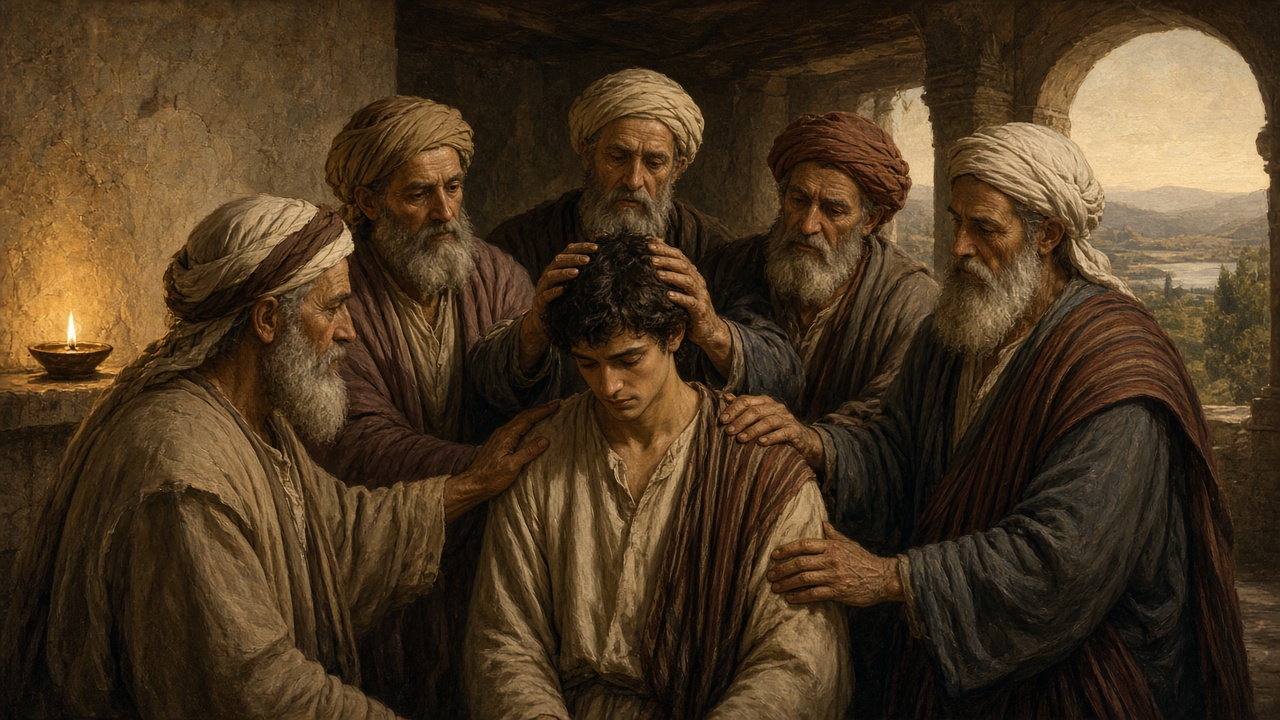
- El autor exhorta al joven a quien se dirige a no dejar que nadie menosprecie su juventud, sino a ser ejemplo en el habla, en la conducta, en el amor, en la fe y en la pureza. Hasta que el autor llegue, debe dedicarse a la lectura pública de las Escrituras, a la exhortación y a la enseñanza, y no descuidar el don que le fue dado mediante profecía, cuando los ancianos le impusieron las manos. El ejercicio físico, añade la carta, tiene un valor limitado, mientras que la piedad es valiosa en todo sentido y encierra promesa para la vida presente y para la venidera, un dicho que la carta llama digno de confianza y de plena aceptación.Fuentes: el propio texto bíblico
Notas escritas con ayuda de IA a partir de fuentes abiertas (Theographic Bible Metadata, CC BY-SA 4.0; Easton’s Bible Dictionary, dominio público) y revisadas antes de publicarse.
Créditos y licencia de esta traducción
Tupàn ze'eg
Bible without Deuterocanon in Guajajára (BR:gub:Guajajára)
copyright © 2007 Wycliffe Bible Translators, Inc.
Language: Guajajára
Translation by: Wycliffe Bible Translators, Inc.
Guajajára [gub], Brazil
Copyright Information
© 2007, Wycliffe Bible Translators, Inc. All rights reserved.
This translation text is made available to you under the
terms of the Creative Commons License: Attribution-Noncommercial-No Derivative Works.
( http://creativecommons.org/licenses/by-nc-nd/3.0/ )
In addition, you have permission to port the text to different file formats, as long as you
do not change any of the text or punctuation of the Bible.
You may share, copy, distribute, transmit, and extract portions
or quotations from this work, provided that you include the above copyright
information:
You must give Attribution to the work.
You do not sell this work for a profit.
You do not make any derivative works that change any of the actual words or punctuation of the Scriptures.
Permissions beyond the scope of this license may be
available if you contact
us with your request.
Printed book ISBN 9788531109713
The Bible without Deuterocanon
in Guajajára
© 2007, Wycliffe Bible Translators, Inc. All rights reserved.
This translation is made available to you under the terms of the
Creative Commons Attribution-Noncommercial-No Derivatives license 4.0.
You may share and redistribute this Bible translation or extracts from it in any format, provided that:
You include the above copyright and source information.
You do not sell this work for a profit.
You do not change any of the words or punctuation of the Scriptures.
Pictures included with Scriptures and other documents on this site are licensed just for use with those Scriptures and documents.
For other uses, please contact the respective copyright owners.
2020-03-30
Fuente: http://ebible.org/gubBl/ · eBible.org