1 Reyes 1
Tupàn ze'eg · Toca un versículo para ver sus referencias cruzadas.
Acerca de este libro
Sobre 1 Reyes
- El Easton's Bible Dictionary (1897) considera incierta la autoría de los libros de Reyes. Una tradición según la cual Jeremías los escribió queda, a juicio de Easton, respaldada por pasajes casi idénticos a partes de Jeremías y por sucesos que Jeremías conocía personalmente; sin embargo, Easton estima más probable que Esdras, después del cautiverio, compilara los libros a partir de documentos anteriores, quizá escritos por David, Salomón, Natán, Gad e Iddo. Easton sitúa la composición entre el 561 a. C., cuando Evil-merodac liberó a Joaquín del cautiverio, y el 538 a. C., el decreto de Ciro.Fuentes: Easton: Kings, The Books of
- Easton afirma que estos libros contienen los anales del reino desde la subida de Salomón al trono hasta que Nabucodonosor y los babilonios lo sometieron, un período que estima en unos 453 años. 1 Reyes comienza mientras David está muriendo: Adonías, su cuarto hijo, que había pasado a ser el heredero presunto del trono tras la muerte de Amnón y Absalón, se hace proclamar rey, pero Natán y Betsabé persuaden a David de que entronice a Salomón de inmediato. Salomón, hijo de David y Betsabé, cuya historia se registra en 1 Reyes 1-11, llegó al trono, sugiere Easton, hacia los dieciséis o dieciocho años.Fuentes: Easton: Kings, The Books of · Adonijah · Solomon
- En las Escrituras hebreas, los dos libros de Reyes formaban originalmente un solo libro; la Septuaginta fue la primera en dividirlos y, con la Vulgata, los numera como el tercer y el cuarto libros de Reyes, siendo los libros de Samuel el primero y el segundo. Easton observa que Crónicas da mayor relieve al oficio sacerdotal o levítico, mientras que Reyes da mayor relieve al oficio real, y que en la división de las Escrituras en tres partes hecha por los judíos estos libros se cuentan entre los Profetas. La narración remite a fuentes anteriores: el libro de los hechos de Salomón y las crónicas de los reyes de Judá y de Israel.Fuentes: Easton: Kings, The Books of
- Tras la muerte de Salomón, las diez tribus se rebelaron e invitaron a Jeroboam, hijo de Nebat, a ser su rey; Easton lo llama el primer rey de esas tribus y sitúa su reinado entre 976 y 945 a. C. Había huido a Egipto bajo la protección de Sisac I y luego trasladó su residencia de Siquem, su primera capital, a Tirsa, que siguió siendo la residencia principal de los reyes de Israel hasta que Omri compró a Semer el monte de Shomeron por dos talentos de plata y edificó Samaria. La narración posterior incluye a Acab, hijo de Omri y séptimo rey de Israel, cuya esposa era Jezabel: al culto del becerro introducido por Jeroboam añadió el culto de Baal, y fue severamente amonestado por el profeta Elías.Fuentes: Jeroboam · Tirzah · Samaria · Ahab
Notas escritas con ayuda de IA a partir de fuentes abiertas (Theographic Bible Metadata, CC BY-SA 4.0; Easton’s Bible Dictionary, dominio público) y revisadas antes de publicarse.
Tuwihawete Tawi itua'uhez a'e kury
1Tuwihaw Tawi itua'uhez tuwe a'e kury. Tàpuz me uma'ereko ma'e upyk zewàwànaw pupe wà. Nezewe rehe we huwixàg. Nupuner kwaw uzemuaku haw rehe. 2A'e rupi izupe pureruze'egaw imume'u har uze'eg izupe wà kury. — Tuwihaw Tawi, i'i wà. — Uruekar putar amo kuzàwaza nerehe we àràm nerehe uzekaiw ma'e romo ure nehe. Uker putar nepehegwer rehe nemuaku kar pà nehe, i'i izupe wà.
3Na'e wekar kuzàwaza ipuràg eteahy ma'e oho Izaew waiwy nànàn wà kury. Xunez tawhu pe wexak kuzàwaza Amizàg her ma'e wà. Weraha tuwihawete pe wà. 4Ipuràg eteahy Amizàg a'e. Wiko tuwihawete pe uma'ereko ma'e romo kury. Uzekaiw katu hehe. Nuker kwaw Tawi ipuhe hemireko ài. Nuzapo kwaw a'e ma'e izupe.
Anoni heko wer zepe tuwihaw romo
5Amixàràw umàno a'e 'ar 'ym mehe. Tawi ta'yr ipy wikuwe ma'e a'e, Anoni her romo Azit imemyr romo hekon a'e. Awa ipuràg eteahy ma'e romo hekon Anoni. Tawi numupytu'u kar kwaw ma'e iapo mehe. — Màràzàwe tuwe erezapo agwer ma'e, ni'i pixik kwaw. A'e rupi uzapo wemiapo putar haw oho iko. Heko wer tetea'u tuwihawete romo. Omono'og ywyramawa zeàmàtyry'ymawhu pe heraha pyr tetea'u wà. Omono'og kawaru tetea'u wà no. Omono'og 50 awa wà no. Wyzài taw pe wyzài ywy rehe iho mehe oho hupi wà. 7Uze'eg Anoni oho Zoaw Zeruz imemyr pe kury, xaxeto Amiatar pe no. Wiko hehe we wà kury. Uputar tuwihawete romo heko àwàm a'e wà no. 8Amo awa nuputar kwaw tuwihawete romo heko àwàm a'e wà. Na'aw waner xe wà kury: Xaxeto Zanok her ma'e. Menai Zoiaz ta'yr. Tupàn ze'eg imume'u har Nàtà her ma'e. Ximez. Hei. Zauxiapekwer Tawi rehe uzekaiw ma'e wà.
9Amo 'ar mehe Anoni uzuka amo ma'ea'yr oho ita moz her ma'e pe ytyzuzàmaw Hozew her ma'e huwake wà: àràpuhàràn wà, tapi'ak awa wà no, tapi'aka'yr ikyra katu ma'e wà no. Wenoz Tawi ta'yr a'e pe wà. Wenoz amogwer Tawi hehe we har a'e pe wà no. Zuta ywy rehe har romo wanekon a'e wà. 10Xàrumàw wiko tywyr amo u hemireko pupe har romo a'e. Nuenoz kwaw a'e. Amo awa nuenoz kwaw wà no. Ni Nàtà Tupàn ze'eg imume'u har, ni Menai, ni zauxiapekwer Tawi rehe uzekaiw ma'e nuenoz kwaw wà.
Wiko Xàrumàw tuwihawete romo kury
11Na'e oho Nàtà Matexewa Xàrumàw ihy pe uze'eg pà kury. Upuranu hehe. — Aipo erekwaw Anoni Azit memyr tuwihaw romo uzemuigo kar awer ne. Tuwihaw Tawi nukwaw pixik kwaw ma'e uzeapo ma'e kwer a'e. 12Amume'u putar amo pureruze'egaw ihe kury. Aze nepurupyro wer nezehe nehe, aze nepurupyro wer nememyr rehe nehe no, 13eze'eg eho tàrityka'i tuwihaw Tawi pe kury. — Tuwihaw Tawi, ere izupe nehe. — Aipo neremume'u kwaw nera'yr Xàrumàw nerekuzaromo tuwihaw romo heko àwàm ne. — Wapyk putar tuwihaw henaw rehe hemàno re nehe, nere'e kwaw aipo. Màràzàwe tuwe Anoni uzeapo tuwihaw romo kury, ere izupe nehe, i'i izupe.
14Uze'eg wi Nàtà izupe. — Tuwihaw pe neze'eg mehe we ahem putar a'e pe ihe nehe no. — Azeharomoete ize'eg, a'e putar izupe neze'eg awer rehe ihe nehe no.
15Na'e Matexewa oho tuwihaw iker haw pe izupe uze'eg pà kury. Tua'uhez tuwe Tawi. Amizàg Xunez parer uzekaiw iko hehe. 16Wapyk Matexewa upenàràg rehe tuwihawete henataromo kury. Upuranu Tawi hehe. — Ma'e ereputar, i'i izupe.
17Uwazar ize'eg izupe. — Tuwihawete Tawi. Eremume'u hememyr Xàrumàw tuwihawete romo heko àwàm Tupàn Tuweharupi Wiko Ma'e henataromo ne, nerekuzaromo tuwihawete henaw rehe iapyk àwàm ne. 18Anoni uzeapo tuwihawete romo kwez kury. Nerekwaw kwaw hemiapo kwer. 19Uzuka ma'ea'yr tetea'u Tupàn henataromo wà: tapi'ak awa wà, àràpuhàràn wà no, tapi'aka'yr ikyra katu ma'e wà no. Wenoz wywyr mynykaw pe wà no. Wenoz xaxeto Amiatar no, Zoaw zauxiapekwer wanuwihaw henoz pà no. Xo nera'yr Xàrumàw zo nuenoz kwaw wà. 20Tuwihawete Tawi. Teko Izaew izuapyapyr paw wàro neze'eg àwàm wà nehe. Mo wiko putar tuwihawete romo nerekuzar romo nehe. 21Aze neremume'u kwaw nehe, nemàno re na'arewahy hepyhyk putar wà nehe. Upyhyk putar nera'yr Xàrumàw a'e wà nehe. Urezuka putar wà nehe, i'i izupe.
22Matexewa ize'eg mehe we uhem Nàtà tàpuzuhu pe kury. 23Tawi rehe we har umume'u Nàtà Tupàn ze'eg imume'u har a'e pe ihem awer oho izupe wà. Wixe Nàtà upenàràg rehe umuapyk pà tuwihawete henataromo. Umuhyk uwa ywy rehe. 24Na'e uze'eg izupe kury. — Tuwihawete Tawi, i'i izupe. — Aipo eremume'u Anoni nerekuzaromo tuwihawete romo heko àwàm ne. 25Kutàri uzuka kar tapi'ak awa oho Tupàn henataromo wà kury. Uzuka kar àràpuhàràn wà no, tapi'aka'yr ikyra katu ma'e wà no. Wenoz nera'yr paw mynykaw pe wà. Wenoz Zoaw neremiruze'eg zauxiapekwer wanuwihaw wà no. Wenoz Amiatar xaxeto romo wiko ma'e no. Kutàri tàrityka'i umai'u waiko wà. U'u win waiko hehe we wà no. Uhapukaz waiko nezewe wà. — Tuwe tuwihawete Anoni umumaw kwarahy tetea'u wiko pà nehe, i'i waiko wà. 26Anoni naherenoz kwaw a'e. Nuenoz kwaw Zanok xaxeto romo wiko ma'e. Nuenoz kwaw Menai. Nuenoz kwaw Xàrumàw. 27Aipo erezapo kar nezewe haw izupe. Màràzàwe tuwe neremume'u kwaw tuwihaw nerehe we har wanupe. Màràzàwe tuwe neremume'u kwaw tuwihawete nerekuzaromo àràm urewe, i'i izupe.
28Uze'eg tuwihawete Tawi izupe. — Enoz Matexewa xe kury, i'i izupe. Uzewyr Matexewa henataromo upu'àm pà. 29— Amume'u putar ko ma'e Tupàn Tuweharupi Wiko Ma'e ma'erahy heremipuraraw kwer paw wanuwi hepyro arer henataromo ihe nehe kury. 30Kutàri azapo kar putar ma'e a'e heremimume'u kwer rupi katete ihe nehe kury. — Nememyr Xàrumàw wiko putar tuwihawete romo herekuzaromo a'e nehe, a'e newe Tupàn Tuweharupi Wiko Ma'e Izaew wazar henataromo ihe. Kutàri azapo kar putar a'e ma'e ihe nehe kury, i'i Tawi Matexewa pe.
31Na'e Matexewa wapyk upenàràg rehe uwa imuhyk pà ywy rehe kury. — Tuwe hezar heruwihawete Tawi wikuwe awyzeharupi a'e nehe, i'i izupe.
32Na'e Tawi omono kar amo uzehe we har xaxeto Zanok ipiaromo kury. Werur kar amo awa izupe wà no: Tupàn ze'eg imume'u har Nàtà her ma'e, Menai Zoiaz ta'yr. Waneixe mehe Tawi uze'eg wanupe. 33— Peraha uma'ereko ma'e heràpuzuhu pe har penupi wà nehe. Pemuzeupir kar hera'yr Xàrumàw hereimaw kawaràn ikupe pe nehe. Peraha ytyzuzàmaw Ziom her ma'e pe nehe. 34A'e pe Zanok a'e nehe, Nàtà a'e nehe no, uzakook putar uri kawer Xàrumàw rehe Izaew wanuwihawete romo imuigo kar pà wà nehe. — Tuwe tuwihawete Xàrumàw wikuwe awyzeharupi nehe, peze izupe nehe. 35A'e ma'e iapo pawire pezur hupi nehe, herenaw rehe wapyk mehe nehe. Wiko putar tuwihawete romo herekuzaromo nehe, ta'e aexak ihe xe, Izaew waneruze'egar romo Zuta waneruze'egar romo ihe xe, i'i Tawi wanupe.
36— Uzeapo putar neremimutar nehe, i'i Menai izupe. — Tuwe Tupàn Tuweharupi Wiko Ma'e nezar umume'u tuwihawete romo heko haw a'e nehe no. 37Tupàn Tuweharupi Wiko Ma'e wiko nerehe we tuweharupi nerekuwe mehe a'e. Tuwe wiko Xàrumàw rehe we nezewegatete nehe no. Tuwe hemiruze'eg ràm heta tetea'u wera'u neremiruze'eg kwer wanuwi wà nehe, i'i izupe.
38Na'e Zanok a'e, Nàtà a'e no, Menai a'e no, zauxiapekwer tuwihawete rehe uzekaiw ma'e a'e wà no, umuzeupir kar Xàrumàw Tawi heimaw kawaràn ikupe pe wà kury. Oho hupi ytyzuzàmaw Ziom her ma'e pe wà. 39Weraha Zanok uri kawer hyru uzeupi. Wata 'ym mehe we wenuhem hyru Tupàn hàpuzràn wi a'e. Uzakook Xàrumàw rehe kury. Upy xi'àm tapi'ak i'ak kwer wà kury, uhapukaz pà wà. — Tuwe tuwihawete Xàrumàw umumaw kwarahy tetea'u wikuwe pà nehe, i'i wà.
40A'e re teko paw wata oho Xàrumàw haikweromo wà, urywete haw rehe uhapukaz pà wà, uxi'àm upy pà wà no. Wanehapukaz taw nuzawy kwaw àmàn iànoànogaw. Nuzawy kwaw ywy iwokaw.
41Anoni a'e, hehe we har a'e wà no, umai'u paw etea'i mehe wenu wànoànogaw a'e wà. Wenu Zoaw xi'àm ipy mehe. Upuranu a'e pe har wanehe. — Ma'e wànoànog tawhu pe, i'i wanupe.
42Ize'eg mehe we uhem Zonata, xaxeto Amiatar ta'yr a'e pe kury. Uze'eg Anoni Zonata pe. — Eixe ty. Ereiko awa ukyze 'ym ma'e romo. Aipo ikatu ma'e eremume'u putar urewe nehe, i'i izupe.
43— Nan kwaw pa, i'i Zonata. — Tuwihawete Tawi umuigo kar wa'yr Xàrumàw kwez tuwihawete romo tàrityka'i kury. 44Omono kar awa tetea'u Xàrumàw rupi wà. Na'aw waner xe wà: Zanok, Nàtà, Menai. Omono kar zauxiapekwer uzehe uzekaiw ma'e wà no. Umuapyk Xàrumàw imono kawaràn kupe pe wà, Tawi heimaw kupe pe wà. 45Na'e Zanok a'e, Nàtà a'e no, uzakook uri kawer Xàrumàw rehe a'e wà kury, tuwihawete romo imuigo kar pà ytyzuzàmaw Ziom her ma'e pe a'e wà kury. A'e re uzewyr oho tawhu pe urywete haw rehe uhapukaz pà wà. Tàrityka'i teko heiheihem waiko Xàrumàw ikatu haw rehe uhapukaz pà wà. A'e waneiheihemaw penu peiko. 46Xàrumàw wiko tuwihawete romo a'e kury. 47Tàpuzuhu pe uma'ereko ma'e oho Tawi pe uze'eg pà wà no. — Urerurywete nera'yr Xàrumàw tuwihawete romo heko haw rehe ure, i'i oho izupe wà. — Tuwe teko Xàrumàw her kwaw par heta tetea'u wera'u nerer her kwaw par wanuwi wà nehe. Tuwe hemiruze'eg ràm heta tetea'u wera'u neremiruze'eg kwer wanuwi wà nehe, i'i izupe wà. A'e ma'e henu mehe tuwihawete uzemumew uker haw rehe Tupàn henataromo kury. 48— Tuwe teko umume'u Tupàn Tuweharupi Wiko Ma'e Izaew wazar ikatuahy haw wà nehe. Ta'e kutàri umuigo kar hezuapyr tuwihawete romo herekuzaromo a'e kury xe. Ta'e wexak kar a'e ma'e ihewe hemàno 'ym mehe we a'e xe, i'i Tawi Tupàn pe.
49Na'e Anoni heminozgwer ukyze katu a'e wà kury. Upu'àm mai'u haw wi a'e wi oho pà wà, pitàitàigatu weko haw kutyr oho pà wà. 50Ukyze katu Anoni Xàrumàw wi kury. A'e rupi oho Tupàn hàpuzràn pupe kury. Upyhyk ma'ea'yr hapy haw i'ak zàwenugar a'e pe har. Ta'e teko uzapo nezewe uzuka àràm wi uzepyro pà wà xe.
51Umume'u amo Anoni ikyze haw oho Xàrumàw pe wà. — Upyhyk ma'ea'yr hapy haw i'ak zàwenugar oho, i'i izupe wà. Umume'u ize'eg awer Xàrumàw pe wà no. — Tuwe Xàrumàw nahezuka kwaw takihepuku pupe a'e nehe, i'i newe a'e, i'i teko Xàrumàw pe wà.
52Uze'eg Xàrumàw wanupe. — Aze awa wemimume'u iapo har romo hekon a'e nehe, napokok kwaw ni pitài i'aw iàkàg rehe har rehe nehe. Aze ikatu 'ym ma'e rehe ipurapo wer nehe, azuka kar putar ihe nehe, i'i Xàrumàw uzehe we har wanupe.
53Na'e omono kar zauxiapekwer Anoni ipiaromo wà kury. Umuezyw kar ma'ea'yr hapy haw wi wà. Ur Xàrumàw henataromo kury. Wapyk upenàràg rehe uwa imuhyk pà ywy rehe. Uze'eg Xàrumàw izupe. — Eho nereko haw pe kury, i'i izupe.
¿Sabías que…?
La sucesión al trono de David
- Siendo el hijo mayor sobreviviente de David tras la muerte de Amnón y Absalón, Adonías reclamó la sucesión real respaldado por el comandante militar Joab y el sacerdote Abiatar. Sin embargo, David eligió a su hijo menor Salomón, quien contaba con el apoyo del profeta Natán, el sacerdote Sadoc y Benaía.Fuentes: Adonijah · Solomon · el propio texto bíblico
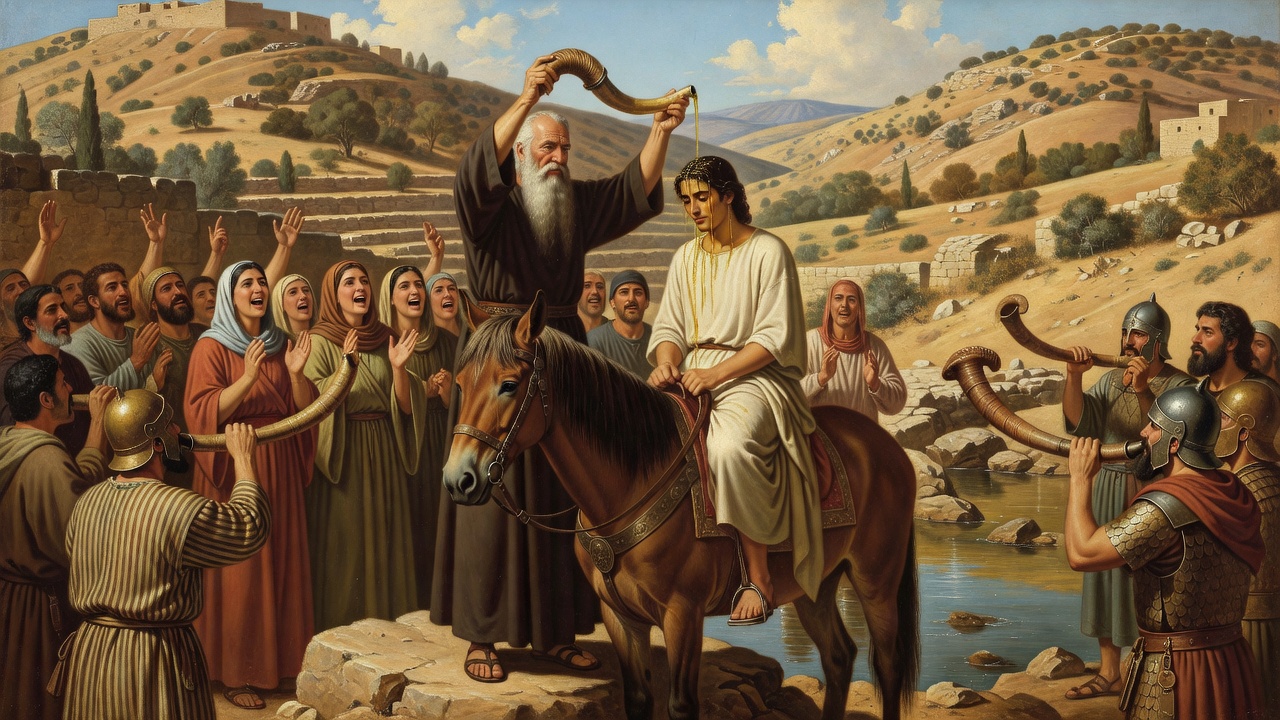
- Montar en la propia mula del rey constituía una proclamación pública decisiva de autoridad real. Por orden expresa de David, Salomón fue llevado al manantial de Gijón, donde Sadoc lo ungió como rey con aceite sagrado del tabernáculo en medio del sonido de cuernos y la aclamación popular.Fuentes: Gihon · Zadok · el propio texto bíblico
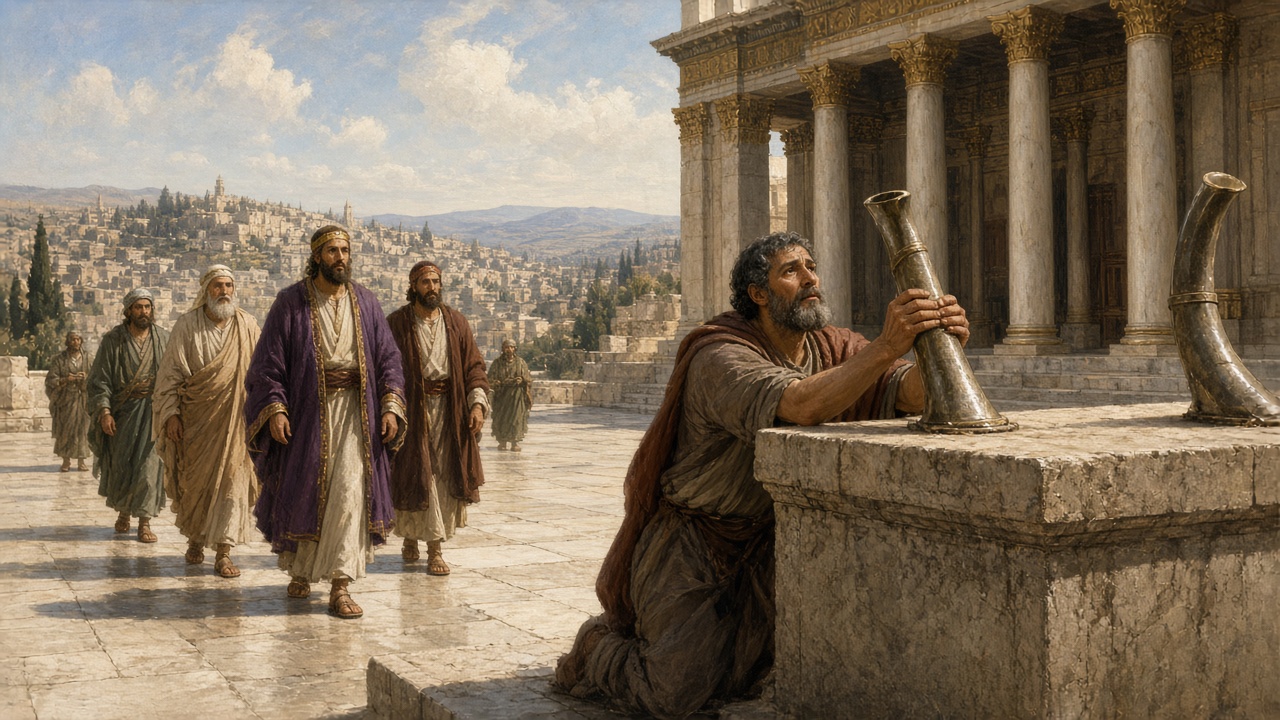
- Al enterarse de la coronación pública de Salomón, Adonías huyó aterrorizado y buscó asilo sujetándose a los cuernos del altar de los sacrificios. Salomón le otorgó clemencia condicional, perdonándole la vida siempre que demostrara ser un hombre digno.Fuentes: Adonijah · el propio texto bíblico
Notas escritas con ayuda de IA a partir de fuentes abiertas (Theographic Bible Metadata, CC BY-SA 4.0; Easton’s Bible Dictionary, dominio público) y revisadas antes de publicarse.
Lugares de este capítulo
- Shunem · Hoy: Sulam · 32.606, 35.334 · versículo 3
- Serpent’s Stone · Hoy: within 100 m of Bir Ayub · 31.767, 35.236 · versículo 9
- Gihon · Hoy: Gihon Spring · 31.773, 35.236 · versículos 33, 38, 44, 45
- Jerusalem · 31.777, 35.234 · versículo 40
Solo aparecen lugares identificados con alta confianza (90 % o más según las fuentes académicas reunidas por OpenBible). Mapa de la época: DARE (Digital Atlas of the Roman Empire), CC BY 4.0; mapa actual: © colaboradores de OpenStreetMap; lugares: OpenBible.info (CC BY 4.0).
Créditos y licencia de esta traducción
Tupàn ze'eg
Bible without Deuterocanon in Guajajára (BR:gub:Guajajára)
copyright © 2007 Wycliffe Bible Translators, Inc.
Language: Guajajára
Translation by: Wycliffe Bible Translators, Inc.
Guajajára [gub], Brazil
Copyright Information
© 2007, Wycliffe Bible Translators, Inc. All rights reserved.
This translation text is made available to you under the
terms of the Creative Commons License: Attribution-Noncommercial-No Derivative Works.
( http://creativecommons.org/licenses/by-nc-nd/3.0/ )
In addition, you have permission to port the text to different file formats, as long as you
do not change any of the text or punctuation of the Bible.
You may share, copy, distribute, transmit, and extract portions
or quotations from this work, provided that you include the above copyright
information:
You must give Attribution to the work.
You do not sell this work for a profit.
You do not make any derivative works that change any of the actual words or punctuation of the Scriptures.
Permissions beyond the scope of this license may be
available if you contact
us with your request.
Printed book ISBN 9788531109713
The Bible without Deuterocanon
in Guajajára
© 2007, Wycliffe Bible Translators, Inc. All rights reserved.
This translation is made available to you under the terms of the
Creative Commons Attribution-Noncommercial-No Derivatives license 4.0.
You may share and redistribute this Bible translation or extracts from it in any format, provided that:
You include the above copyright and source information.
You do not sell this work for a profit.
You do not change any of the words or punctuation of the Scriptures.
Pictures included with Scriptures and other documents on this site are licensed just for use with those Scriptures and documents.
For other uses, please contact the respective copyright owners.
2020-03-30
Fuente: http://ebible.org/gubBl/ · eBible.org