Levítico 1
Η Παλαιά Διαθήκη κατά τη μετάφραση των εβδομήκοντα (Ο') | SEPTUAGINTA · Toca un versículo para ver sus referencias cruzadas.
Acerca de este libro
Sobre Levítico
- El Diccionario Bíblico de Easton (1897) presenta Levítico como el tercer libro del Pentateuco y como el tercer libro de Moisés. El nombre, usado en la Vulgata siguiendo la LXX, refleja el tema principal del libro: el servicio levítico.Fuentes: Easton: Leviticus
- Easton afirma que todas las ordenanzas del libro fueron entregadas en el espacio de un mes, el primer mes del segundo año después del Éxodo. En la entrada sobre el Sinaí, llamado también Horeb, dice que los hebreos llegaron a esa región montañosa en el tercer mes después del Éxodo y permanecieron acampados cerca de un año entero, y que todo Levítico registra lo que ocurrió allí.Fuentes: Easton: Leviticus · Mount Sinai
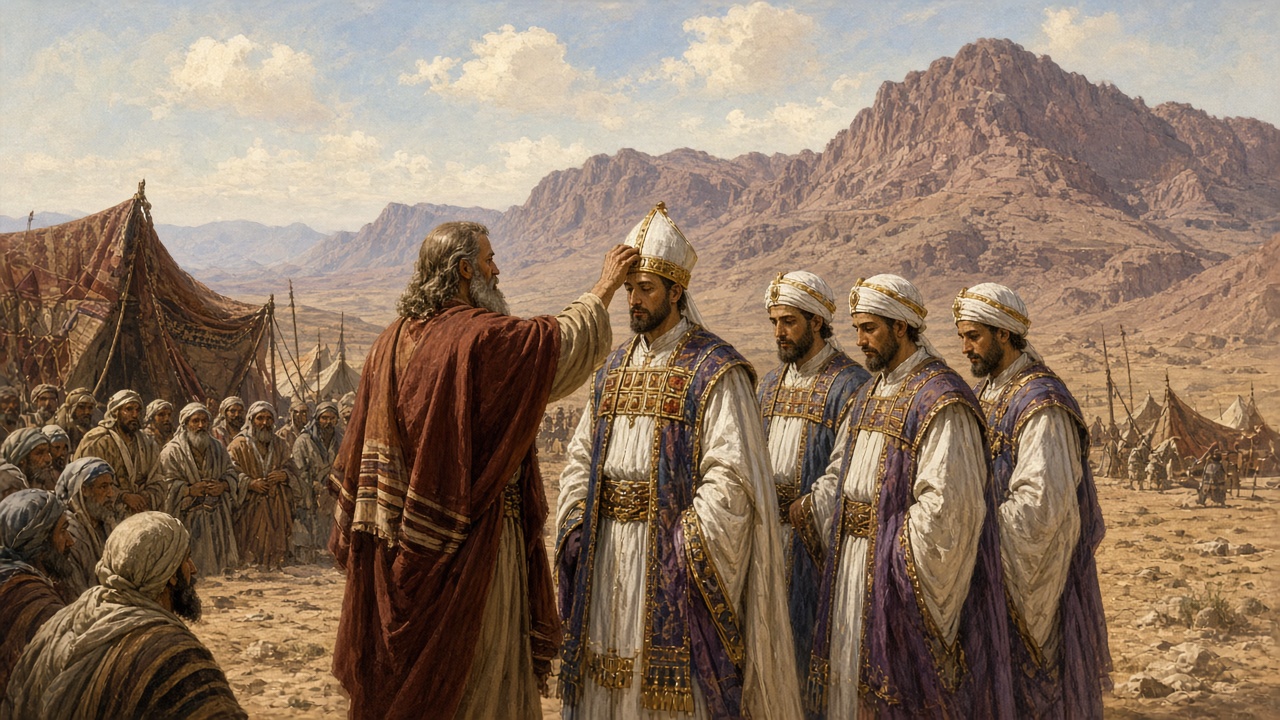
- Los capítulos 1 a 7 dan leyes sobre holocaustos, ofrendas de cereales y ofrendas de acción de gracias, luego sobre ofrendas por el pecado y ofrendas por la culpa, y sobre los deberes de los sacerdotes al ofrecer sacrificios. Los capítulos 8 a 10 relatan la consagración de Aarón y de sus hijos, la primera ofrenda de Aarón por sí mismo y por el pueblo, y la muerte de Nadab y Abiú, que fueron heridos de muerte y enterrados fuera del campamento tras ofrecer fuego extraño, es decir, fuego común no tomado del gran altar de bronce. Los capítulos 11 a 16 tratan de la pureza y de los sacrificios y ordenanzas para apartar la impureza.Fuentes: Easton: Leviticus · Nadab · Abihu
- Easton describe los capítulos 17 a 20 como leyes que marcan la separación entre Israel y los demás pueblos. Otras leyes tratan de la pureza personal de los sacerdotes y de su consumo de las cosas santas, de las ofrendas sin defecto y de la debida celebración de las grandes fiestas en los capítulos 23 y 25. Siguen promesas y advertencias acerca de la obediencia, el libro cierra con una sección sobre votos, y Easton observa que Dios es quien habla de manera directa en casi todo el libro.Fuentes: Easton: Leviticus
- En los ritos del capítulo 16, un macho cabrío queda asociado con Azazel, término que la Authorized Version traduce como scapegoat y que la Revised Version deja como Azazel. Easton informa que algunos intérpretes judíos lo toman como un lugar en el desierto, a unas doce millas al este de Jerusalén, mientras otros lo toman como un espíritu maligno o incluso Satanás, y también señala un significado de raíz: separación.Fuentes: Azazel
Notas escritas con ayuda de IA a partir de fuentes abiertas (Theographic Bible Metadata, CC BY-SA 4.0; Easton’s Bible Dictionary, dominio público) y revisadas antes de publicarse.
1ΚΑΙ ἀνεκάλεσε Μωυσῆν, καὶ ἐλάλησε Κύριος αὐτῷ ἐκ τῆς σκηνῆς τοῦ μαρτυρίου λέγων· 2λάλησον τοῖς υἱοῖς Ἰσραήλ, καὶ ἐρεῖς πρὸς αὐτούς· ἄνθρωπος ἐξ ὑμῶν ἐὰν προσαγάγῃ δῶρα τῷ Κυρίῳ, ἀπὸ τῶν κτηνῶν καὶ ἀπὸ τῶν βοῶν καὶ ἀπὸ τῶν προβάτων προσοίσετε τὰ δῶρα ὑμῶν. 3ἐὰν ὁλοκαύτωμα τὸ δῶρον αὐτοῦ ἐκ τῶν βοῶν, ἄρσεν ἄμωμον προσάξει· πρὸς τὴν θύραν τῆς σκηνῆς τοῦ μαρτυρίου προσοίσει αὐτὸ δεκτὸν ἐναντίον Κυρίου. 4καὶ ἐπιθήσει τὴν χεῖρα ἐπὶ τὴν κεφαλὴν τοῦ καρπώματος, δεκτὸν αὐτῷ ἐξιλάσασθαι περὶ αὐτοῦ. 5καὶ σφάξουσι τὸν μόσχον ἔναντι Κυρίου, καὶ προσοίσουσιν οἱ υἱοὶ Ἀαρὼν οἱ ἱερεῖς τὸ αἷμα, καὶ προσχεοῦσι τὸ αἷμα ἐπὶ τὸ θυσιαστήριον κύκλῳ τὸ ἐπὶ τῶν θυρῶν τῆς σκηνῆς τοῦ μαρτυρίου. 6καὶ ἐκδείραντες τὸ ὁλοκαύτωμα μελιοῦσιν αὐτὸ κατὰ μέλη, 7καὶ ἐπιθήσουσιν οἱ υἱοὶ Ἀαρὼν οἱ ἱερεῖς πῦρ ἐπὶ τὸ θυσιαστήριον καὶ ἐπιστοιβάσουσι ξύλα ἐπὶ τὸ πῦρ. 8καὶ ἐπιστοιβάσουσιν οἱ υἱοὶ Ἀαρὼν οἱ ἱερεῖς τὰ διχοτομήματα καὶ τὴν κεφαλὴν καὶ τὸ στέαρ ἐπὶ τὰ ξύλα τὰ ἐπὶ τοῦ πυρὸς τὰ ὄντα ἐπὶ τοῦ θυσιαστηρίου, 9τὰ δὲ ἐγκοίλια καὶ τοὺς πόδας πλυνοῦσιν ὕδατι, καὶ ἐπιθήσουσιν οἱ ἱερεῖς τὰ πάντα ἐπὶ τὸ θυσιαστήριον· κάρπωμά ἐστι, θυσία, ὀσμὴ εὐωδίας τῷ Κυρίῳ.
10Ἐὰν δὲ ἀπὸ τῶν προβάτων τὸ δῶρον αὐτοῦ τῷ Κυρίῳ, ἀπό τε τῶν ἀρνῶν καὶ τῶν ἐρίφων, εἰς ὁλοκαυτώματα, ἄρσεν ἄμωμον προσάξει αὐτὸ καὶ ἐπιθήσει τὴν χεῖρα ἐπὶ τὴν κεφαλὴν αὐτοῦ. 11καὶ σφάξουσιν αὐτὸ ἐκ πλαγίων τοῦ θυσιαστηρίου πρὸς βορρᾶν ἔναντι Κυρίου καὶ προσχεοῦσιν οἱ υἱοὶ Ἀαρὼν οἱ ἱερεῖς τὸ αἷμα αὐτοῦ ἐπὶ τὸ θυσιαστήριον κύκλῳ. 12καὶ διελοῦσιν αὐτὸ κατὰ μέλη καὶ τὴν κεφαλὴν καὶ τὸ στέαρ, καὶ ἐπιστοιβάσουσιν οἱ ἱερεῖς αὐτὰ ἐπὶ τὰ ξύλα τὰ ἐπὶ τοῦ πυρὸς τὰ ἐπὶ τοῦ θυσιαστηρίου. 13καὶ τὰ ἐγκοίλια καὶ τοὺς πόδας πλυνοῦσιν ὕδατι. καὶ προσοίσει ὁ ἱερεὺς τὰ πάντα καὶ ἐπιθήσει ἐπὶ τὸ θυσιαστήριον· κάρπωμά ἐστι, θυσία, ὀσμὴ εὐωδίας τῷ Κυρίῳ.
14Ἐὰν δὲ ἀπὸ τῶν πετεινῶν κάρπωμα προσφέρῃ δῶρον αὐτοῦ τῷ Κυρίῳ, καὶ προσοίσει ἀπὸ τῶν τρυγόνων, ἢ ἀπὸ τῶν περιστερῶν τὸ δῶρον αὐτοῦ. 15καὶ προσοίσει αὐτὸ ὁ ἱερεὺς πρὸς τὸ θυσιαστήριον καὶ ἀποκνίσει τὴν κεφαλήν, καὶ ἐπιθήσει ὁ ἱερεὺς ἐπὶ τὸ θυσιαστήριον καὶ στραγγιεῖ τὸ αἷμα πρὸς τὴν βάσιν τοῦ θυσιαστηρίου. 16καὶ ἀφελεῖ τὸν πρόλοβον σὺν τοῖς πτεροῖς καὶ ἐκβαλεῖ αὐτὸ παρὰ τὸ θυσιαστήριον κατὰ ἀνατολάς εἰς τὸν τόπον τῆς σποδοῦ. 17καὶ ἐκκλάσει αὐτὸ ἐκ τῶν πτερύγων καὶ οὐ διελεῖ, καὶ ἐπιθήσει αὐτὸ ὁ ἱερεὺς ἐπὶ τὸ θυσιαστήριον, ἐπὶ τὰ ξύλα τὰ ἐπὶ τοῦ πυρός· κάρπωμά ἐστι, θυσία, ὀσμὴ εὐωδίας τῷ Κυρίῳ.
¿Sabías que…?
El Holocausto
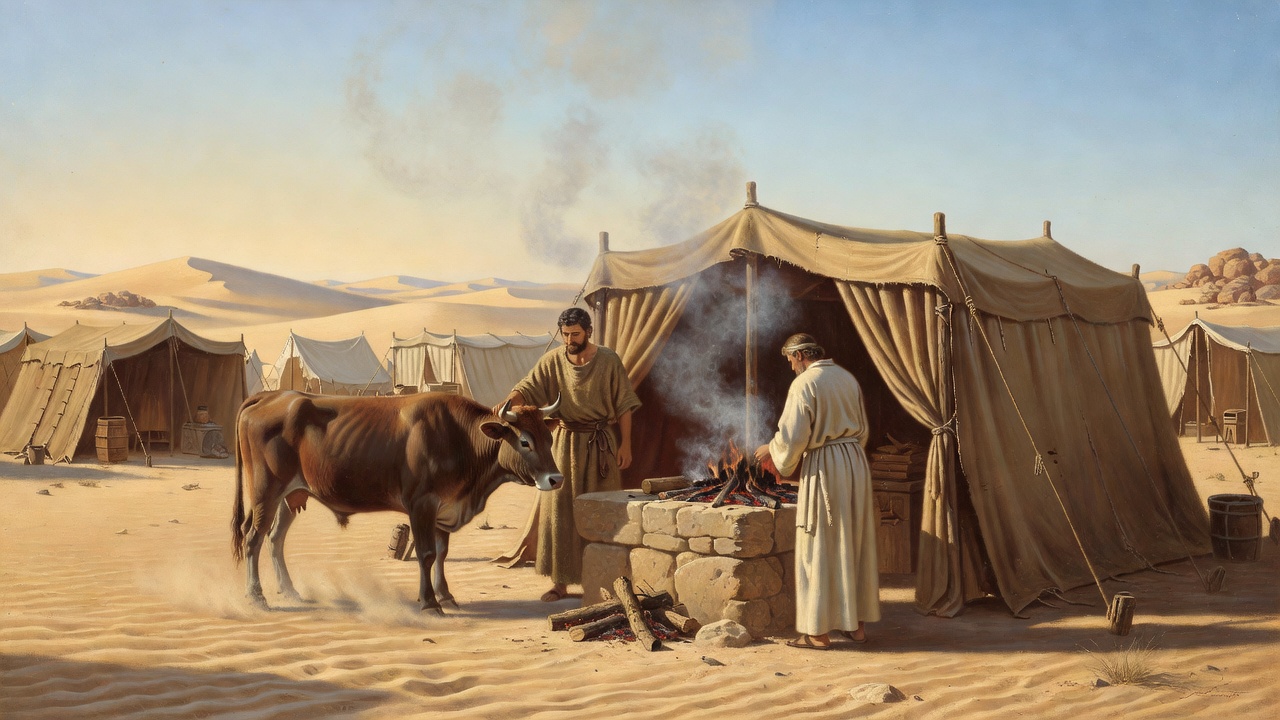
- Las instrucciones para el holocausto se adaptaban a distintas capacidades materiales, permitiendo ofrendas del ganado vacuno, del rebaño (ovejas o cabras) o de aves (tórtolas o pichones). En el caso del ganado y del rebaño, se requería un macho sin defecto.Fuentes: el propio texto bíblico
- El ritual establecía una clara división de funciones entre el oferente y los sacerdotes. El adorador presentaba el animal, ponía su mano sobre la cabeza de este para expiación, lo degollaba, lo desollaba y lavaba sus partes internas, mientras que los hijos de Aarón rociaban la sangre y quemaban toda la ofrenda sobre el altar.Fuentes: el propio texto bíblico · Aaron
Notas escritas con ayuda de IA a partir de fuentes abiertas (Theographic Bible Metadata, CC BY-SA 4.0; Easton’s Bible Dictionary, dominio público) y revisadas antes de publicarse.
Créditos y licencia de esta traducción
Η Παλαιά Διαθήκη κατά τη μετάφραση των εβδομήκοντα (Ο') | SEPTUAGINTA
The Old Testament in Ancient Greek, Septuagint translation
Public Domain
℗ Orthodox Media Network
Language: Ελληνικά (Greek, Ancient)
Dialect: Koine
ORTHODOX MEDIA NETWORK-ΟΡΘΟΔΟΞΟ ΔΙΚΤΥΟ ΕΝΗΜΕΡΩΣΗΣ
A Voice from the Heart of Mount Athos to the World
Orthodox Media Network ( https://vivlos.link/DEqNY ) was founded on Mount Athos – the only monastic republic in the world – with main mission to promote the Holy Scriptures and preserve the spiritual and cultural heritage of Orthodox monasticism, using mainly the internet.
Since 2010, its founder and General Secretary, Apostolos Vavylis, has become the first person internationally to record the entire Bible in both the original ancient Greek text and its modern Greek translation. This work – unprecedented in Orthodox tradition – has reached and inspired millions:
* Over 15 million people (estimated) have listened to at least one chapter of the recorded Bible.
* Hundreds of independent accounts across nearly every digital platform, share these recordings in countless forms.
We have never claimed copyright or demanded takedowns of these reproductions — because our goal is not profit, but the free and faithful dissemination of the Word of God and the blessing it brings to the world.
We welcome anyone that would like to publicly share our work with the only condition to publish the present text as a minimum respect to our mission.
* Our vision:
To place a Bible in every Greek-speaking home, wherever it may be on earth.
There are an estimated 17 million Greeks living in nearly 100 countries.
* If you wish to support or partner with us, please contact:
* [email protected]
The Old Testament (Septuaginta)
We are a voice of Orthodoxy, a witness of the Word, and a blessing to the Nations.
2026-02-13
Fuente: http://ebible.org/grclxx/ · eBible.org