Génesis 16
Η Παλαιά Διαθήκη κατά τη μετάφραση των εβδομήκοντα (Ο') | SEPTUAGINTA · Toca un versículo para ver sus referencias cruzadas.
1ΣΑΡΑ δὲ γυνὴ ¨Αβραμ οὐκ ἔτικτεν αὐτῷ. ἦν δὲ αὐτῇ παιδίσκη Αἰγυπτία, ᾗ ὄνομα Ἄγαρ. 2εἶπε δὲ Σάρα πρὸς ¨Αβραμ· ἰδοὺ συνέκλεισέ με Κύριος τοῦ μὴ τίκτειν· εἴσελθε οὖν πρὸς τὴν παιδίσκην μου, ἵνα τεκνοποιήσωμαι ἐξ αὐτῆς. ὑπήκουσε δὲ ¨Αβραμ τῆς φωνῆς Σάρας. 3καὶ λαβοῦσα Σάρα ἡ γυνὴ ¨Αβραμ Ἄγαρ τὴν Αἰγυπτίαν τὴν ἑαυτῆς παιδίσκην, μετὰ δέκα ἔτη τοῦ οἰκῆσαι ¨Αβραμ ἐν γῇ Χαναάν, ἔδωκεν αὐτὴν τῷ ¨Αβραμ ἀνδρὶ αὐτῆς αὐτῷ γυναῖκα. 4καὶ εἰσῆλθε πρὸς Ἄγαρ, καὶ συνέλαβε. καὶ εἶδεν ὅτι ἐν γαστρὶ ἔχει, καὶ ἠτιμάσθη ἡ κυρία ἐναντίον αὐτῆς. 5εἶπε δὲ Σάρα πρὸς ¨Αβραμ· ἀδικοῦμαι ἐκ σοῦ· ἐγὼ δέδωκα τὴν παιδίσκην μου εἰς τὸν κόλπον σου, ἰδοῦσα δὲ ὅτι ἐν γαστρὶ ἔχει, ἠτιμάσθην ἐναντίον αὐτῆς· κρίναι ὁ Θεὸς ἀνὰ μέσον ἐμοῦ καὶ σοῦ. 6εἶπε δὲ ¨Αβραμ πρὸς Σάραν· ἰδοὺ ἡ παιδίσκη σου ἐν ταῖς χερσί σου· χρῶ αὐτῇ ὡς ἄν σοι ἀρεστόν ᾖ. καὶ ἐκάκωσεν αὐτὴν Σάρα, καὶ ἀπέδρα ἀπὸ προσώπου αὐτῆς.
7Εὗρε δὲ αὐτὴν ἄγγελος Κυρίου ἐπὶ τῆς πηγῆς τοῦ ὕδατος ἐν τῇ ἐρήμῳ, ἐπὶ τῆς πηγῆς ἐν τῇ ὁδῷ Σούρ. 8καὶ εἶπεν αὐτῇ ὁ ἄγγελος Κυρίου. Ἄγαρ, παιδίσκη Σάρας, πόθεν ἔρχῃ καὶ ποῦ πορεύῃ; καὶ εἶπεν· ἀπὸ προσώπου Σάρας τῆς κυρίας μου ἐγὼ ἀποδιδράσκω. 9εἶπε δὲ αὐτῇ ὁ ἄγγελος Κυρίου· ἀποστράφηθι πρὸς τὴν κυρίαν σου καὶ ταπεινώθητι ὑπὸ τὰς χεῖρας αὐτῆς. 10καὶ εἶπεν αὐτῇ ὁ ἄγγελος Κυρίου· πληθύνων πληθυνῶ τὸ σπέρμα σου, καὶ οὐκ ἀριθμηθήσεται ὑπὸ τοῦ πλήθους. 11καί εἶπεν αὐτῇ ὁ ἄγγελος Κυρίου· ἰδού, σὺ ἐν γαστρί ἔχεις καὶ τέξῃ υἱὸν καὶ καλέσεις τὸ ὄνομα αὐτοῦ Ἰσμαήλ, ὅτι ἐπήκουσε Κύριος τῇ ταπεινώσει σου. 12οὗτος ἔσται ἄγροικος ἄνθρωπος αἱ χεῖρες αὐτοῦ ἐπὶ πάντας, καὶ αἱ χεῖρες πάντων ἐπ᾿ αὐτόν, καὶ κατὰ πρόσωπον πάντων τῶν ἀδελφῶν αὐτοῦ κατοικήσει. 13καὶ ἐκάλεσεν Ἄγαρ τὸ ὄνομα Κυρίου τοῦ λαλοῦντος πρὸς αὐτήν· σὺ ὁ Θεὸς ὁ ἐπιδών με, ὅτι εἶπε· καὶ γὰρ ἐνώπιον εἶδον ὀφθέντα μοι. 14ἕνεκεν τούτου ἐκάλεσε τὸ φρέαρ Φρέαρ οὗ ἐνώπιον εἶδον· ἰδοὺ ἀνὰ μέσον Κάδης καὶ ἀνὰ μέσον Βαράδ.
15Καὶ ἔτεκεν Ἄγαρ τῷ ¨Αβραμ υἱόν, καὶ ἐκάλεσεν ¨Αβραμ τὸ ὄνομα τοῦ υἱοῦ αὐτοῦ, ὃν ἔτεκεν αὐτῷ Ἄγαρ, Ἰσμαήλ. 16¨Αβραμ δὲ ἦν ἐτῶν ὀγδοηκονταέξ, ἡνίκα ἔτεκεν Ἄγαρ τῷ ¨Αβραμ τὸν Ἰσμαήλ.
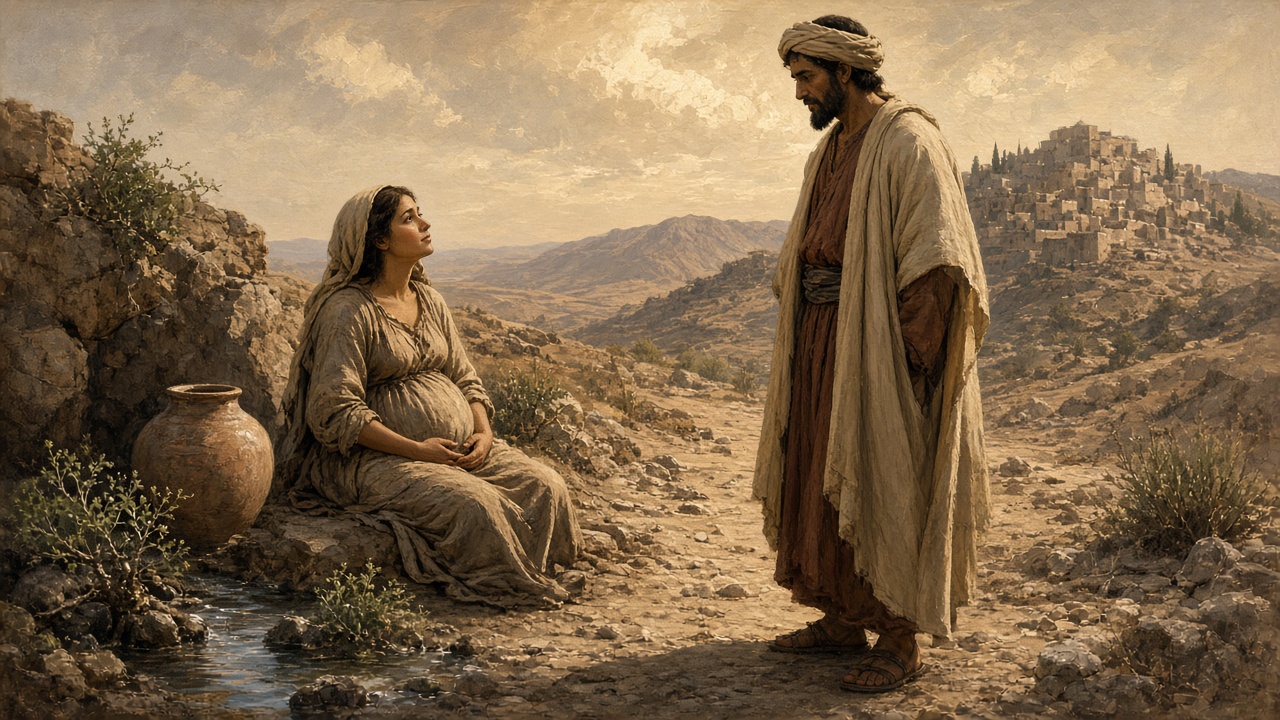
¿Sabías que…?
La huida de Agar y el nacimiento de Ismael
- Agar, sierva egipcia de Sarai, lleva un nombre que se entiende como “huida” o, según otros, “extranjera”. Después de que Abram vivió diez años en Canaán, Sarai se la entregó como esposa secundaria, con la esperanza de formar una familia por medio de ella.Fuentes: Hagar · el propio texto bíblico
- Cuando Sarai la trató con dureza, Agar huyó por el camino de Shur, a través del desierto que quedaba entre ella y Egipto, al parecer con la intención de volver con sus parientes. El ángel del Señor la encontró junto a un manantial. Shur, que significa “muro”, era un desierto en la frontera noreste de Egipto, probablemente llamado así por unas fortificaciones fronterizas que iban de Pelusio a Heliópolis.Fuentes: el propio texto bíblico · Hagar · Shur
- Agar llamó al Señor que le habló “el Dios que me ve”, y el pozo recibió el nombre de Beer-lahai-roi, “el pozo del Dios visible”, entre Cades y Bered, una ciudad en el sur de Palestina, en el desierto de Shur. Ella regresó a la tienda de Abram, e Ismael, su hijo mayor, nació en Mamre cuando Abram tenía ochenta y seis años; Abram le puso el nombre que el ángel había anunciado, porque el Señor había oído su aflicción.Fuentes: el propio texto bíblico · Hagar · Bered · Ishmael (Son of Hagar)
Notas escritas con ayuda de IA a partir de fuentes abiertas (Theographic Bible Metadata, CC BY-SA 4.0; Easton’s Bible Dictionary, dominio público) y revisadas antes de publicarse.
Lugares de este capítulo
- Canaan · 32.767, 35.333 · versículo 3
Solo aparecen lugares identificados con alta confianza (90 % o más según las fuentes académicas reunidas por OpenBible). Mapa de la época: DARE (Digital Atlas of the Roman Empire), CC BY 4.0; mapa actual: © colaboradores de OpenStreetMap; lugares: OpenBible.info (CC BY 4.0).
Créditos y licencia de esta traducción
Η Παλαιά Διαθήκη κατά τη μετάφραση των εβδομήκοντα (Ο') | SEPTUAGINTA
The Old Testament in Ancient Greek, Septuagint translation
Public Domain
℗ Orthodox Media Network
Language: Ελληνικά (Greek, Ancient)
Dialect: Koine
ORTHODOX MEDIA NETWORK-ΟΡΘΟΔΟΞΟ ΔΙΚΤΥΟ ΕΝΗΜΕΡΩΣΗΣ
A Voice from the Heart of Mount Athos to the World
Orthodox Media Network ( https://vivlos.link/DEqNY ) was founded on Mount Athos – the only monastic republic in the world – with main mission to promote the Holy Scriptures and preserve the spiritual and cultural heritage of Orthodox monasticism, using mainly the internet.
Since 2010, its founder and General Secretary, Apostolos Vavylis, has become the first person internationally to record the entire Bible in both the original ancient Greek text and its modern Greek translation. This work – unprecedented in Orthodox tradition – has reached and inspired millions:
* Over 15 million people (estimated) have listened to at least one chapter of the recorded Bible.
* Hundreds of independent accounts across nearly every digital platform, share these recordings in countless forms.
We have never claimed copyright or demanded takedowns of these reproductions — because our goal is not profit, but the free and faithful dissemination of the Word of God and the blessing it brings to the world.
We welcome anyone that would like to publicly share our work with the only condition to publish the present text as a minimum respect to our mission.
* Our vision:
To place a Bible in every Greek-speaking home, wherever it may be on earth.
There are an estimated 17 million Greeks living in nearly 100 countries.
* If you wish to support or partner with us, please contact:
* [email protected]
The Old Testament (Septuaginta)
We are a voice of Orthodoxy, a witness of the Word, and a blessing to the Nations.
2026-02-13
Fuente: http://ebible.org/grclxx/ · eBible.org