Proverbios 30
Geeshsha Maxaafa · Toca un versículo para ver sus referencias cruzadas.
Agura Leemisota
1Yaaqe na7aa Agura leemisoti haysafe kaallidi xaafetidaysata. Aguri Iti7eelasinne Ukaalas haysa haasayis. 2Taani asa ubbaafe aadhida eeya;
asas de7iya akeeki taw deenna.
3Taani cincatethi tamaarabike;
Geeshsha Xoossabaaka erike.
4Salo pude keyidi duge wodhiday oonee?
Carko ba kushen oykiday,
haathe ba afilan yiiciday,
sa7aa gaxaa minthidi essiday oonee?
Iya sunthay oonee?
Iya na7aa sunthay oonee?
Iya eriya gidiko ane taw oda?
5Xoossa qaalan borey baawa; ubbay tuma
iyan ammanetiya ubbaas I gondalle.
6Iya qaala bolla aybaka gujofa;
gujiko I nena seerana;
ne wordancho gideysa I qoncisana.
7Godaw, ta nena nam7ubba oychayis;
ta hayqana gakanaw enta tana diggofa.
8Ta ase cimmonna melanne wordo haasayonna mela tana naaga;
taw koshshiya kathi immafe attishin, tana dure woyko manqo oothofa.
9Dure gidada, “Goday oonee?” gada nena kaddana;
manqo gidada, kaysada ta Xoossaa sunthaa cayisana.
10Nena baaddonna melanne
iya baadethay new gome gidonna mela,
aylliya iya godaara zigropa.
11Ba aawa baaddiyanne ba aayiw anjona yeletethi de7ees.
12Daro tuna gidi uttidi
bantana geeshshi oothiya asati de7oosona.
13Otoron kumida asatinne
ase kadhidi xeelliya asati de7oosona.
14Enta achay mashshe gidin,
enta gaccoy toora gidin,
manqotanne metootanchota naaqidi,
entaba bonqiya asati de7oosona.
15Ullathas nam7u macca nayti de7oosona;
enti, “Hamma! Hamma!” yaagidi waassoosona.
Kallidi eronna heedzubati de7oosona;
oyddanthoy qassi “Gidana” gidi erenna.
16Hessati,
duufo,
maynnida maccas,
haathe kallidi eronna mela biittanne,
“Gidana!” gidi eronna tama.
17Ba aawa leqiya na7aa ayfiya,
ba aayiya cimin kadhiya na7aa ayfiya,
zangaaran de7iya quuroti woocana;
iya ashuwa ankoti maana.
18Tana heedzubati malaalsoosona;
oyddanthoy ubba taw gelenna.
19Hessati,
salora paalliya arganthi,
zaalla bollara kolxiya shooshi
abba bollara biya markabenne
geela7ora shiiqo oyketida adde.
20Layma maccasi haniya hanoyka hessa mela;
Iya masu; shin ba doona quchada,
“Taani aykoka balabiike” yaagawusu.
21Heedzuban biitti qaaxees;
oyddanthuwa ubba tookanaw danda7etenna.
22Hessatika,
aylley kawotida wode,
eeya asi kathi kallida wode,
23asi ixida maccasi azina gelida wodenne
macca aylliya ba godatiw laattida wode medhetiya hanota.
24Sa7a bolla oyddu guutha medhetethati de7oosona;
shin enti aadhida cinca.
25Hessatika,
Cuncalley wolqi bayna medhetethi;
shin bantaw miyaba bone shiishidi, minjoosona.
26Gupaleti wolqi baynayisata;
shin banta keetha zaalla qophon keexoosona.
27Booletas kawoy baawa;
shin enti ubbay maaran zattoosona.
28Zareti kushen oyketoosona;
shin kawo gadhon de7oosona.
29Banta maata bessishe hemetiya heedzu medhetethati de7oosona;
oyddanthoy lo77o hemethi hemetees.
30Hessika,
do7a ubbaafe minonne yashshi eronna gaammo.
31Macca kuttota giddon hemetiya adde kutto,
wude kaalethiya deesha kole;
ba olanchota giddon qoncen eqiya kawa.
32Neeni eeyada otortidaba gidikoka,
iita oothanaw halchidaba gidiko,
ane taki gada qopa.
33Maathi bukey oysu kesseysada,
siidhe dichin suuthi yeysada,
hanqo denthethoy ooshshu ehees.
¿Sabías que…?
Los Dichos de Agur
- Proverbios 30 se atribuye a Agur, hijo de Jaqué, quien dirigió sus palabras a Itiel y Ucal. Más allá de lo que está registrado en este capítulo, no se sabe nada más acerca de Agur o de su padre.Fuentes: Agur · Jakeh · Ucal · el propio texto bíblico
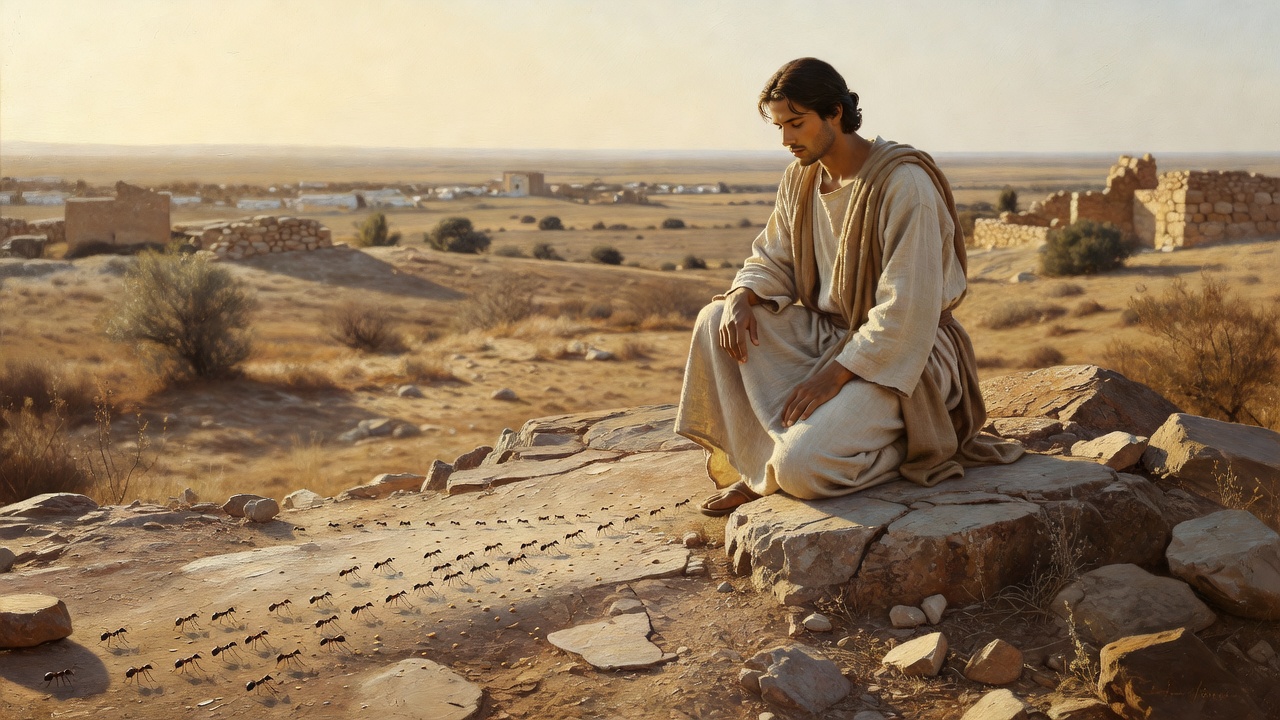
- El capítulo utiliza con frecuencia un patrón numérico graduado ('tres cosas... cuatro que...') para agrupar observaciones sobre la naturaleza y la conducta humana. Agur aplica esta estructura a maravillas de la creación, alteraciones sociales, seres de andar imponente y cuatro pequeñas criaturas que muestran una notable sabiduría: hormigas, damanes, langostas y lagartijas.Fuentes: el propio texto bíblico
- Agur hace una petición específica de dos partes, pidiendo que no se le dé ni pobreza ni riquezas, sino solo su porción diaria de comida. Explica que tener en abundancia podría llevar a alguien a negar al Señor, mientras que caer en la pobreza podría tentar a la persona a robar.Fuentes: el propio texto bíblico
Notas escritas con ayuda de IA a partir de fuentes abiertas (Theographic Bible Metadata, CC BY-SA 4.0; Easton’s Bible Dictionary, dominio público) y revisadas antes de publicarse.
Créditos y licencia de esta traducción
Geeshsha Maxaafa
Gofa: Geeshsha Maxaafa (Bible) for Ethiopia, Latin script
copyright © 2024 The Word for the World International
Language: Goofa (Gofa)
Contributor: The Word for the World International
This translation is made available to you under the terms of the
Creative Commons Attribution Share-Alike license 4.0.
You have permission to share and redistribute this Bible translation in any format and to make reasonable revisions and adaptations of this translation, provided that:
You include the above copyright and source information.
If you make any changes to the text, you must indicate that you did so in a way that makes it clear that the original licensor is not necessarily endorsing your changes.
If you redistribute this text, you must distribute your contributions under the same license as the original.
Pictures included with Scriptures and other documents on this site are licensed just for use with those Scriptures and documents.
For other uses, please contact the respective copyright owners.
Note that in addition to the rules above, revising and adapting God's Word involves a great responsibility to be true to God's Word. See Revelation 22:18-19.
2025-05-03
Fuente: http://ebible.org/gofl/ · eBible.org