Job 8
Geeshsha Mexaafa · Toca un versículo para ver sus referencias cruzadas.
Belidaade Haasaya
1Shuha dere as Belidaade geetettizayssi hizgidi zaarides;
2«Ne doonappe ke7iza qaalati
gote carko mala;
awude gakkanaas hayssaththo
ne haasayanee?
3Xoossi pirda bokkasi erizee?
Ubbaa Dandayza Xoossay
xilloteth bokkasi erizee?
4Ne nayti Xoossa qohidaa gidikko,
istti bantta pirda ekkida guussa.
5Gidikkoka ne Xoossako simmiko,
Ubbaa Dandayza
Xoossa woossiko,
6suurenne geesh gidikko
izi eesoti nees bessiza sohon
nena zaarana.
7Ne doomeththay
guuth misatikkoka,
nees poloy keehi lo7o gidana.
8«Ane kase yeleta oychcha;
kase aawati gakkidasoza
pilgga xeella.
9Nu layththazi
buro guuth gidida gishshas
nuni aykkoka erokko;
nu layththayka
eesho mala aadhdhizaaza.
10Istti nees tamaarsizayssinne
nees yootizayssi
ba akeekizayssafe
ekkidi gidennee?
11Tumukka carey bayndason
shacca maatay mokki erizee?
Haaththi bayndason
marcoy cililizee?
12Hayssi hanontta aggiko diccidi
buuch gakkanaappe sinththan
buro cililan dishe melees.
13Xoossa dogiza asata
ubbaa wurseththay
hessa mala hanana;
Xoossi baawa giza asata
hidotay qanxxettana.
14Achcharo keeththa mala
miishshan ammanetteettes;
istti hidota ooththiza
miishshi diikkoka
kawushshara dhayana.
15Achcharo keeththa bolla
istti zemppizaa gidikko
izi minni eqqenna;
achcharo keeththaza izi oykkiko
duuxeretti wodhdhana.
16Haaththa kallida harumay
ho7o demmidi daayees;
17Xaphoza shuchcha
muuhe giddon yeddees;
zaalla za7an xaphees.
18Ba dizasoppe shodettiza wode
izi dizasozi erettenna.
19Iza wurseththi hessa mala gidees;
hara maatati biittafe doleettes.
20«Xoossi wosoy baynda
asata olenna;
iita asata qese minththenna.
21Hessa gishshas nenikka
ufayssan miiccana malanne
‹Ililana› mala izi ooththana.
22Nena ixxiza asati gidikko
yeella may7ana;
iita asata keeththika dhayana.»
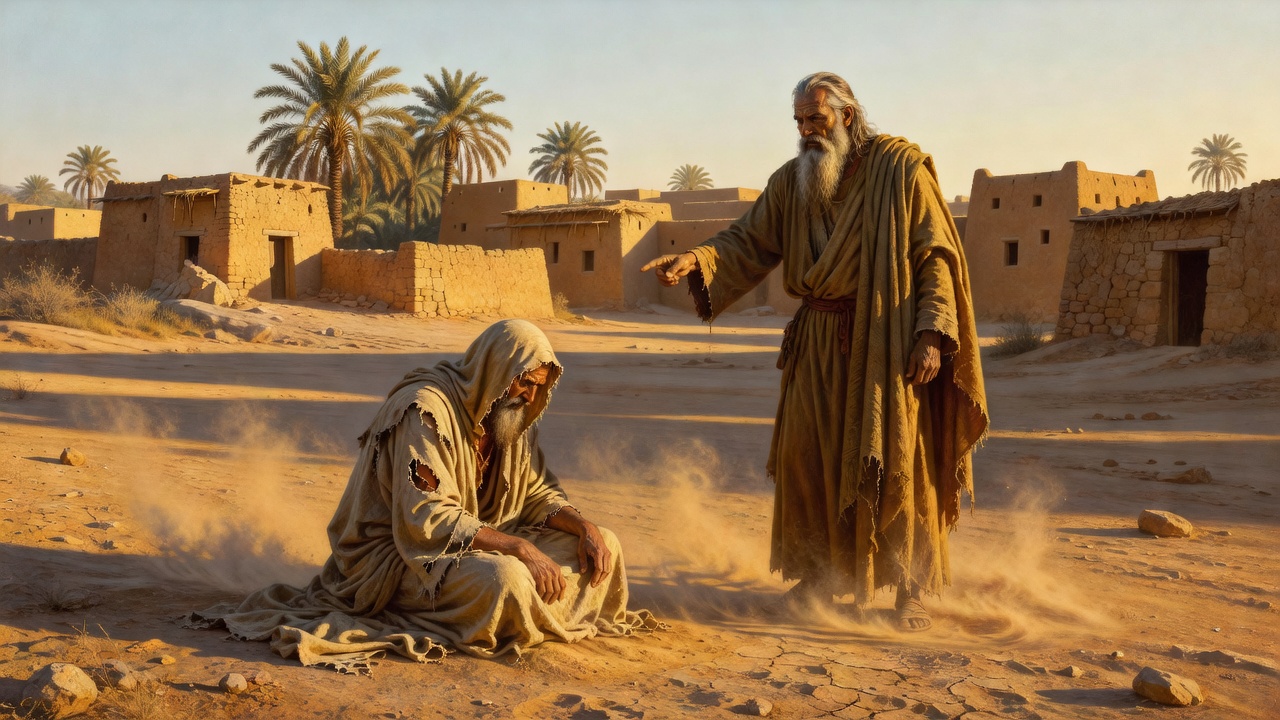
¿Sabías que…?
El llamado de Bildad a la sabiduría antigua
- Bildad es identificado como suhita, lo que probablemente lo vincula con Súa, una región árabe poblada por los descendientes de Abraham y Cetura. En este capítulo, pronuncia el primero de sus tres discursos severos a Job, afirmando que la justicia divina es absoluta e inalterable.Fuentes: Bildad · el propio texto bíblico
- En lugar de recurrir a su propia experiencia, Bildad apela al conocimiento acumulado de las generaciones pasadas, comparando los días humanos con una sombra pasajera. Para ilustrar la ruina del impío, utiliza metáforas de la naturaleza como juncos que se marchitan sin agua y la fragilidad de una telaraña.Fuentes: el propio texto bíblico
Notas escritas con ayuda de IA a partir de fuentes abiertas (Theographic Bible Metadata, CC BY-SA 4.0; Easton’s Bible Dictionary, dominio público) y revisadas antes de publicarse.
Créditos y licencia de esta traducción
Geeshsha Mexaafa
The Holy Bible in the Gamo language of Ethiopia, Latin script
copyright © 2024 The Word for the World International
Language: Gamotso (Gamo)
Contributor: The Word for the World International
This translation is made available to you under the terms of the
Creative Commons Attribution Share-Alike license 4.0.
You have permission to share and redistribute this Bible translation in any format and to make reasonable revisions and adaptations of this translation, provided that:
You include the above copyright and source information.
If you make any changes to the text, you must indicate that you did so in a way that makes it clear that the original licensor is not necessarily endorsing your changes.
If you redistribute this text, you must distribute your contributions under the same license as the original.
Pictures included with Scriptures and other documents on this site are licensed just for use with those Scriptures and documents.
For other uses, please contact the respective copyright owners.
Note that in addition to the rules above, revising and adapting God's Word involves a great responsibility to be true to God's Word. See Revelation 22:18-19.
2025-05-03
Fuente: http://ebible.org/gmvl/ · eBible.org