Job 35
Kitaaba Woyyuu · Toca un versículo para ver sus referencias cruzadas.
1Eliihuun itti dabalee,
2«Iyoobiin ati, ‹Waaqa duratti ani balcha'a›
jechuun keeti sirri'ii?
3Ati Waaqaan, ‹Ani cubbuu yoo hujuu dhabe ati maan dhaggatta?
Ani bu'aa maan dhaggadha ree?› jette.
4«Amma ani si'ii fi jaalota teetii ta si woliin jirtuuf
deebii hin kenna.
5Ol jedhii gara ol-gubba'aa ilaal!
Duumensa si'iin gubba'atti mudhatu hubadhu.
6Ati cubbuu yoo hujje Waaqa maaniin miita?
Balleessaan teeti yoo bacatte maan isa goota?
7Ati balchaa yoo teete isaaf maan kennita?
Yookiin inni harka keeti irraa maan fudhata?
8Hammeenni keeti nama akka keetii hin miidha;
balchummaan teetille ilmaan namaa calla'aaf bu'aa qaddi.
9«Sababa cunqurfamiisi bacateef
kolbaan hin iyyiti;
harka hunnaamessaa jalaa bayiisaaf
qarqaarsa dhaggatiisaaf iyyatan.
10Ammoo eennulle, ‹Waaqi na dade,
yennaa rakkoo guddo'oo
nami akka isa faarfatu ka godhu,
11ka bineensota lafaa caalaa nu barsiisu,
ka sinbirroota caalaa nu qaroonsu eessa jira?› hin jedhu.
12Isaan hin iyyan;
inni ammoo sababa koora worra hantuu godhuutiif
deebii isaaniif hin deebisu.
13Dhugumaan Waaqi iyyata bu'aa hin qanne hin dhage'u;
Waaqi waan mara dande'ulle
gara iyya isaanii hin midhatu.
14Iyoob ati, ‹Ani Waaqa hin dhaggu› yennaa jettu,
inni attam iyya teeti dhage'a ree?
Haajaan keeti isa dura jira,
isuma eegadhu.
15Waaqi aarii ifiitiin ka hin adanne,
hammeenna namaalle itti ilaalaa ka taru seetaa?
16Iyoob ati, dubbii bu'aa hin qanne dubbatta;
beekkumsa maleelle dubbii fakkansita» jedhe.
¿Sabías que…?
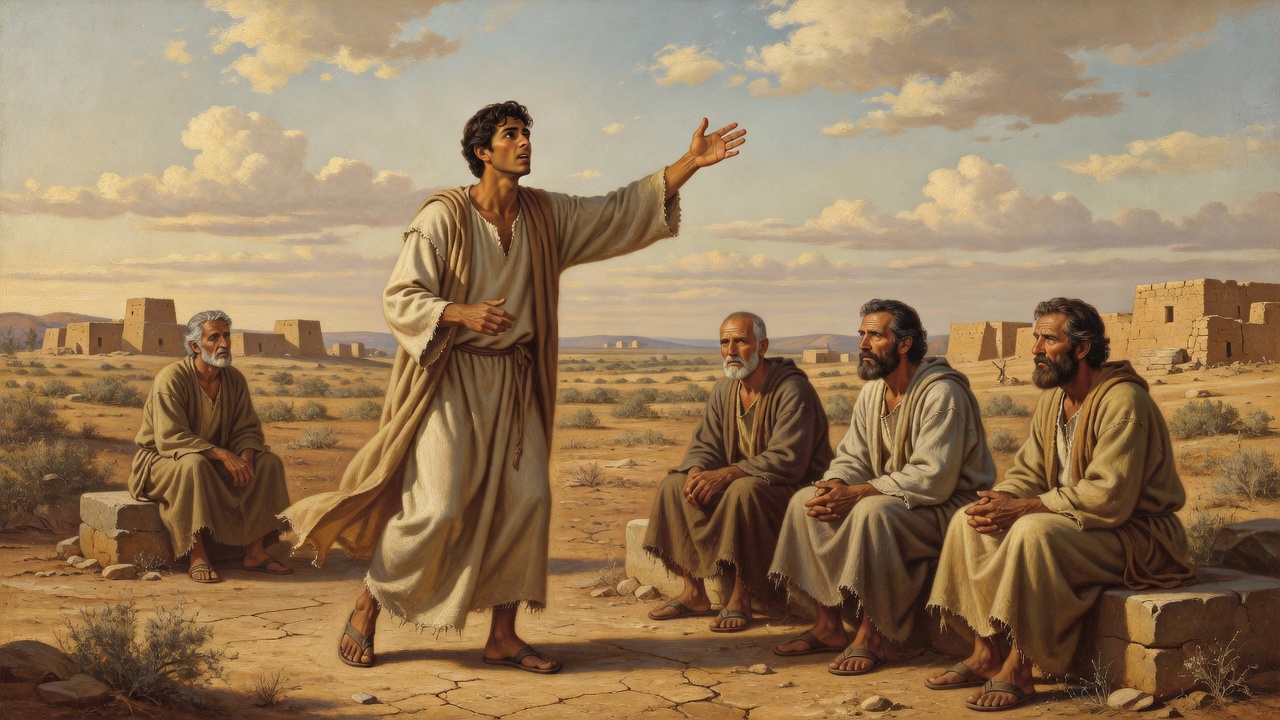
Eliú sobre la Independencia de Dios y el Clamor Humano
- Eliú interviene después de que el debate entre Job y sus tres compañeros ha concluido, ofreciendo una serie de discursos a lo largo de los capítulos 32 al 37.Fuentes: Elihu · el propio texto bíblico
- En este capítulo, Eliú defiende la trascendencia de Dios al pedirle a Job que contemple los cielos y las nubes, argumentando que el pecado humano no perjudica a Dios ni la rectitud humana lo enriquece.Fuentes: el propio texto bíblico
- Eliú también explica por qué los clamores de auxilio bajo la opresión a veces no reciben respuesta, sosteniendo que las personas a menudo claman solo por alivio del sufrimiento en lugar de buscar con humildad a Dios, su Hacedor.Fuentes: el propio texto bíblico
Notas escritas con ayuda de IA a partir de fuentes abiertas (Theographic Bible Metadata, CC BY-SA 4.0; Easton’s Bible Dictionary, dominio público) y revisadas antes de publicarse.
Créditos y licencia de esta traducción
Kitaaba Woyyuu
Oromo, Borana-Arsi-Guji: Kitaaba Woyyuu (Bible)
copyright © 2025 The Word for the World International
Language: gujii
Contributor: Bible Society of Ethiopia
This translation is made available to you under the terms of the
Creative Commons Attribution Share-Alike license 4.0.
You have permission to share and redistribute this Bible translation in any format and to make reasonable revisions and adaptations of this translation, provided that:
You include the above copyright and source information.
If you make any changes to the text, you must indicate that you did so in a way that makes it clear that the original licensor is not necessarily endorsing your changes.
If you redistribute this text, you must distribute your contributions under the same license as the original.
Pictures included with Scriptures and other documents on this site are licensed just for use with those Scriptures and documents.
For other uses, please contact the respective copyright owners.
Note that in addition to the rules above, revising and adapting God's Word involves a great responsibility to be true to God's Word. See Revelation 22:18-19.
2025-05-02
Fuente: http://ebible.org/gax/ · eBible.org