Apocalipsis 7
Alkawal Kesal · Toca un versículo para ver sus referencias cruzadas.
Himɓe 144 000 waɗanaaɓe maane Alla
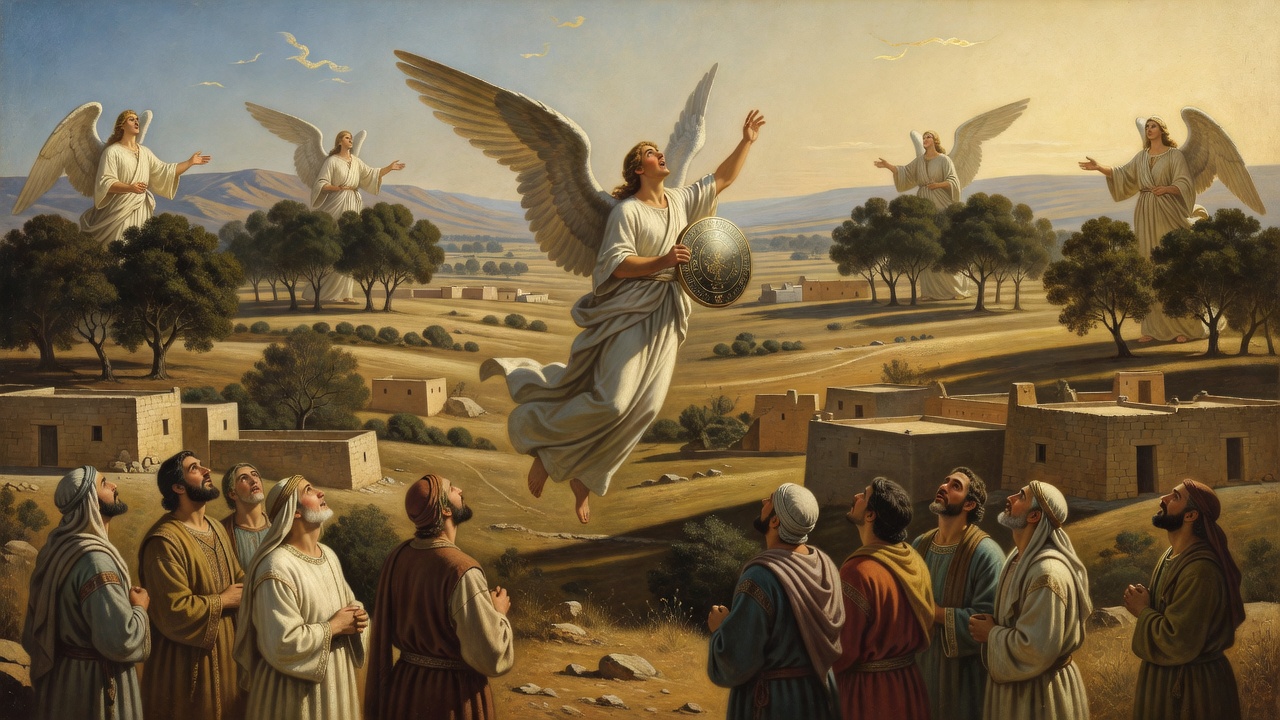
1Ɓaawo majjum, ji'umi malaykaaɓe nayo e darii to gooraaje duuniyaaru naay. Ɓee kaɗa keni duuniyaaru naay wifugo dow leydi, e dow maayo, e dow leɗɗe. 2Ji'umi kade malaykaajo goɗɗo ƴiwoy diga lettugal, e jogii maanorɗum Alla yonkinteejo. O baddi malaykaaɓe nayo e daane towne, hokkaaɓe baawɗe waɗango leydi, e maayo ko halli. 3O wi'i ɓe: «To on gaɗanee taw leydi, e maayo, e leɗɗe ko halli, faa to en gaɗanii maccuɓe Alla meeɗen maane dow tiiɗe.» 4Den nanumi limgal waɗanaaɓe maane dow tiiɗe mum: Ɓe gaɗii himɓe ujune hemure e lasoy ɗiɗo e nayo (144 000) ƴiwuɓe diga lenyi Isira'iilaaɓe fu.
5Ƴiwuɓe e lenyol Yahuuda, ujune sappo e ɗiɗo (12 000).
Ƴiwuɓe e lenyol Ruben, ujune sappo e ɗiɗo (12 000).
Ƴiwuɓe e lenyol Gada, ujune sappo e ɗiɗo (12 000).
6Ƴiwuɓe e lenyol Aser, ujune sappo e ɗiɗo (12 000).
Ƴiwuɓe e lenyol Neftali, ujune sappo e ɗiɗo (12 000).
Ƴiwuɓe e lenyol Manaasa, ujune sappo e ɗiɗo (12 000).
7Ƴiwuɓe e lenyol Simeyon, ujune sappo e ɗiɗo (12 000).
Ƴiwuɓe e lenyol Leewi, ujune sappo e ɗiɗo (12 000).
Ƴiwuɓe e lenyol Isakar, ujune sappo e ɗiɗo (12 000).
8Ƴiwuɓe e lenyol Jabulon, ujune sappo e ɗiɗo (12 000).
Ƴiwuɓe e lenyol Yusufu, ujune sappo e ɗiɗo (12 000).
Ƴiwuɓe e lenyol Benyamin bo, ujune sappo e ɗiɗo (12 000).
Cuuɗi baaba ɗii fu waɗanaama maane.
Jama'aare ɗuunne diga lenyi fu
9Ɓaawo mum daarumi, go ji'umi jama'aare ɗuunne, ne limataako. Ɓe ƴiwii diga e leyɗe fu, e lenyi fu, e himɓe fu, e ɗelle fu. Ɓee darii yeeso kittaal laamu, e yeeso Jawgiyel. Ɓee ɓornii toggooje daneeje, ɓee jogii licce papaaje e juuɗe maɓɓe. 10Ɓee bata e daaɗe towɗe ɓee bi'a: «Kisidam men ƴiwii diga e Alla meeɗen, jooɗiiɗo dow kittaal laamu, kanko e Jawgiyel.» 11Malaykaaɓe fu e fiiltitii kittaal laamu, e dottiiɓe, e huune yonkintejum nayum. Ɓe jiccii yeeso kittaal laamu, ɓe cujidani Alla. 12Ɓee bi'a:
«Aami! Maantoore, e tedduŋal,
e faamu, e jettooje, e manŋu, e baawɗe,
e semme woodani Alla meeɗen faa abada!»
13Den gooto der dottiiɓe ƴamimmi wi'i: «Ɓeey nun himɓe ɓorniiɓe toggooje daneeje? Toy ɓe ƴiwi?» 14Toonti moo mi: «Joomiraawo am, an nun anni.» Go o wi'immi: «Kamɓe woni ƴiwoyɓe diga toora mawka. Ɓe loonnii toggooje maɓɓe, ɓe dawnini ɗe e ƴiiƴam Jawgiyel. 15Gam majjum ɓe gonii yeeso kittaal laamu Alla. Ɓee cujidana mo jemma e nyalooma der suudu Alla makko ceniinu. Jooɗiiɗo dow kittaal laamu reenan ɓe. 16Ɓe dafataake, ɓe ɗonɗataake, naaŋe fiyataa ɓe, guli bo waɗataa ɓe. 17Gam Jawgiyel gonuŋel caka kittaal laamu duran ɓe. Ŋel yaaran ɓe to ciiɓiije diyam kokkoojam yonki. Alla moytan gonɗi gite maɓɓe fu.»
¿Sabías que…?
Las tribus selladas y la gran multitud
- Apocalipsis 7 presenta el número de los sellados como 144,000, doce mil de cada una de las tribus de Israel nombradas en el capítulo. Israel era otro nombre de Jacob, el segundo de los hijos gemelos de Isaac y Rebeca; el Easton's Bible Dictionary (1897) explica el nombre de Jacob como alguien que sigue los talones de otro, o un suplantador.Fuentes: el propio texto bíblico · Jacob (Israel)
- Aunque Rubén era el hijo mayor de Jacob y Lea, la lista de los sellados comienza con Judá y luego nombra a Rubén. La lista incluye también tanto a José como a Manasés; Manasés era el hijo mayor de José, y Jacob lo adoptó a él y a su hermano Efraín como hijos propios.Fuentes: el propio texto bíblico · Reuben · Manasseh (son of Joseph)
- Después del sellado, la visión muestra una multitud demasiado grande para contarse, de toda nación, tribu, pueblo y lengua, de pie ante el trono y el Cordero, con vestiduras blancas y ramas de palma en las manos. Uno de los ancianos dice que han salido de la gran tribulación y han lavado sus vestiduras, dejándolas blancas en la sangre del Cordero.Fuentes: el propio texto bíblico
Notas escritas con ayuda de IA a partir de fuentes abiertas (Theographic Bible Metadata, CC BY-SA 4.0; Easton’s Bible Dictionary, dominio público) y revisadas antes de publicarse.
Créditos y licencia de esta traducción
Alkawal Kesal
Portions of the New Testament in the Fulfulde Borgu language of Benin
copyright © 2011 SIM International
Language: Fulfulde Borgu (Fulfulde, Borgu)
Translation by: SIM
This translation text is made available to you under the
terms of the Creative Commons License: Attribution-Noncommercial-No Derivative Works.
( http://creativecommons.org/licenses/by-nc-nd/3.0/ )
In addition, you have permission to port the text to different file formats, as long as you
do not change any of the text or punctuation of the Bible.
You may share, copy, distribute, transmit, and extract portions
or quotations from this work, provided that you include the above copyright
information:
You must give Attribution to the work.
You do not sell this work for a profit.
You do not make any derivative works that change any of the actual words or punctuation of the Scriptures.
Permissions beyond the scope of this license may be
available if you contact
us with your request.
This translation is made available to you under the terms of the
Creative Commons Attribution-Noncommercial-No Derivatives license 4.0.
You may share and redistribute this Bible translation or extracts from it in any format, provided that:
You include the above copyright and source information.
You do not sell this work for a profit.
You do not change any of the words or punctuation of the Scriptures.
Pictures included with Scriptures and other documents on this site are licensed just for use with those Scriptures and documents.
For other uses, please contact the respective copyright owners.
2014-10-16
Fuente: http://ebible.org/fue/ · eBible.org