Mateo 10
Aadi keyri: linjiila iisaa almasiihu · Toca un versículo para ver sus referencias cruzadas.
No Iisaa suɓorii nelaaɓe sappo e ɗiɗon
1Iisaa noddi taalibaaɓe mum sappo e ɗiɗon ɓee, o hokki ɓe baawɗe ribbugol seyɗaani'en e sellingol sii ɲawuuji e ellaaji fuu. 2Inɗe nelaaɓe sappo e ɗiɗon ɓee annii: arano e maɓɓe yo Simon noddirteeɗo Piyeer e Andire miɲum, Yaakuuba ɓii Jebede e Yuhanna miɲum, 3Filipa e Bartolome, Tomaa e Matta duwaaɲe oo, Yaakuuba ɓii Alfaa, kaɲum e Tadde, 4Simon kiranoowo suudu baaba e Yahuuda Isikariyota jammbotooɗo mo oo.
No Iisaa neliri taalibaaɓe mum sappo e ɗiɗon ɓee
5Iisaa neli ɓeen sappo e ɗiɗon, o wii ɓe:
—Pati njehee e leyɗe ɗe Yahuudiyankooɓe ngalaa e mum ɗee, kasen duu pati naatee e geelle Samariya. 6To baali suudu Israa'iila majjuɗi ɗii kaan-ɗon yaade. 7To njahaton fuu, ooynee mbiyon «Laamu Laamɗo ɓattiima!» 8Cellinon ɲawɓe, nguurtinon maayɓe, cellinon seppaaɓe, ndibbon seyɗaani'en. On keɓirii nii tan, ndokkiree nii tan. 9Pati naɓoree kaŋŋe naa cardi naa mbuuɗu jakawalle e njiibaaji mooɗon. 10Pati fay gooto e mooɗon naɓora mbasu naa saayaaji ɗiɗi. Pati fay gooto e mooɗon ɓama paɗe naa sawru. Sabi golloowo ana haandi e nguure.
11So tawii on ngarii e ngeenndi naa wuro, tewtee njaatigi lobbo, kasen keddee njaatigi mon ɗoo faa nde iw-ɗon ɗon. 12So oɗon naata e galle, calminon. 13So galle oo ana haandi hen, yo jam mon yotto mo. Kaa so mo haandaa hen, yo jam mon wartu e mon. 14So won galle naa ngeenndi ɗo on njaɓɓaaka naa on kettindaaka, njaltee nokku oo, piɗɗon colla koyɗe mon duu. 15Miɗo haalana on goonga: ɲannde darngal, jukkungo ndiin ngeenndi ɓuran ngo geelle Sodooma e Gomoora ngoo naawde.
Haala torraaji garooji
16—Kettindee! Mi nelii on no baali hakkunde pobbi nii. Ndennoo, ƴoƴiree no boje nii, neworee no buugaaji nii. 17Ndeento-ɗon e yimɓe ɓee, sabi ɓe ndarnan on e carirɗe, ɓe piyan on dorri ley cuuɗi maɓɓe baajorɗi. 18On naɓete yeeso sarooɓe e kaanankooɓe saabe am, faa laatano-ɗon kam seedee'en yeeso maɓɓe kamɓe e heeferɓe ɓee. 19So on ndarnaama e sarirde, pati mbemmbe-ɗon no kaaldaton naa ko kaalaton. Sabi on ndokkete konngi ɗi kaan-ɗon haalde e oon wakkati, 20ɗi iwataa e mooɗon, ko selli hen dee, Ruuhu Baabiraaɗo mooɗon oo haalata ley mooɗon. 21Neɗɗo hokkitiran sakiike mum waree, baabiraaɗo duu ɓiyum. Ɓiɓɓe immanto saaraaɓe mum'en, piya dabare yalla ɓeen ana mbaree. 22Yimɓe fuu mbaɲan on saabe am. Kaa muɲuɗo faa timmooɗe, joomum hisinte. 23So on torraama e ngeenndi ngootiri, ndoganee ngonndi. Miɗo haalana on goonga: on piltidataako geelle Israa'iila ɗee fuu tawa Ɓii Neɗɗo wartaali.
24Taalibbo ɓuraa moobbo mum, maccuɗo ɓuraa kalfaaɗo mum. 25Ana yiɗaa taalibbo wuurda no moobbo mum wuurdi fuu, maccuɗo duu no kalfaaɗo mum wuurdi. Miin duu, mi noddiraama «Beelsebul» (hooreejo seyɗaani'en), wanaa haala mon onon.
Haala kulol Laamɗo
26—Ndennoo, pati kulee yimɓe. Walaa fuu ko suuɗii ko ɓanngintaake, walaa sirri mo saakataake. 27Ko kaalan-mi on e nimre koo, kaaltee ɗum e fooyre. Ko ngunndante-ɗon koo, ooynee ɗum dow beneeji. 28Pati kulee warooɓe terɗe, ɓe mbaawanaa yonkiiji. Laamɗo baawɗo halkude terɗe e yonkiiji fuu e jahannama, oo kaan-ɗon hulde. 29Tama biiwuuji ɗiɗi coottataake mbuuɗu? Kaa fay gootel e majji yanataa e leydi tawa wanaa e sago Baabiraaɗo mooɗon oo. 30Onon, fay leeɓi ko'e mon fuu ko limaa. 31Ndennoo, pati kulee, sabi onon ɓuri biiwuuji keewɗi teentilaade.
32Neɗɗo fuu ceettaniiɗo kam yeeso yimɓe, miin duu, mi seettanto ɗum yeeso Baabiraaɗo am gonɗo dow kammu oo. 33Kaa calaniiɗo kam hakkunde yimɓe fuu, miin duu, mi salanto ɗum yeeso Baabiraaɗo am gonɗo dow kammu oo.
No Iisaa laatorii sabaabu ceeraagu yimɓe
34—Pati miilee jam ngardu-mi e leydi ndii. Mi wardaali e jam, kaafaawi ngardu-mi. 35Ko waddi kam dee, seenndude ɓiɗɗo gorko e baam mum, ɓiɗɗo debbo e inna mum, debbo ɓamaaɗo e esum debbo. 36Neɗɗo fuu koreeji mum laatotoo wayɓe mum. 37Korsinɗo inna mum naa baam mum faa ɓuri kam fuu, wanaa potuɗo laataade taalibbo am. Korsinɗo ɓiyum gorko naa debbo faa ɓuri kam fuu, wanaa potuɗo laataade taalibbo am. 38Mo ɓamaali leggal mum bardugal, jokka e am fuu, wanaa potuɗo laataade taalibbo am. 39Tewtuɗo reenude yonki mum fuu, waasan ki, kaa baasirɗo ki sabaabu am, hewtan ki.
Haala mbarjaari
40—Jaɓɓiiɗo on fuu jaɓɓiima kam, jaɓɓiiɗo kam fuu jaɓɓiima nelɗo kam oo. 41Jaɓɓiiɗo annabaajo saabe o annabaajo fuu, heɓan mbarjaari ndi annabaajo fodanaa ndii. Jaɓɓiiɗo neɗɗo pooccitiiɗo saabe o pooccitiiɗo fuu, heɓan mbarjaari ndi pooccitiiɗo fodanaa ndii. 42Miɗo haalana on goonga: neɗɗo fuu dokkuɗo ɓurɗo famɗude e taalibaaɓe am ɓee fay so horde loonde ndiyam ɓuuɓuɗam tan saabe o taalibbo am, o waasataa heɓude mbarjaari makko.
¿Sabías que…?
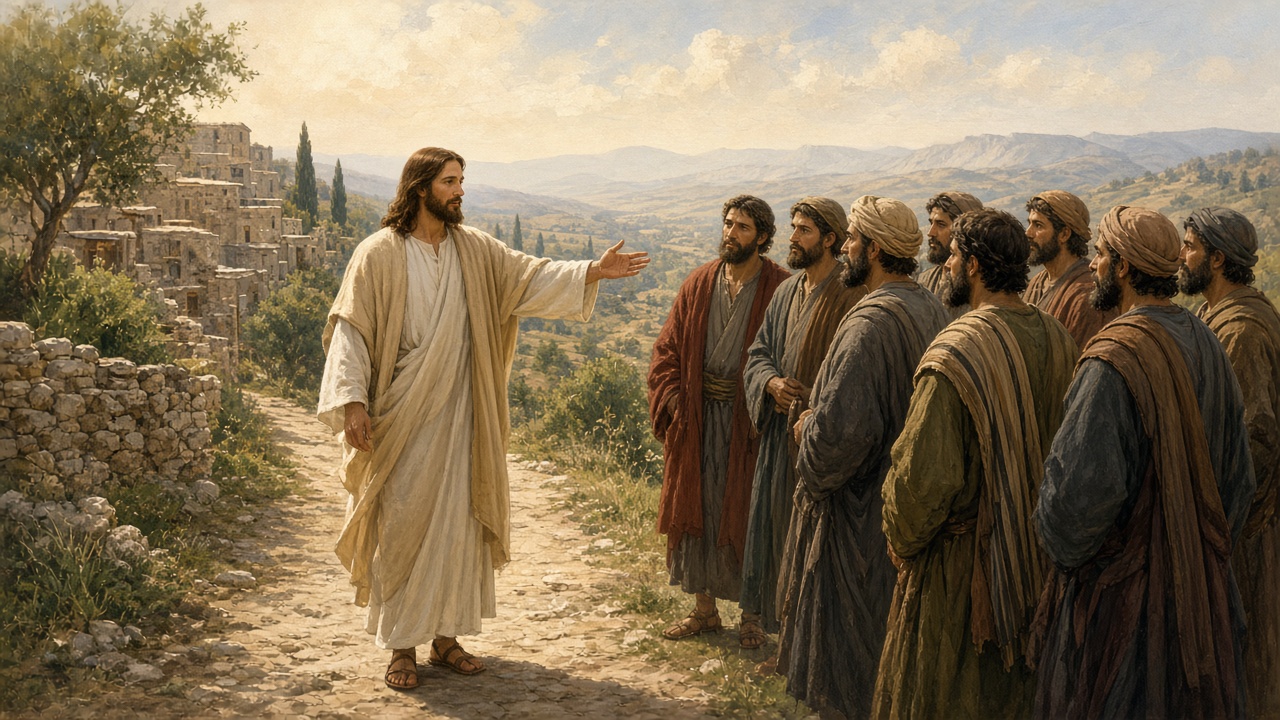
Los doce enviados en misión
- Simón, llamado Pedro, y su hermano Andrés —la primera pareja nombrada entre los doce— eran pescadores de Betsaida, en la costa occidental del mar de Galilea. Santiago y Juan, mencionados a continuación, eran hijos de Zebedeo, un pescador de Galilea que tenía sus propias barcas y jornaleros.Fuentes: el propio texto bíblico · Simon Peter · Andrew · Zebedee
- Mateo, identificado en la lista como el recaudador de impuestos, era hijo de Alfeo y antes se conocía como Leví; cobraba impuestos en Capernaúm, y el nombre Mateo significa “don de Dios”. Tomás, nombrado junto a él, también era llamado Dídimo, el equivalente griego del nombre hebreo, que significa “gemelo”. Bartolomé significa “hijo de Tolmai” y, por lo general, se supone que es la misma persona que Natanael.Fuentes: el propio texto bíblico · Matthew · Thomas · Bartholomew
- Jesús advierte que el día del juicio será más tolerable para Sodoma y Gomorra que para un pueblo que rechace a los doce apóstoles. El Diccionario Bíblico de Easton (1897) describe esas ciudades de la llanura de Sidim como destruidas por fuego y proverbiales por su maldad, y las ubica, probablemente juntas, cerca del extremo norte de lo que hoy es el mar Muerto.Fuentes: el propio texto bíblico · Sodom · Gomorrah
Notas escritas con ayuda de IA a partir de fuentes abiertas (Theographic Bible Metadata, CC BY-SA 4.0; Easton’s Bible Dictionary, dominio público) y revisadas antes de publicarse.
Créditos y licencia de esta traducción
Aadi keyri: linjiila iisaa almasiihu
New Testament in Fulfulde, Maasina
copyright © 2005 Wycliffe Bible Translators, Inc.
Language: Maasina Fulfulde (Fulfulde, Maasina)
Translation by: Wycliffe Bible Translators
Contributor: Wycliffe Bible Translators, Inc.
Copyright Information
© 2005,Wycliffe Bible Translators, Inc. All rights reserved.
This translation text is made available to you under the terms of the Creative Commons
License: Attribution-Noncommercial-No Derivative Works. ( http://creativecommons.org/licenses/by-nc-nd/3.0/ ) In addition, you have permission to
port the text to different file formats, as long as you do not change any of the text or
punctuation of the Bible.
You may share, copy, distribute, transmit, and extract portions or quotations from this work,
provided that you include the above copyright information:
You must give Attribution to the work.
You do not sell this work for a profit.
You do not make any derivative works that change any of the actual words or punctuation of
the Scriptures.
Permissions beyond the scope of this license may be available if you contact us with your
request.
The New Testament
in Fulfulde, Maasina
© 2005, Wycliffe Bible Translators, Inc. All rights
reserved.
This translation is made available to you under the terms of the
Creative Commons Attribution-Noncommercial-No Derivatives license 4.0.
You may share and redistribute this Bible translation or extracts from it in any format, provided that:
You include the above copyright and source information.
You do not sell this work for a profit.
You do not change any of the words or punctuation of the Scriptures.
Pictures included with Scriptures and other documents on this site are licensed just for use with those Scriptures and documents.
For other uses, please contact the respective copyright owners.
2015-03-17
Fuente: http://ebible.org/ffm/ · eBible.org