Salmos 68
Biblica® Se aɖeke mebla Biblia zazã o Agbenya La™ · Toca un versículo para ver sus referencias cruzadas.
David ƒe ha na hɛnɔ la.
1Mawu tso, na wò futɔwo naka hlẽ,
na wò ketɔwo nasi le nuwò.
2Gbɔ wo ɖa abe ale si ya gbɔa dzudzɔ dzonae ene.
Abe ale si yɔkumi lolõna le dzo nu ene la,
nenema ame vɔ̃ɖiwo atsrɔ̃e le Mawu ŋkume.
3Ke ame dzɔdzɔewo ya akpɔ dzidzɔ,
atso aseye le Mawu ŋkume;
na woakpɔ dzidzɔ, eye woatu aglo.
4Midzi ha na Mawu,
midzi kafukafuha na eƒe ŋkɔ,
mido ame si le lilikpowo dzi gbɔna la ɖe dzi,
eŋkɔe nye Yehowa, eye mitso aseye le eŋgɔ;
5eya ame si nye tɔ na tɔmanɔsitɔwo,
ahosiwo ta ʋlila, eye wònye Mawu si le enɔƒe kɔkɔe la.
6Mawu kplɔa ame siwo tsi akogo la dea ƒomewo me,
enana ablɔɖe gamenɔlawo, eye wodzia dzidzɔhawo.
Ke ame dzeaglãwo la, egblẽa wo ɖe kuɖiɖinyigba dzi.
7O! Mawu, ne èdo dze wò dukɔ la ŋgɔ,
hezɔ to gbegbe la, Sela
8anyigba ʋuʋu, dziƒowo dza tsi bɔbɔbɔ le Mawu,
si nɔ Sinai la ŋkume, le Mawu,
Israel ƒe Mawu la ŋkume.
9O! Mawu, èna tsi dza fũu,
eye nèna wò domenyinu si nu ti kɔ na
belibelibeli la gakpɔ ŋusẽ.
10Mawu, wò amewo yi ɖanɔ edzi,
eye tso wò nu gbogboawo me, èna nu ame dahewo.
11Aƒetɔ ɖe gbeƒã nya la,
eye ameha gã aɖe do ɣli kplii be,
12“Fiawo kple aʋakɔwo, misi kaba,
elabena amewo le afunyinuwo ham le asaɖawo me.
13Esi miele alɔ̃ dɔm le lãkpowo dome la,
wotsɔ klosalo fa ɖe nye ahɔnɛ ƒe aʋala ŋu,
eye wotsɔ sika si le keklẽm la fa ɖe eƒe fuwo ŋuti.”
14Esi Ŋusẽkatãtɔ la kaka anyigbadzifiawo hlẽ la,
enɔ abe tsikpee dza ɖe Zalmɔn dzi ene.
15Basan towo ƒe dzedzeme
kple kɔkɔme nya kpɔ ŋutɔ;
to tsaklitsakliwo Basan toawo nye.
16O! To tsaklitsakliwo,
nu ka ta mietsɔ ŋuʋaʋã ƒe ŋku
le to si Mawu tia be wòanye yeƒe fiazikpui ƒe nɔƒe
kple Yehowa ŋutɔ ƒe nɔƒe tegbee la kpɔmii?
17Mawu ƒe tasiaɖamwo nye akpe nanewo
kple akpe teƒe akpewo;
Aƒetɔ la tso Sinai va ɖo eƒe teƒe kɔkɔe la.
18Esi nèlia yi dzi la, ètɔ ka aboyomewo hekplɔ dzoe,
èxɔ nunana tso amewo gbɔ,
tso aglãdzelawo gɔ̃ hã gbɔ, be wò,
O! Yehowa Mawu, àte ŋu anɔ afi ma.
19Kafukafu woana Aƒetɔ, Mawu míaƒe Ɖela,
ame si tsɔa míaƒe agbawo gbe sia gbe. Sela
20Míaƒe Mawu nye Mawu si xɔna na ame;
ɖeɖe tso ku me vana to Aƒetɔ Yehowa ko dzi.
21Vavã, Mawu agbã ta na eƒe futɔwo
kple dzodome na ame siwo gale woƒe nu vɔ̃wo dzi yim.
22Aƒetɔ la gblɔ be,
“Makplɔ wo vɛ tso Basan;
makplɔ wo ado goe tso atsiaƒu ƒe gogloƒe ke,
23be nàklɔ afɔ ɖe wò futɔwo ƒe ʋu me,
eye wò avuwo ƒe aɖewo hã nakpɔ wo tɔ gome.”
24O! Mawu, wole míaƒe azɔlime kpɔm,
wole ale si nye Mawu
kple fianye zɔ ge ɖe kɔkɔeƒe lae la kpɔm.
25Woɖo ɖe fli me, hadzilawo le ŋgɔgbe,
hafialawo ɖo, eye ɖetugbi siwo
le axatsɛ ƒom la tsɔ wo ɖe dome.
26Mikafu Mawu le ameha gã la dome.
Mikafu Yehowa le Israelviwo ƒe takpekpe me.
27Kpɔ ɖa, Benyamin ƒe to si nye suetɔ lae le ŋgɔ na wo,
Yuda ƒe dumegã gbogboawo le afi ma,
eye Zebulon kple Naftali ƒe amegãwo hã le afi ma.
28O! Mawu, yɔ wò ŋusẽ vɛ;
O! Mawu, ɖe wò ŋusẽ fia mí abe tsã ene.
29Le wò Yerusalem gbedoxɔ ta la,
fiawo atsɔ nunanawo vɛ na wò.
30Blu ɖe lã wɔadã siwo le aƒlawo me
kple nyitsuwo ƒe ha siwo le dukɔwo ƒe nyiviwo dome la ta.
Netsɔ klosalokɔ gãwo vɛ le ɖokuibɔbɔ me.
Kaka dukɔ siwo aʋawɔwɔ doa dzidzɔ na.
31Ame dɔdɔwo atso Egipte ava,
eye Kus abɔbɔ eɖokui ɖe Mawu te.
32O! Mi anyigbadzifiaɖuƒewo,
midzi ha na Mawu,
midzi kafukafuha na Aƒetɔ la, Sela
33Eya ame si nɔ blemalilikpowo dzi,
eye wòɖe gbe kple gbe sesẽ aɖe.
34Miɖe gbeƒã Mawu ƒe ŋusẽ,
ame si ƒe atsyɔ̃ le Israel dzi,
eye eƒe ŋusẽ le dziŋgɔli ŋu.
35O! Mawu, ŋɔdzi le ŋuwò le wò kɔkɔeƒe la;
Israel ƒe Mawu la na ŋusẽ
kple ŋutete eƒe dukɔ la.
Woakafu Mawu!
¿Sabías que…?
El Dios Victorioso de Israel
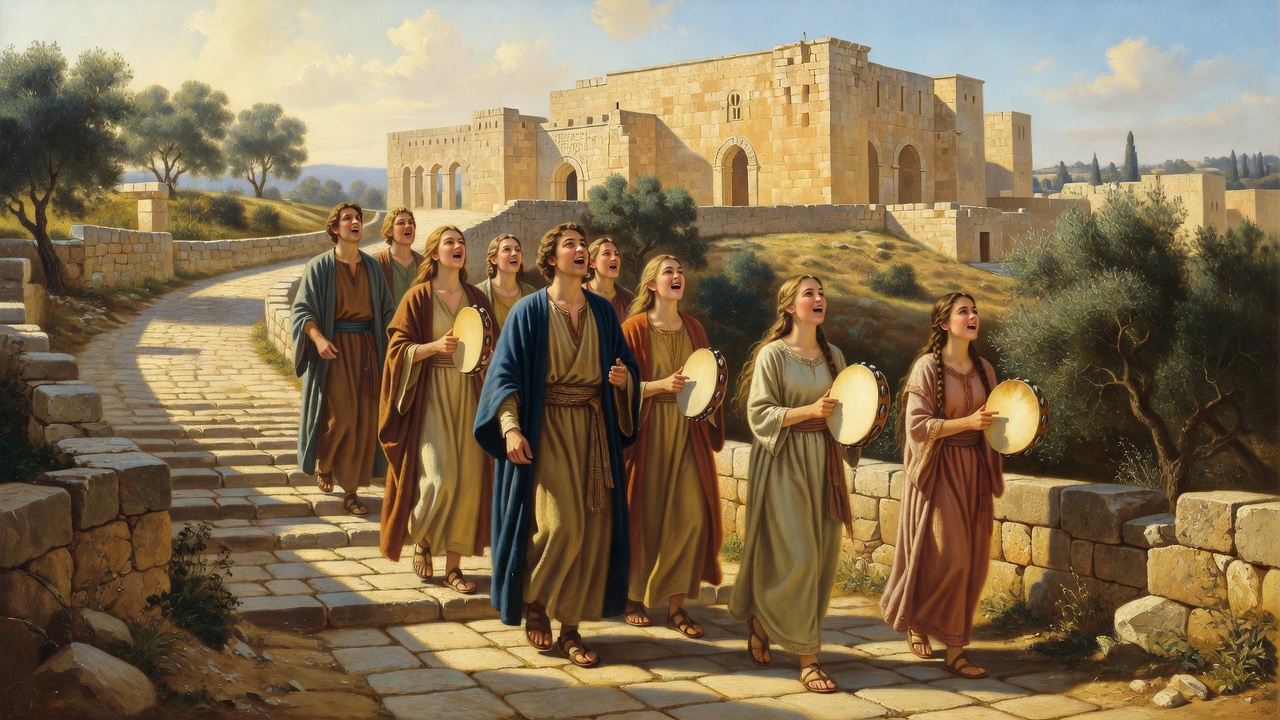
- El salmo describe una gran procesión festiva hacia el santuario, encabezada por cantores, músicos y jóvenes que tocan panderos. Representantes tanto de tribos del sur, como el pequeño Benjamín y Judá, como del norte, como Zabulón y Neftalí, se unen en la celebración.Fuentes: el propio texto bíblico · Benjamin (patriarch) · Zebulun · Naphtali
- El texto contrasta el imponente monte de Basán, con sus múltiples cumbres, con el monte que Dios eligió para Su morada en Jerusalén. También compara la dispersión de los reyes derrotados por la tierra con la nieve que cae sobre Salmón, un monte boscoso cerca de Siquem.Fuentes: el propio texto bíblico · Bashan · Zalmon · Jerusalem
- Más allá de Israel, el salmo prevé que las naciones extranjeras se someterán y llevarán tributos a Jerusalén. Menciona expresamente la llegada de emisarios desde Egipto y de la tierra de Cus, al sur, extendiendo sus manos hacia Dios.Fuentes: el propio texto bíblico · Egypt · Cush · Jerusalem
Notas escritas con ayuda de IA a partir de fuentes abiertas (Theographic Bible Metadata, CC BY-SA 4.0; Easton’s Bible Dictionary, dominio público) y revisadas antes de publicarse.
Lugares de este capítulo
- Egypt · 30.129, 31.308 · versículos 7, 31
- Mount Bashan · Hoy: Jebel Druze · 32.667, 36.733 · versículo 15
- Mount Zion · 31.772, 35.229 · versículo 16
- Holy Place · Hoy: on Mount Moriah · 31.778, 35.236 · versículo 17
- Bashan · 32.781, 35.935 · versículo 22
- Jerusalem · 31.777, 35.234 · versículo 29
- Cush · Hoy: Cush 1 · 16.935, 33.751 · versículo 31
Solo aparecen lugares identificados con alta confianza (90 % o más según las fuentes académicas reunidas por OpenBible). Mapa de la época: DARE (Digital Atlas of the Roman Empire), CC BY 4.0; mapa actual: © colaboradores de OpenStreetMap; lugares: OpenBible.info (CC BY 4.0).
Créditos y licencia de esta traducción
Biblica® Se aɖeke mebla Biblia zazã o Agbenya La™ Éwé: Biblica® Se aɖeke mebla Biblia zazã o Agbenya La™ (Bible) of Ghana copyright © 1988, 2006, 2020 Biblica, Inc. Language: eʋegbe Contributor: Biblica, Inc. Dɔwɔƒe si na wò asi ka agbalẽ sia lae nye Creative Commons Attribution-ShareAlike 4.0 International License (CC BY-SA). Ne èdi be yeakpɔ laisensi alo mɔɖegbalẽ sia la, yi ɖe http://creativecommons.org/licenses/by-sa/4.0 alo ŋlɔ agbalẽ na Creative Commons Dɔwɔƒea to adrɛsi sia dzi: Creative Commons, PO Box 1866, Mountain View, CA 94042, USA. Biblica, Inc. na wode Biblica® kple eƒe dzesidenu agbalẽ me, eye woaŋlɔ agbalẽ axɔ mɔɖeɖe tso Biblica, Inc. gbɔ hafi woawɔ Biblica® ƒe dzesidenu la ŋu dɔ. Le CC BY-SA ƒe mɔɖeɖe ƒe sewo nu la, àte ŋu azã agbalẽ sia me nyawo le dɔ bubuwo wɔwɔ me gake ele be nàde dzesi Biblica ƒe dzesidenu la abe ale si wòle ene. Ne ètrɔ asi le agbalẽ sia ŋu alo zãe le mɔ bubu nu la, ele be nàɖe Biblica® ƒe dzesidenu la ɖa. Ele be nàde dzesi tɔtrɔ siwo nèwɔ la ɖe agbalẽ la me eye nàde dzesii be: “Àte ŋu akpɔ Biblica, Inc. ƒe dɔ gbãtɔ le www.biblica.com kple open.bible femaxee.” Ele be nutɔnyenye ƒe dzeside nadze le agbalẽ la ƒe axa si tanya alo nutɔnyenye ƒe dzesi nɔna la ale: Biblica® Se aɖeke mebla Biblia zazã o Agbenya La™ Nutɔnyenye © 1988, 2006, 2020 Biblica, Inc. Biblica® Open Ewe Contemporary Scriptures™ Copyright © 1988, 2006, 2020 by Biblica, Inc. Biblica, Inc. na Dɔwɔƒe si Kpɔa Nutɔnyenye kple Adzɔdodo ƒe Nyawo dzi le Amerika la de “Biblica” kple eƒe dzesidenu agbalẽ me. Woaxɔ mɔɖeɖe na ezazã. “Biblica” is a trademark registered in the United States Patent and Trademark Office by Biblica, Inc. Used with permission. Ele be nàna míaƒe asi naka wò agbalẽ la le laisensi alo mɔɖeɖe ƒe se (CC BY-SA) sia nu. Ne èdi be yeana nyanya Biblica, Inc. tso agbalẽ sia zazã ŋu la, anyo be nàdo ta ɖe mía gbɔ le https://open.bible/contact-us. This work is made available under the Creative Commons Attribution-ShareAlike 4.0 International License (CC BY-SA). To view a copy of this license, visit http://creativecommons.org/licenses/by-sa/4.0 or send a letter to Creative Commons, PO Box 1866, Mountain View, CA 94042, USA. Biblica® is a trademark registered by Biblica, Inc., and use of the Biblica® trademark requires the written permission of Biblica, Inc. Under the terms of the CC BY-SA license, you may copy and redistribute this unmodified work as long as you keep the Biblica® trademark intact. If you modify a copy or translate this work, thereby creating a derivative work, you must remove the Biblica® trademark. On the derivative work, you must indicate what changes you have made and attribute the work as follows: “The original work by Biblica, Inc. is available for free at www.biblica.com and open.bible.” Notice of copyright must appear on the title or copyright page of the work as follows: Biblica® Se aɖeke mebla Biblia zazã o Agbenya La™ Nutɔnyenye © 1988, 2006, 2020 Biblica, Inc. Biblica® Open Ewe Contemporary Scriptures™ Copyright © 1988, 2006, 2020 by Biblica, Inc. Biblica, Inc. na Dɔwɔƒe si Kpɔa Nutɔnyenye kple Adzɔdodo ƒe Nyawo dzi le Amerika la de “Biblica” kple eƒe dzesidenu agbalẽ me. Woaxɔ mɔɖeɖe na ezazã. “Biblica” is a trademark registered in the United States Patent and Trademark Office by Biblica, Inc. Used with permission. You must also make your derivative work available under the same license (CC BY-SA). If you would like to notify Biblica, Inc. regarding your translation of this work, please contact us at https://open.bible/contact-us. This translation is made available to you under the terms of the Creative Commons Attribution Share-Alike license 4.0. You have permission to share and redistribute this Bible translation in any format and to make reasonable revisions and adaptations of this translation, provided that: You include the above copyright and source information. If you make any changes to the text, you must indicate that you did so in a way that makes it clear that the original licensor is not necessarily endorsing your changes. If you redistribute this text, you must distribute your contributions under the same license as the original. Pictures included with Scriptures and other documents on this site are licensed just for use with those Scriptures and documents. For other uses, please contact the respective copyright owners. Note that in addition to the rules above, revising and adapting God's Word involves a great responsibility to be true to God's Word. See Revelation 22:18-19. 2025-05-01
Fuente: http://ebible.org/ewe/ · eBible.org