Levítico 15
Biblica® Se aɖeke mebla Biblia zazã o Agbenya La™ · Toca un versículo para ver sus referencias cruzadas.
Nu siwo dona tso ame ƒe lãme eye wonana ame ŋuti mekɔna o
1Yehowa gblɔ na Mose kple Aron be, 2“Migblɔ na Israelviwo be, ‘Ne ŋutsu aɖe le afu ɖɔm la, eŋuti mekɔ o. 3Ne afua le dodom alo ne enu tso hã la, ŋutsu la ŋu mekɔ o.
4“ ‘Abati si dzi wòmlɔ kple nu si dzi wònɔ hã ŋu mekɔ o, 5eya ta ame si ka asi ŋutsu la ƒe abati ŋu hã ŋuti mekɔ o va se ɖe fiẽ; ele nɛ be wòanya eƒe awuwo, eye wòale tsi. 6Ame si nɔ zikpui si dzi ŋutsu si ŋu mekɔ o nɔ la hã ŋu mekɔ o va se ɖe fiẽ. Ele nɛ be wòanya eƒe awuwo, eye wòale tsi.
7“ ‘Ame si ka asi ŋutsu si le afu ɖɔm ŋuti la ŋuti mekɔ o va se ɖe fiẽ, eye ele nɛ be wòanya eƒe awuwo, ale tsi.
8“ ‘Ne ŋutsu si le afu ɖɔm ɖe ta ɖe ame si ŋuti kɔ ŋu la, ele na ame ma be wòanya eƒe awuwo, ale tsi, eye eŋuti mekɔ o va se ɖe fiẽ.
9“ ‘Nu sia nu si dzi afuɖɔla la anɔ ne ele sɔ dom la, ŋuti mekɔ o, 10eye ame si aka asi nu siwo dzi wònɔ do sɔ la dometɔ aɖe ŋu la ŋuti mekɔ o va se ɖe fiẽ. Nenema ke ame si fɔ nuawo hã la ŋuti mekɔ o va se ɖe fie; ele nɛ be wòanya eƒe awuwo, ale tsi.
11“ ‘Ne ŋutsu si ŋu mekɔ o, meklɔ asi hafi ka asi ame aɖe ŋu o la, ele na amea hã be wòanya eƒe awuwo, ale tsi, eye eŋu makɔ o va se ɖe fiẽ.
12“ ‘Ele be woagbã ze si ŋu ŋutsu la ka asii, eye woaklɔ atinu si ŋu wòka asii.
13“ ‘Ne ŋutsu aɖe ŋu kɔ tso afuɖɔɖɔ me la, nexlẽ ŋkeke adre hena eƒe ŋutikɔklɔ ƒe kɔnu, nenya eƒe awuwo eye wòale tsi nyuie ekema eŋuti akɔ. 14Le ŋkeke enyia gbe la, alé akpakpa eve alo ahɔnɛvi eve, ado ɖe Yehowa ŋkume le Agbadɔ la ƒe mɔnu, eye wòatsɔ wo ana nunɔla la. 15Nunɔla la atsɔ akpakpawo dometɔ ɖeka asa nu vɔ̃ vɔsa, eye wòatsɔ evelia asa numevɔ. Ale nunɔla la alé avu ɖe enu le Yehowa ŋkume le afu si wòɖɔ la ta.
16“ ‘Ɣe sia ɣi si ŋutsu aɖe anye tsi la, ele nɛ be wòale tsi nyuie, eye eŋu makɔ o va se ɖe fiẽ. 17Ele be wòanya nudodo alo ayi si ŋu ŋutsu ƒe tsi la ka la kple tsi, eye eŋu makɔ o va se ɖe fiẽ. 18Ne ŋutsu aɖe dɔ nyɔnu aɖe gbɔ la, ele be wo ame eve la nale tsi, eye wo ŋu mekɔ o va se ɖe fiẽ.
19“ ‘Ne nyɔnu aɖe kpɔ dzinu la, eŋu mekɔ o va se ɖe esime ŋkeke adre nava yi. Le ɣeyiɣi sia me la, ame sia ame si ka asi eŋu la ŋu mekɔ o va se ɖe fiẽ.
20“ ‘Nu sia nu si dzi wòamlɔ alo anɔ le ɣe ma ɣi me la ŋuti mekɔ o. 21Ame sia ame si ka asi eƒe abati ŋu la anya eƒe awuwo, ale tsi, eye eŋu makɔ o va se ɖe fiẽ. 22Ame sia ame si ka asi eƒe nunɔdzi aɖe ŋu la, anya eƒe awuwo, ale tsi, eye eŋu makɔ o va se ɖe fiẽ. 23Eɖanye abati o, eɖanye nu si dzi wònɔ o, ne ame aɖe ka asi eŋu ko la, amea ŋu makɔ o va se ɖe fiẽ.
24“ ‘Ŋutsu si adɔ nyɔnu sia gbɔ le eƒe asiɖoanyiɣi, eye ʋua ƒe ɖe ka eŋu la, eŋuti makɔ o hena ŋkeke adre, eye abati ɖe sia ɖe si dzi wòamlɔ la ŋu makɔ o.
25“ ‘Ne gbɔtotsitsi la xɔ ɣeyiɣi wu ale si wòxɔna tsã alo wòva le ɣeyiɣi trama aɖe dzi le ɣletia me la, ekema nyɔnu la ŋuti mekɔ o, zi ale si ʋu la le dodom abe ale si wònɔna ne wòɖo asi anyi ene. 26Esia fia be nu sia nu si dzi wòamlɔ le ɣeyiɣi ma me la ŋu makɔ o, abe ale si wòanɔ le eƒe gbɔtotsitsi ŋutɔ me ene. Nenema ke nu sia nu si dzi wòanɔ hã ŋu mekɔ o. 27Ame sia ame si ka asi eƒe abati alo nu si dzi wònɔ ŋu la ŋu mekɔ o. Ele be wòanya eƒe awuwo, ale tsi, eye eŋuti makɔ o va se ɖe fiẽ.
28“ ‘Ne gbɔtotsitsi sia nu tso, eye ŋkeke adre va yi la, ekema eŋuti kɔ azɔ. 29Le ŋkeke enyia gbe la, nyɔnu la atsɔ akpakpa eve alo ahɔnɛvi eve ayi na nunɔla la le Agbadɔ la ƒe mɔnu. 30Nunɔla la atsɔ ɖeka asa nu vɔ̃ vɔsa, atsɔ evelia asa numevɔ, eye wòalé avu ɖe enu le Yehowa ŋkume le ale si gbɔtotsitsi na eŋu mekɔ o la ta.
31“ ‘Ale ne Israelviwo ŋu mekɔ o la, miakɔ wo ŋuti; ne menye nenema o la, woagblẽ kɔ ɖo na nye Agbadɔ si le wo dome, eye woaku.’ ”
32Eya ta esiae nye se na ŋutsu si le afu ɖɔm kple ŋutsu si nye tsi, eye eŋu mekɔ o, 33kple se le nyɔnuwo ƒe gbɔtotsitsi ŋu kple se na ŋutsu si adɔ nyɔnu si tsi gbɔto, eye eŋu mekɔ o la gbɔ.
¿Sabías que…?
Leyes sobre Flujos Corporales y Purificación
- Las leyes de pureza en Levítico 15 regulaban los flujos corporales naturales y anormales en hombres y mujeres, los cuales producían impureza ceremonial. Los objetos tocados por una persona con flujo, como camas, asientos y monturas, transmitían impureza, por lo que quien los tocara debía lavar su ropa, bañarse y quedar impuro hasta la tarde.Fuentes: el propio texto bíblico
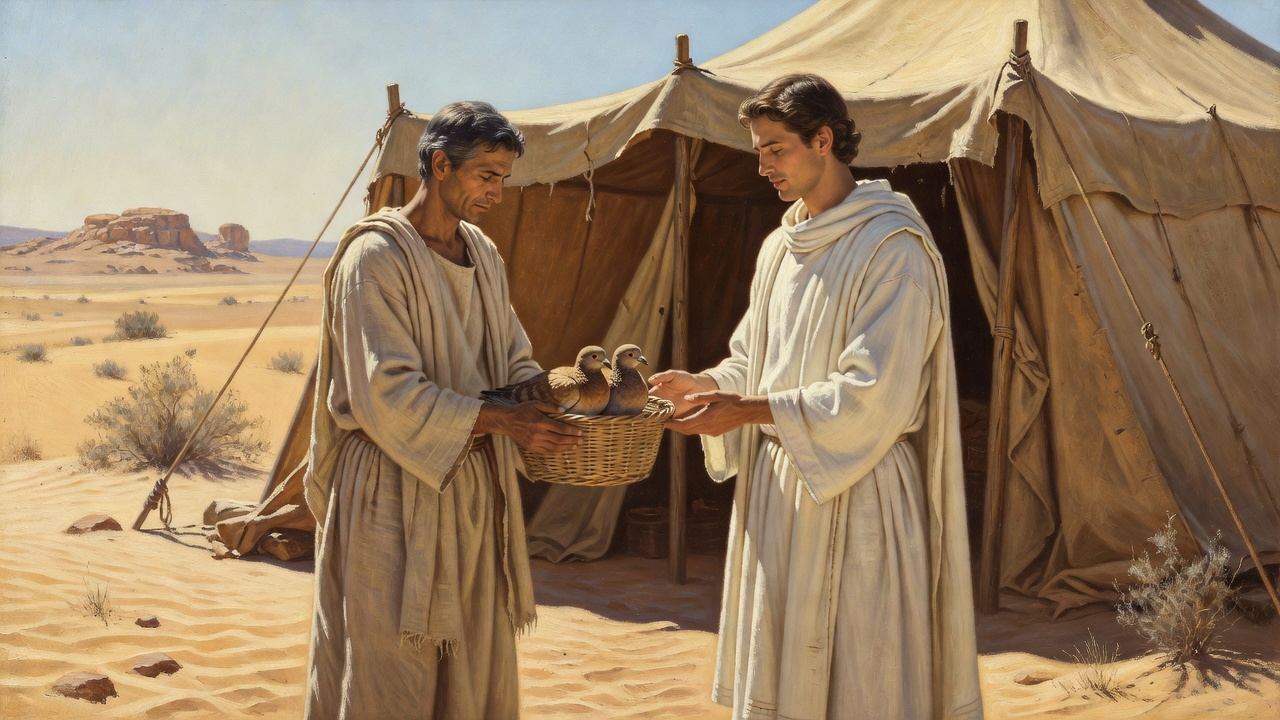
- La purificación de flujos prolongados requería esperar siete días tras la sanidad, lavar las ropas y bañarse en agua fresca. Al octavo día, la persona llevaba dos tórtolas o dos pichones al sacerdote a la entrada de la Tienda de Reunión para ofrecer uno en sacrificio por el pecado y el otro en holocausto.Fuentes: el propio texto bíblico
- El propósito explícito de estas ordenanzas era mantener a los israelitas conscientes de los límites rituales, evitando que profanaran el tabernáculo que permanecía en medio del campamento.Fuentes: el propio texto bíblico
Notas escritas con ayuda de IA a partir de fuentes abiertas (Theographic Bible Metadata, CC BY-SA 4.0; Easton’s Bible Dictionary, dominio público) y revisadas antes de publicarse.
Créditos y licencia de esta traducción
Biblica® Se aɖeke mebla Biblia zazã o Agbenya La™ Éwé: Biblica® Se aɖeke mebla Biblia zazã o Agbenya La™ (Bible) of Ghana copyright © 1988, 2006, 2020 Biblica, Inc. Language: eʋegbe Contributor: Biblica, Inc. Dɔwɔƒe si na wò asi ka agbalẽ sia lae nye Creative Commons Attribution-ShareAlike 4.0 International License (CC BY-SA). Ne èdi be yeakpɔ laisensi alo mɔɖegbalẽ sia la, yi ɖe http://creativecommons.org/licenses/by-sa/4.0 alo ŋlɔ agbalẽ na Creative Commons Dɔwɔƒea to adrɛsi sia dzi: Creative Commons, PO Box 1866, Mountain View, CA 94042, USA. Biblica, Inc. na wode Biblica® kple eƒe dzesidenu agbalẽ me, eye woaŋlɔ agbalẽ axɔ mɔɖeɖe tso Biblica, Inc. gbɔ hafi woawɔ Biblica® ƒe dzesidenu la ŋu dɔ. Le CC BY-SA ƒe mɔɖeɖe ƒe sewo nu la, àte ŋu azã agbalẽ sia me nyawo le dɔ bubuwo wɔwɔ me gake ele be nàde dzesi Biblica ƒe dzesidenu la abe ale si wòle ene. Ne ètrɔ asi le agbalẽ sia ŋu alo zãe le mɔ bubu nu la, ele be nàɖe Biblica® ƒe dzesidenu la ɖa. Ele be nàde dzesi tɔtrɔ siwo nèwɔ la ɖe agbalẽ la me eye nàde dzesii be: “Àte ŋu akpɔ Biblica, Inc. ƒe dɔ gbãtɔ le www.biblica.com kple open.bible femaxee.” Ele be nutɔnyenye ƒe dzeside nadze le agbalẽ la ƒe axa si tanya alo nutɔnyenye ƒe dzesi nɔna la ale: Biblica® Se aɖeke mebla Biblia zazã o Agbenya La™ Nutɔnyenye © 1988, 2006, 2020 Biblica, Inc. Biblica® Open Ewe Contemporary Scriptures™ Copyright © 1988, 2006, 2020 by Biblica, Inc. Biblica, Inc. na Dɔwɔƒe si Kpɔa Nutɔnyenye kple Adzɔdodo ƒe Nyawo dzi le Amerika la de “Biblica” kple eƒe dzesidenu agbalẽ me. Woaxɔ mɔɖeɖe na ezazã. “Biblica” is a trademark registered in the United States Patent and Trademark Office by Biblica, Inc. Used with permission. Ele be nàna míaƒe asi naka wò agbalẽ la le laisensi alo mɔɖeɖe ƒe se (CC BY-SA) sia nu. Ne èdi be yeana nyanya Biblica, Inc. tso agbalẽ sia zazã ŋu la, anyo be nàdo ta ɖe mía gbɔ le https://open.bible/contact-us. This work is made available under the Creative Commons Attribution-ShareAlike 4.0 International License (CC BY-SA). To view a copy of this license, visit http://creativecommons.org/licenses/by-sa/4.0 or send a letter to Creative Commons, PO Box 1866, Mountain View, CA 94042, USA. Biblica® is a trademark registered by Biblica, Inc., and use of the Biblica® trademark requires the written permission of Biblica, Inc. Under the terms of the CC BY-SA license, you may copy and redistribute this unmodified work as long as you keep the Biblica® trademark intact. If you modify a copy or translate this work, thereby creating a derivative work, you must remove the Biblica® trademark. On the derivative work, you must indicate what changes you have made and attribute the work as follows: “The original work by Biblica, Inc. is available for free at www.biblica.com and open.bible.” Notice of copyright must appear on the title or copyright page of the work as follows: Biblica® Se aɖeke mebla Biblia zazã o Agbenya La™ Nutɔnyenye © 1988, 2006, 2020 Biblica, Inc. Biblica® Open Ewe Contemporary Scriptures™ Copyright © 1988, 2006, 2020 by Biblica, Inc. Biblica, Inc. na Dɔwɔƒe si Kpɔa Nutɔnyenye kple Adzɔdodo ƒe Nyawo dzi le Amerika la de “Biblica” kple eƒe dzesidenu agbalẽ me. Woaxɔ mɔɖeɖe na ezazã. “Biblica” is a trademark registered in the United States Patent and Trademark Office by Biblica, Inc. Used with permission. You must also make your derivative work available under the same license (CC BY-SA). If you would like to notify Biblica, Inc. regarding your translation of this work, please contact us at https://open.bible/contact-us. This translation is made available to you under the terms of the Creative Commons Attribution Share-Alike license 4.0. You have permission to share and redistribute this Bible translation in any format and to make reasonable revisions and adaptations of this translation, provided that: You include the above copyright and source information. If you make any changes to the text, you must indicate that you did so in a way that makes it clear that the original licensor is not necessarily endorsing your changes. If you redistribute this text, you must distribute your contributions under the same license as the original. Pictures included with Scriptures and other documents on this site are licensed just for use with those Scriptures and documents. For other uses, please contact the respective copyright owners. Note that in addition to the rules above, revising and adapting God's Word involves a great responsibility to be true to God's Word. See Revelation 22:18-19. 2025-05-01
Fuente: http://ebible.org/ewe/ · eBible.org