Zacarías 9
Young's Literal Translation · Toca un versículo para ver sus referencias cruzadas.
The Burden against Israel’s Enemies
1The burden of a word of Jehovah against the land of Hadrach, and Demmeseh — his place of rest: (When to Jehovah [is] the eye of man, And of all the tribes of Israel.) 2And also Hamath doth border thereon, Tyre and Zidon, for — very wise! 3And Tyre doth build a bulwark to herself, And doth heap silver as dust, And gold as mire of out-places. 4Lo, the Lord doth dispossess her, And He hath smitten in the sea her force, And she with fire is consumed. 5See doth Ashkelon and fear, Also Gaza, and she is exceedingly pained, Also Ekron — for her expectation dried up, And perished hath a king from Gaza, And Ashkelon doth not remain, 6And dwelt hath a foreigner in Ashdod, And I have cut off the excellency of the Philistines. 7And turned aside his blood from his mouth, His abominations from between his teeth, And he hath remained, even he, to our God, And he hath been as a leader in Judah, And Ekron as a Jebusite. 8And I have pitched for My house a camp, Because of the passer through, and of the returner, And pass not through against them again doth an exactor, For, now, I have seen with My eyes.
Zion’s Coming King
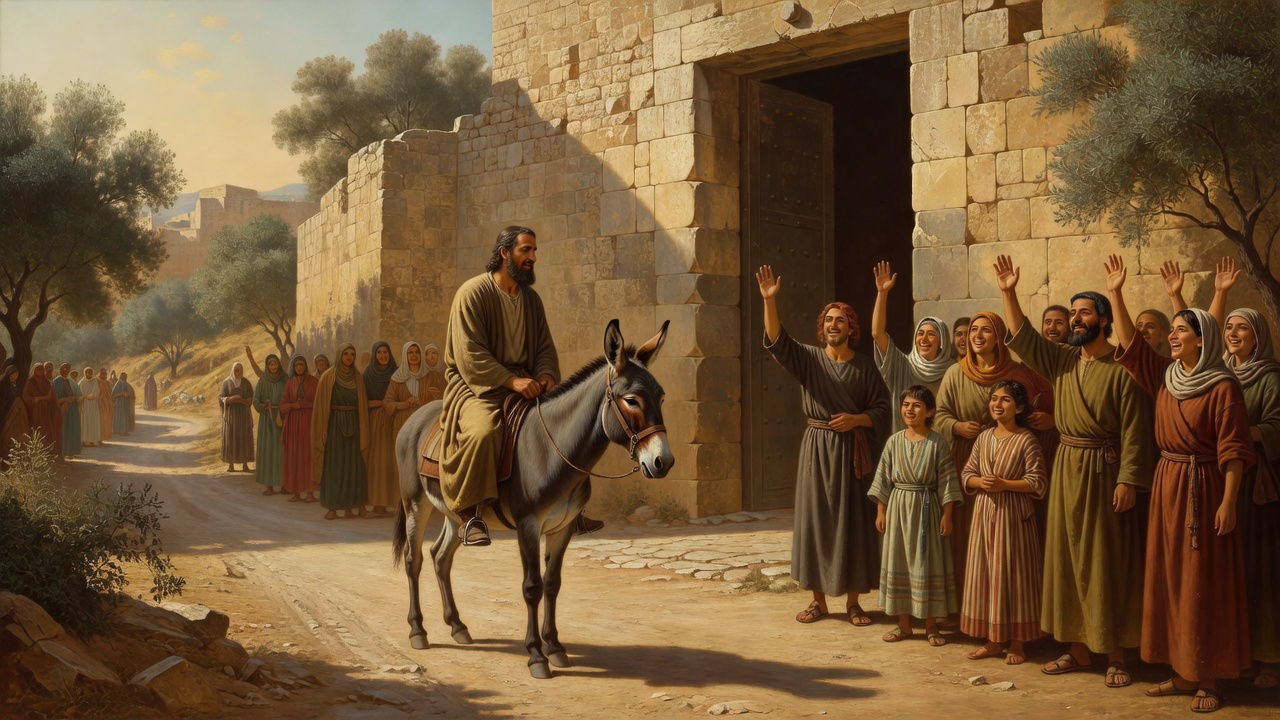
9Rejoice exceedingly, O daughter of Zion, Shout, O daughter of Jerusalem, Lo, thy King doth come to thee, Righteous — and saved is He, Afflicted — and riding on an ass, And on a colt — a son of she-asses. 10And I have cut off the chariot from Ephraim, And the horse from Jerusalem, Yea, cut off hath been the bow of battle, And he hath spoken peace to nations, And his rule [is] from sea unto sea, And from the river unto the ends of earth. 11Also thou — by the blood of thy covenant, I have sent thy prisoners out of the pit, There is no water in it. 12Turn back to a fenced place, Ye prisoners of the hope, Even to-day a second announcer I restore to thee. 13For I have trodden for Me Judah, A bow I have filled [with] Ephraim, And I have stirred up thy sons, O Zion, Against thy sons, O Javan, And I have set thee as the sword of a hero.
The LORD Will Save His People
14And Jehovah doth appear for them, And gone forth as lightning hath His arrow, And the Lord Jehovah with a trumpet bloweth, And He hath gone with whirlwinds of the south. 15Jehovah of Hosts doth cover them over, And they consumed, and subdued sling-stones, Yea, they have drunk, They have made a noise as wine, And they have been full as a bowl, As corners of an altar. 16And saved them hath Jehovah their God In that day, as a flock of His people, For stones of a crown are displaying themselves over His ground. 17For what His goodness! and what His beauty! Corn the young men, And new wine the virgins — make fruitful!
¿Sabías que…?
Juicio a las Naciones y la Llegada del Rey Pacífico
- El oráculo describe a Tiro acumulando plata como polvo y oro como lodo antes de que sus fortificaciones y riquezas sean arrojadas al mar. Históricamente, Tiro era una destacada ciudad costera fenicia cuyos mercaderes navegaban por el Mediterráneo y reunían inmensas riquezas comerciales de colonias lejanas en sus almacenes.Fuentes: Tyre · el propio texto bíblico
- Zacarías predice el juicio sobre ciudades filisteas como Gaza, Ascalón, Asdod y Ecrón, pero señala que Ecrón llegaría a ser como un clan en Judá. Ecrón era la más septentrional de las cinco grandes ciudades filisteas y constituía un poder vecino independiente antes de esta visión profética de asimilación.Fuentes: Ekron · el propio texto bíblico
- El texto llama a la Hija de Sion a celebrar la llegada de un rey justo que monta un asno y desarma los carros de combate y caballos de Efraín y Jerusalén. Sion era la colina fortificada al sureste de Jerusalén donde David construyó su ciudadela, representando el centro real de la nación.Fuentes: Zion · el propio texto bíblico
Notas escritas con ayuda de IA a partir de fuentes abiertas (Theographic Bible Metadata, CC BY-SA 4.0; Easton’s Bible Dictionary, dominio público) y revisadas antes de publicarse.
Lugares de este capítulo
- Aram · 33.511, 36.306 · versículo 1
- Damascus · 33.511, 36.306 · versículos 1, 2
- Hamath · Hoy: Hama · 35.136, 36.750 · versículo 2
- Sidon · Hoy: Sandikli archaeological site in Sidon · 33.561, 35.372 · versículo 2
- Tyre · 33.271, 35.196 · versículos 2, 3, 4, 5
- Ashkelon · Hoy: Tel Ashkelon · 31.664, 34.546 · versículo 5
- Ekron · Hoy: Tel Miqne · 31.777, 34.852 · versículos 5, 7
- Gaza · Hoy: Tell Harube · 31.504, 34.464 · versículo 5
- Ashdod · Hoy: Tel Ashdod · 31.757, 34.658 · versículo 6
- Philistia · 31.664, 34.546 · versículo 6
- Jerusalem · 31.777, 35.234 · versículos 9, 10
- Zion · Hoy: Jerusalem · 31.777, 35.234 · versículos 9, 13
- Euphrates · Hoy: Euphrates River · 31.004, 47.442 · versículo 10
- Greece · 37.972, 23.727 · versículo 13
Solo aparecen lugares identificados con alta confianza (90 % o más según las fuentes académicas reunidas por OpenBible). Mapa de la época: DARE (Digital Atlas of the Roman Empire), CC BY 4.0; mapa actual: © colaboradores de OpenStreetMap; lugares: OpenBible.info (CC BY 4.0).
Créditos y licencia de esta traducción
Young's Literal Translation
Young's Literal Translation of the Holy Bible
Public Domain
Language: ENGLISH (English)
Dialect: archaic British
Translation by: Robert Young
This public domain Bible translation is brought to you courtesy of eBible.org.
If you would like to make a donation to help keep free Bible access like this going, please visit https://eBible.org/give.php .
2019-10-20
Títulos de sección adaptados de la Berean Standard Bible (dominio público); no forman parte del texto bíblico de esta traducción.
Fuente: http://ebible.org/engylt/ · eBible.org