Job 8
Young's Literal Translation · Toca un versículo para ver sus referencias cruzadas.
Bildad: Job Should Repent
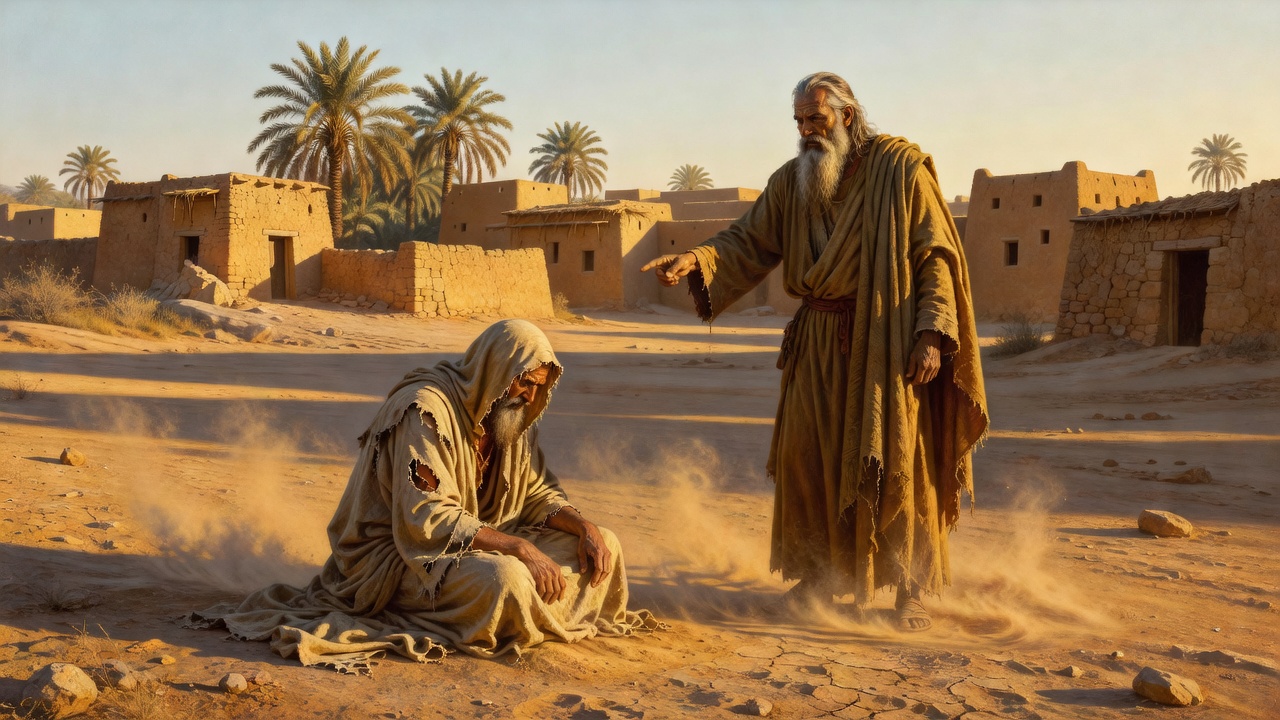
1And Bildad the Shuhite answereth and saith: — 2Till when dost thou speak these things? And a strong wind — sayings of thy mouth? 3Doth God pervert judgment? And doth the Mighty One pervert justice? 4If thy sons have sinned before Him, And He doth send them away, By the hand of their transgression, 5If thou dost seek early unto God, And unto the Mighty makest supplication, 6If pure and upright thou [art], Surely now He waketh for thee, And hath completed The habitation of thy righteousness. 7And thy beginning hath been small, And thy latter end is very great. 8For, ask I pray thee of a former generation, And prepare to a search of their fathers, 9(For of yesterday we [are], and we know not, For a shadow [are] our days on earth.) 10Do they not shew thee — speak to thee, And from their heart bring forth words? 11'Doth a rush wise without mire? A reed increase without water? 12While it [is] in its budding — uncropped, Even before any herb it withereth. 13So [are] the paths of all forgetting God, And the hope of the profane doth perish, 14Whose confidence is loathsome, And the house of a spider his trust. 15He leaneth on his house — and it standeth not: He taketh hold on it — and it abideth not. 16Green he [is] before the sun, And over his garden his branch goeth out. 17By a heap his roots are wrapped, A house of stones he looketh for. 18If [one] doth destroy him from his place, Then it hath feigned concerning him, I have not seen thee! 19Lo, this [is] the joy of his way, And from the dust others spring up.' 20Lo, God doth not reject the perfect, Nor taketh hold on the hand of evil doers. 21While he filleth with laughter thy mouth, And thy lips with shouting, 22Those hating thee do put on shame, And the tent of the wicked is not!
¿Sabías que…?
El llamado de Bildad a la sabiduría antigua
- Bildad es identificado como suhita, lo que probablemente lo vincula con Súa, una región árabe poblada por los descendientes de Abraham y Cetura. En este capítulo, pronuncia el primero de sus tres discursos severos a Job, afirmando que la justicia divina es absoluta e inalterable.Fuentes: Bildad · el propio texto bíblico
- En lugar de recurrir a su propia experiencia, Bildad apela al conocimiento acumulado de las generaciones pasadas, comparando los días humanos con una sombra pasajera. Para ilustrar la ruina del impío, utiliza metáforas de la naturaleza como juncos que se marchitan sin agua y la fragilidad de una telaraña.Fuentes: el propio texto bíblico
Notas escritas con ayuda de IA a partir de fuentes abiertas (Theographic Bible Metadata, CC BY-SA 4.0; Easton’s Bible Dictionary, dominio público) y revisadas antes de publicarse.
Créditos y licencia de esta traducción
Young's Literal Translation
Young's Literal Translation of the Holy Bible
Public Domain
Language: ENGLISH (English)
Dialect: archaic British
Translation by: Robert Young
This public domain Bible translation is brought to you courtesy of eBible.org.
If you would like to make a donation to help keep free Bible access like this going, please visit https://eBible.org/give.php .
2019-10-20
Títulos de sección adaptados de la Berean Standard Bible (dominio público); no forman parte del texto bíblico de esta traducción.
Fuente: http://ebible.org/engylt/ · eBible.org