Job 2
Young's Literal Translation · Toca un versículo para ver sus referencias cruzadas.
Job Loses His Health
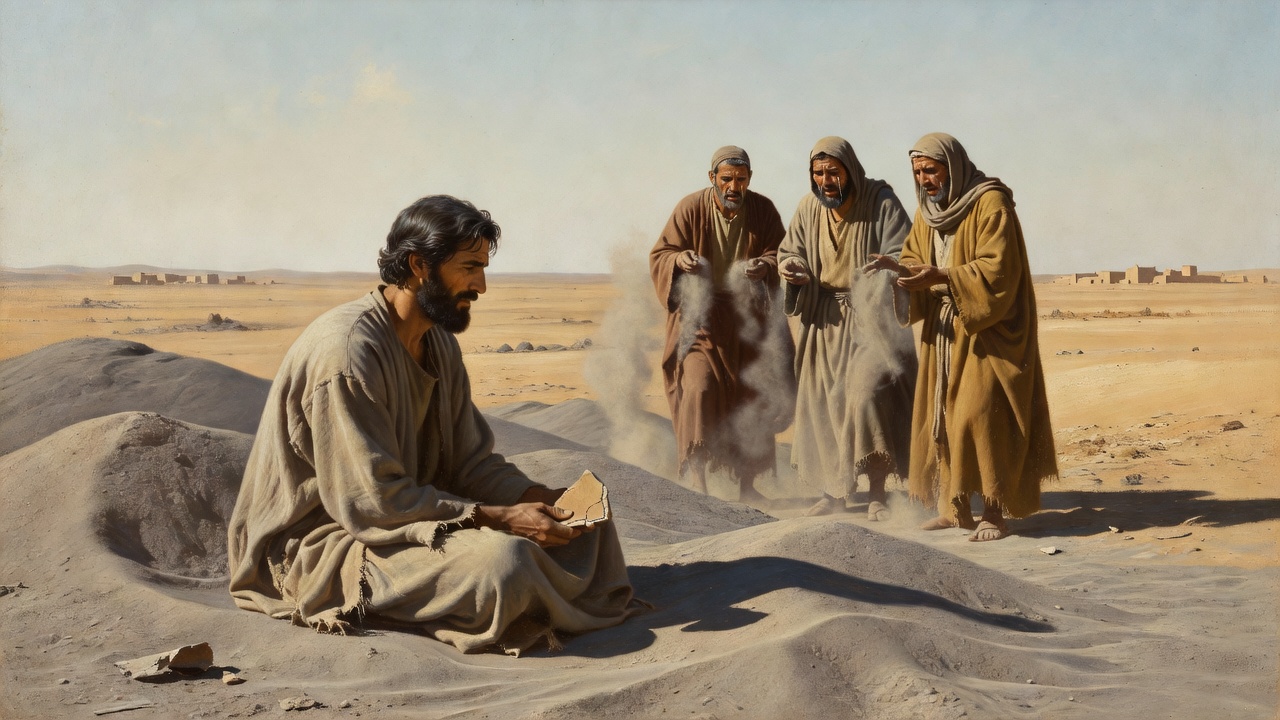
1And the day is, that sons of God come in to station themselves by Jehovah, and there doth come also the Adversary in their midst to station himself by Jehovah. 2And Jehovah saith unto the Adversary, 'Whence camest thou?' And the Adversary answereth Jehovah and saith, 'From going to and fro in the land, and from walking up and down in it.' 3And Jehovah saith unto the Adversary, 'Hast thou set thy heart unto My servant Job because there is none like him in the land, a man perfect and upright, fearing God and turning aside from evil? and still he is keeping hold on his integrity, and thou dost move Me against him to swallow him up for nought!' 4And the Adversary answereth Jehovah and saith, 'A skin for a skin, and all that a man hath he doth give for his life. 5Yet, put forth, I pray Thee, Thy hand, and strike unto his bone and unto his flesh — if not: unto Thy face he doth bless Thee!' 6And Jehovah saith unto the Adversary, 'Lo, he [is] in thy hand; only his life take care of.' 7And the Adversary goeth forth from the presence of Jehovah, and smiteth Job with a sore ulcer from the sole of his foot unto his crown. 8And he taketh to him a potsherd to scrape himself with it, and he is sitting in the midst of the ashes. 9And his wife saith to him, 'Still thou art keeping hold on thine integrity: bless God and die.' 10And he saith unto her, 'As one of the foolish women speaketh, thou speakest; yea, the good we receive from God, and the evil we do not receive.' In all this Job hath not sinned with his lips.
Job’s Three Friends
11And three of the friends of Job hear of all this evil that hath come upon him, and they come in each from his place — Eliphaz the Temanite, and Bildad the Shuhite, and Zophar the Naamathite — and they are met together to come in to bemoan him, and to comfort him; 12and they lift up their eyes from afar and have not discerned him, and they lift up their voice and weep, and rend each his robe, and sprinkle dust on their heads — heavenward. 13And they sit with him on the earth seven days and seven nights, and there is none speaking unto him a word when they have seen that the pain hath been very great.
¿Sabías que…?
La Aflicción de Job y la Llegada de Sus Amigos
- En el texto hebreo de Job, el término traducido como Satanás aparece con el artículo definido como el adversario o acusador. En este segundo concilio celestial, el adversario argumenta que, aunque Job soportó la pérdida de sus bienes y familia, herir su carne y sus huesos lo llevaría a abandonar su integridad.Fuentes: Satan · el propio texto bíblico
- Los compañeros de Job —Elifaz temanita, Bildad suhita y Zofar naamatita— vinieron de regiones distantes asociadas con Arabia. El origen de Bildad se vincula con Súa, hijo de Abraham con Cetura, mientras que la antigua versión griega Septuaginta conecta a Zofar con los mineos del sur de Arabia.Fuentes: Bildad · Zophar · el propio texto bíblico
- Al ver el intenso sufrimiento de Job, sus tres amigos rasgaron sus mantos, arrojaron polvo al aire sobre sus cabezas y se sentaron con él en el suelo en completo silencio durante siete días y siete noches. Esta vigilia compartida reflejaba antiguas costumbres de duelo profundo cuando el dolor superaba las palabras.Fuentes: el propio texto bíblico
Notas escritas con ayuda de IA a partir de fuentes abiertas (Theographic Bible Metadata, CC BY-SA 4.0; Easton’s Bible Dictionary, dominio público) y revisadas antes de publicarse.
Créditos y licencia de esta traducción
Young's Literal Translation
Young's Literal Translation of the Holy Bible
Public Domain
Language: ENGLISH (English)
Dialect: archaic British
Translation by: Robert Young
This public domain Bible translation is brought to you courtesy of eBible.org.
If you would like to make a donation to help keep free Bible access like this going, please visit https://eBible.org/give.php .
2019-10-20
Títulos de sección adaptados de la Berean Standard Bible (dominio público); no forman parte del texto bíblico de esta traducción.
Fuente: http://ebible.org/engylt/ · eBible.org