Ezequiel 18
Young's Literal Translation · Toca un versículo para ver sus referencias cruzadas.
The Soul Who Sins Will Die
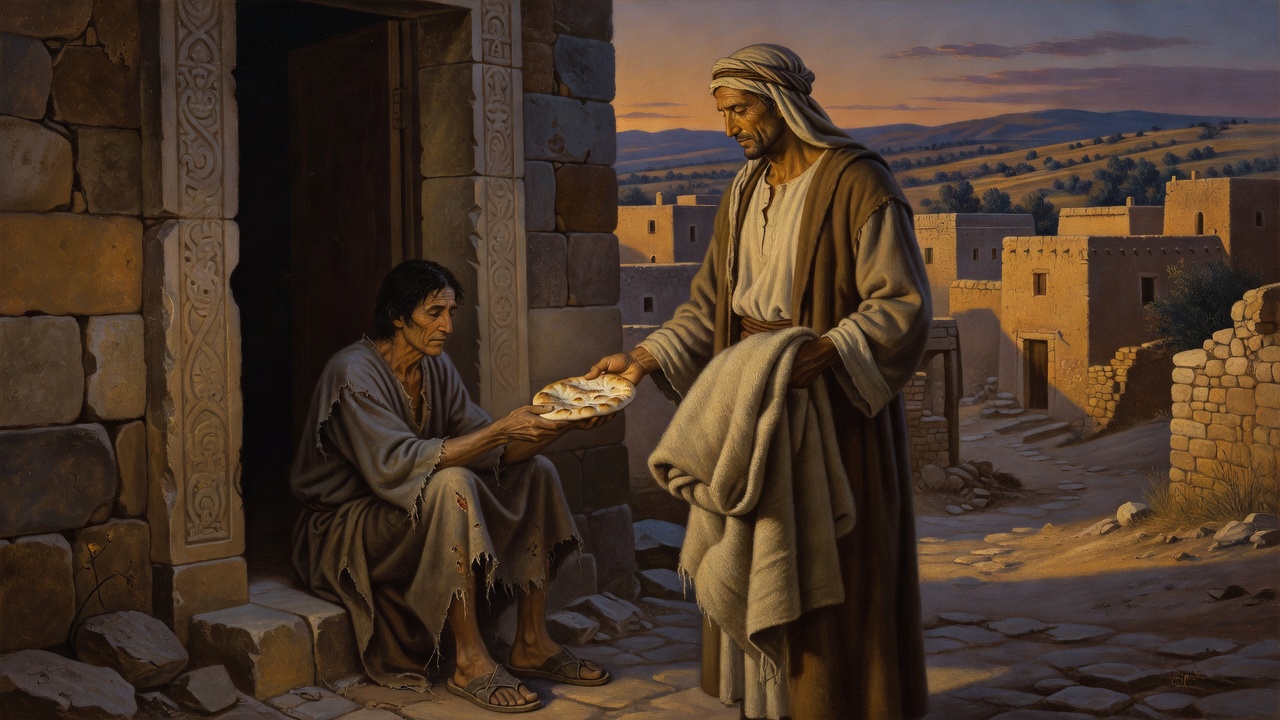
1'And there is a word of Jehovah unto me, saying: 2'What — to you, ye — using this simile Concerning the ground of Israel, saying: Fathers do eat unripe fruit, And the sons' teeth are blunted? 3I live — an affirmation of the Lord Jehovah, Ye have no more the use of this simile in Israel. 4Lo, all the souls are Mine, As the soul of the father, So also the soul of the son — they are Mine, The soul that is sinning — it doth die. 5And a man, when he is righteous, And hath done judgment and righteousness, 6On the mountains he hath not eaten, And his eyes he hath not lifted up Unto idols of the house of Israel, And the wife of his neighbour defiled not, And to a separated woman cometh not near, 7A man — he doth not oppress, His pledge to the debtor he doth return, Plunder he doth not take away, His bread to the hungry he doth give, And the naked doth cover with a garment, 8In usury he doth not give, and increase taketh not, From perversity he turneth back his hand, True judgment he doth between man and man. 9In My statutes he doth walk, And My judgments he hath kept — to deal truly, Righteous [is] he, he surely liveth, An affirmation of the Lord Jehovah. 10And — he hath begotten a son, A burglar — a shedder of blood, And he hath made a brother of one of these, 11And he all those hath not done, For even on the mountains he hath eaten, And the wife of his neighbour he hath defiled, 12The afflicted and needy he hath oppressed, Plunder he hath taken violently away, A pledge he doth not return, And unto the idols he hath lifted up his eyes, Abomination he hath done! 13In usury he hath given, and increase taken, And he liveth: he doth not live, All these abominations he hath done, He doth surely die, his blood is on him. 14And — lo, he hath begotten a son, And he seeth all the sins of his father, That he hath done, and he feareth, And doth not do like them, 15On the mountains he hath not eaten, And his eyes he hath not lifted up Unto idols of the house of Israel, The wife of his neighbour he hath not defiled, 16A man — he hath not oppressed, A pledge he hath not bound, And plunder he hath not taken away, His bread to the hungry he hath given, And the naked he covered with a garment, 17From the afflicted he hath turned back his hand, Usury and increase he hath not taken, My judgments he hath done, In My statutes he hath walked, He doth not die for the iniquity of his father, He doth surely live. 18His father — because he used oppression, Did violently Plunder a brother, And that which [is] not good did in the midst of his people, And lo, he is dying in his iniquity. 19And ye have said, Wherefore hath not the son, Borne of the iniquity of the father? And — the son judgment and righteousness hath done, All My statutes he hath kept, And he doeth them, he surely liveth. 20The soul that doth sin — it doth die. A son doth not bear of the iniquity of the father, And a father doth not bear of the iniquity of the son, The righteousness of the righteous is on him, And the wickedness of the wicked is on him. 21And the wicked — when he turneth back From all his sins that he hath done, And he hath kept all My statutes, And hath done judgment and righteousness, He doth surely live, he doth not die. 22All his transgressions that he hath done Are not remembered to him, In his righteousness that he hath done he liveth. 23Do I at all desire the death of the wicked? An affirmation of the Lord Jehovah, Is it not in his turning back from his way — And he hath lived? 24And in the turning back of the righteous from his righteousness, And he hath done perversity, According to all the abominations That the wicked hath done, he doth — thus he liveth, All his righteousnesses that he hath done are not remembered, For his trespass that he hath trespassed, And for his sin that he hath sinned, For them he doth die. 25And ye have said, Not pondered is the way of the Lord. Hear, I pray you, O house of Israel, My way — is it not pondered? Are not your ways unpondered? 26In the turning back of the righteous from his righteousness, And he hath done perversity, And he is dying by them, for his perversity That he hath done he dieth. 27And in the turning back of the wicked From his wickedness that he hath done, And he doth judgment and righteousness, He his soul doth keep alive. 28And he seeth and turneth back, From all his transgressions that he hath done, He doth surely live, he doth not die, 29And the house of Israel have said, Not pondered is the way of the Lord, My ways — are they not pondered? O house of Israel — are not your ways unpondered? 30Therefore, each according to his ways I judge you, O house of Israel? An affirmation of the Lord Jehovah, Turn ye back, yea, turn yourselves back, From all your transgressions, And iniquity is not to you for a stumbling-block, 31Cast from off you all your transgressions, By which ye have transgressed, And make to you a new heart, and a new spirit, And why do ye die, O house of Israel? 32For I have no pleasure in the death of the dying, An affirmation of the Lord Jehovah, And turn ye back and live!
¿Sabías que…?
Responsabilidad individual y arrepentimiento
- El proverbio popular sobre los padres que comieron uvas agrias y los dientes de los hijos sufriendo la dentera reflejaba la creencia fatalista de que esa generación era castigada únicamente por las faltas de sus antepasados. El capítulo rechaza este dicho y afirma el principio de que cada individuo es responsable de sus propias decisiones morales.Fuentes: el propio texto bíblico
- Para ilustrar la responsabilidad individual, el texto examina tres generaciones sucesivas: un padre justo, un hijo violento y un nieto íntegro. El mensaje destaca que ni la justicia ni la culpa se heredan, y que incluso una persona malvada que se arrepiente vivirá, pues Dios no se complace en la muerte de nadie.Fuentes: el propio texto bíblico
Notas escritas con ayuda de IA a partir de fuentes abiertas (Theographic Bible Metadata, CC BY-SA 4.0; Easton’s Bible Dictionary, dominio público) y revisadas antes de publicarse.
Créditos y licencia de esta traducción
Young's Literal Translation
Young's Literal Translation of the Holy Bible
Public Domain
Language: ENGLISH (English)
Dialect: archaic British
Translation by: Robert Young
This public domain Bible translation is brought to you courtesy of eBible.org.
If you would like to make a donation to help keep free Bible access like this going, please visit https://eBible.org/give.php .
2019-10-20
Títulos de sección adaptados de la Berean Standard Bible (dominio público); no forman parte del texto bíblico de esta traducción.
Fuente: http://ebible.org/engylt/ · eBible.org