Eclesiastés 4
Young's Literal Translation · Toca un versículo para ver sus referencias cruzadas.
The Evil of Oppression
1And I have turned, and I see all the oppressions that are done under the sun, and lo, the tear of the oppressed, and they have no comforter; and at the hand of their oppressors [is] power, and they have no comforter. 2And I am praising the dead who have already died above the living who are yet alive. 3And better than both of them [is] he who hath not yet been, in that he hath not seen the evil work that hath been done under the sun. 4And I have seen all the labour, and all the benefit of the work, because for it a man is the envy of his neighbour. Even this [is] vanity and vexation of spirit. 5The fool is clasping his hands, and eating his own flesh: 6'Better [is] a handful [with] quietness, than two handfuls [with] labour and vexation of spirit.' 7And I have turned, and I see a vain thing under the sun: 8There is one, and there is not a second; even son or brother he hath not, and there is no end to all his labour! His eye also is not satisfied with riches, and [he saith not], 'For whom am I labouring and bereaving my soul of good?' This also is vanity, it is a sad travail. 9The two [are] better than the one, in that they have a good reward by their labour. 10For if they fall, the one raiseth up his companion, but woe to the one who falleth and there is not a second to raise him up! 11Also, if two lie down, then they have heat, but how hath one heat? 12And if the one strengthen himself, the two stand against him; and the threefold cord is not hastily broken.
The Futility of Power
13Better is a poor and wise youth than an old and foolish king, who hath not known to be warned any more. 14For from a house of prisoners he hath come out to reign, for even in his own kingdom he hath been poor. 15I have seen all the living, who are walking under the sun, with the second youth who doth stand in his place; 16there is no end to all the people, to all who were before them; also, the latter rejoice not in him. Surely this also is vanity and vexation of spirit.
¿Sabías que…?
Opresión, Compañerismo y la Fama Pasajera
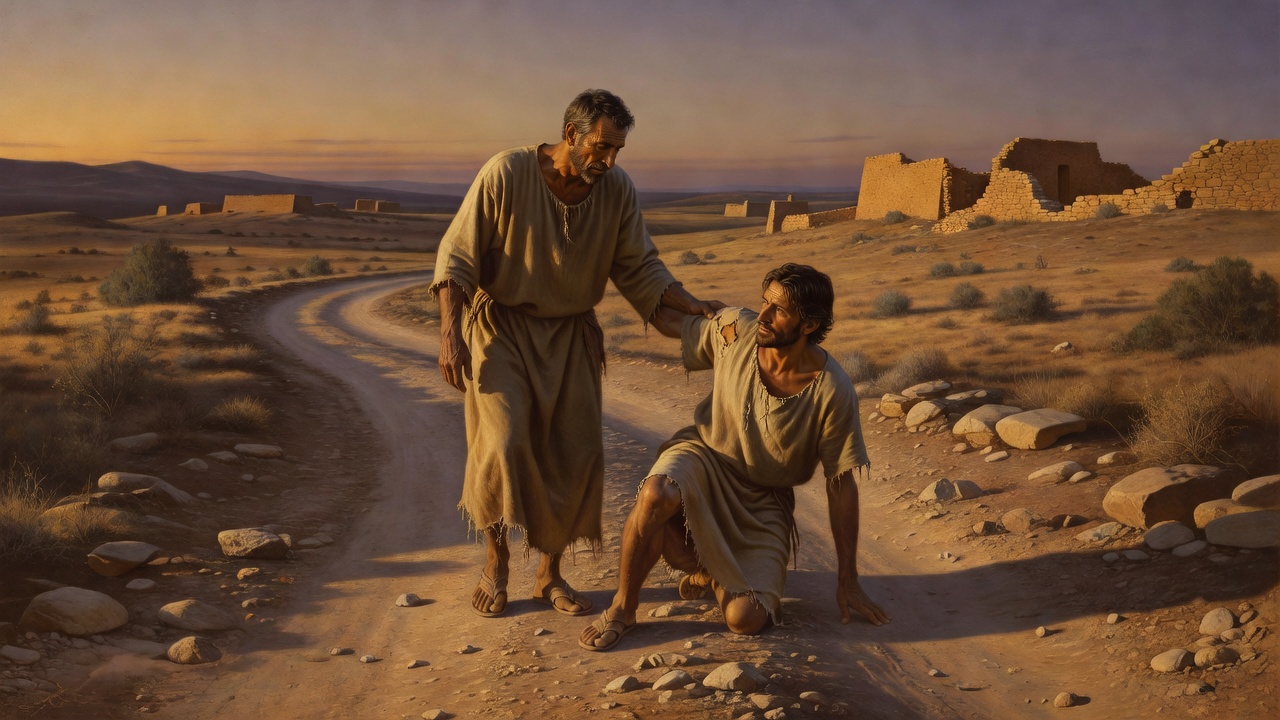
- Eclesiastés destaca el valor práctico del compañerismo en la vida cotidiana, explicando que dos trabajadores obtienen mejor fruto de su labor, pueden levantarse mutuamente tras una caída, darse calor al dormir y resistir juntos a los agresores.Fuentes: el propio texto bíblico
- El texto contrasta la miseria del trabajo solitario con la serenidad de la moderación, señalando que algunos acumulan riquezas sin descanso a pesar de no tener compañero, hijo o hermano con quien compartirlas.Fuentes: el propio texto bíblico
- El pasaje ilustra la naturaleza fugaz del reconocimiento político a través de un joven pobre y sabio que sale de la prisión para reinar en lugar de un monarca necio, alcanzando una gran popularidad que luego es olvidada por las siguientes generaciones.Fuentes: el propio texto bíblico
Notas escritas con ayuda de IA a partir de fuentes abiertas (Theographic Bible Metadata, CC BY-SA 4.0; Easton’s Bible Dictionary, dominio público) y revisadas antes de publicarse.
Créditos y licencia de esta traducción
Young's Literal Translation
Young's Literal Translation of the Holy Bible
Public Domain
Language: ENGLISH (English)
Dialect: archaic British
Translation by: Robert Young
This public domain Bible translation is brought to you courtesy of eBible.org.
If you would like to make a donation to help keep free Bible access like this going, please visit https://eBible.org/give.php .
2019-10-20
Títulos de sección adaptados de la Berean Standard Bible (dominio público); no forman parte del texto bíblico de esta traducción.
Fuente: http://ebible.org/engylt/ · eBible.org