Deuteronomio 14
Young's Literal Translation · Toca un versículo para ver sus referencias cruzadas.
Clean and Unclean Animals
1'Sons ye [are] to Jehovah your God; ye do not cut yourselves, nor make baldness between your eyes for the dead; 2for a holy people [art] thou to Jehovah thy God, and on thee hath Jehovah fixed to be to Him for a people, a peculiar treasure, out of all the peoples who [are] on the face of the ground. 3'Thou dost not eat any abominable thing; 4'this [is] the beast which ye do eat: ox, lamb of the sheep, or kid of the goats, 5hart, and roe, and fallow deer, and wild goat, and pygarg, and wild ox, and chamois; 6and every beast dividing the hoof, and cleaving the cleft into two hoofs, bringing up the cud, among the beasts — it ye do eat. 7'Only, this ye do not eat, of those bringing up the cud, and of those dividing the cloven hoof: the camel, and the hare, and the rabbit, for they are bringing up the cud but the hoof have not divided; unclean they [are] to you; 8and the sow, for it is dividing the hoof, and not [bringing] up the cud, unclean it [is] to you; of their flesh ye do not eat, and against their carcase ye do not come. 9'This ye do eat of all that [are] in the waters; all that hath fins and scales ye do eat; 10and anything which hath not fins and scales ye do not eat; unclean it [is] to you. 11'Any clean bird ye do eat; 12and these [are] they of which ye do not eat: the eagle, and the ossifrage, and the ospray, 13and the glede, and the kite, and the vulture after its kind, 14and every raven after its kind; 15and the owl, and the night-hawk, and the cuckoo, and the hawk after its kind; 16the [little] owl, and the [great] owl, and the swan, 17and the pelican, and the gier-eagle, and the cormorant, 18and the stork, and the heron after its kind, and the lapwing, and the bat; 19and every teeming thing which is flying, unclean it [is] to you; they are not eaten; 20any clean fowl ye do eat. 21'Ye do not eat of any carcase; to the sojourner who [is] within thy gates thou dost give it, and he hath eaten it; or sell [it] to a stranger; for a holy people thou [art] to Jehovah thy God; thou dost not boil a kid in its mother's milk.
Giving Tithes
22'Thou dost certainly tithe all the increase of thy seed which the field is bringing forth year by year; 23and thou hast eaten before Jehovah thy God, in the place where He doth choose to cause His name to tabernacle, the tithe of thy corn, of thy new wine, and of thine oil, and the firstlings of thy herd, and of thy flock, so that thou dost learn to fear Jehovah thy God all the days. 24'And when the way is too much for thee, that thou art not able to carry it — when the place is too far off from thee which Jehovah thy God doth choose to put His name there, when Jehovah thy God doth bless thee; — 25then thou hast given [it] in money, and hast bound up the money in thy hand, and gone unto the place on which Jehovah thy God doth fix; 26and thou hast given the money for any thing which thy soul desireth, for oxen, and for sheep, and for wine, and for strong drink, and for any thing which thy soul asketh, and thou hast eaten there before Jehovah thy God, and thou hast rejoiced, thou and thy house. 27As to the Levite who [is] within thy gates, thou dost not forsake him, for he hath no portion and inheritance with thee. 28'At the end of three years thou dost bring out all the tithe of thine increase in that year, and hast placed [it] within thy gates; 29and come in hath the Levite (for he hath no part and inheritance with thee), and the sojourner, and the fatherless, and the widow, who [are] within thy gates, and they have eaten, and been satisfied, so that Jehovah thy God doth bless thee in all the work of thy hand which thou dost.
¿Sabías que…?
Leyes Alimentarias y Normas sobre el Diezmo
- Las leyes dietéticas de Deuteronomio 14 distinguen a los animales terrestres limpios de los inmundos mediante dos criterios físicos: tener la pezuña dividida y rumiar. Los animales acuáticos solo se consideraban aptos para el consumo si tenían tanto aletas como escamas.Fuentes: el propio texto bíblico
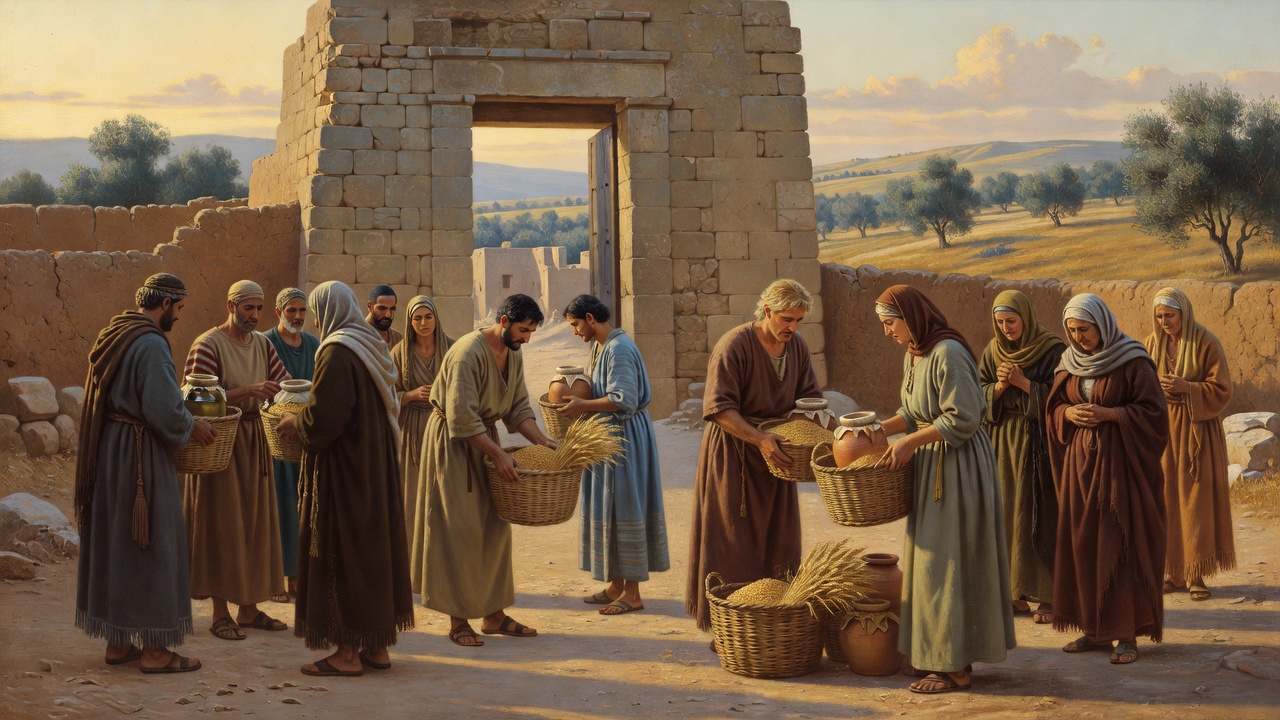
- Para facilitar el cumplimiento a quienes vivían lejos del santuario designado, la ley permitía cambiar los diezmos agrícolas por dinero para el viaje. Al llegar al lugar central, los fieles podían utilizar ese dinero para comprar alimentos festivos y celebrar con sus familias.Fuentes: el propio texto bíblico
- Cada tres años, el diezmo anual se almacenaba dentro de las ciudades locales en lugar de llevarse al santuario central. Estos alimentos se destinaban al sustento de los miembros de la comunidad sin herencia de tierras, específicamente los levitas, los extranjeros residentes, los huérfanos y las viudas.Fuentes: el propio texto bíblico
Notas escritas con ayuda de IA a partir de fuentes abiertas (Theographic Bible Metadata, CC BY-SA 4.0; Easton’s Bible Dictionary, dominio público) y revisadas antes de publicarse.
Créditos y licencia de esta traducción
Young's Literal Translation
Young's Literal Translation of the Holy Bible
Public Domain
Language: ENGLISH (English)
Dialect: archaic British
Translation by: Robert Young
This public domain Bible translation is brought to you courtesy of eBible.org.
If you would like to make a donation to help keep free Bible access like this going, please visit https://eBible.org/give.php .
2019-10-20
Títulos de sección adaptados de la Berean Standard Bible (dominio público); no forman parte del texto bíblico de esta traducción.
Fuente: http://ebible.org/engylt/ · eBible.org