Eclesiastés 9
Wycliffe's Bible with Modern Spelling · Toca un versículo para ver sus referencias cruzadas.
Death Comes to Good and Bad
1I treated all these things in mine heart, to understand diligently. Just [or rightwise] men, and wise men there be, and their works be in the hand of God; and nevertheless a man knoweth not, whether he is worthy of love or of hate.
2But all things be kept uncertain into the time to coming [or to come]; for all things befall evenly to a just [or rightwise] man and to a wicked man, to a good man and to an evil man, to a clean man and to an unclean man, to a man offering offerings and sacrifices, and to a man despising sacrifices; as a good man, so and a sinner; as a forsworn man, so and he that greatly sweareth truth.
3This thing is the worst among all things, that be done under the sun, that the same thing befall to all men; wherefore and the hearts of the sons of men be filled with malice and with despising in their life; and after these things, they shall be led down into hells [or to hell].
4No man there is, that liveth ever, and that hath trust of this thing; better is a quick dog than a dead lion.
5For they that live know that they shall die; but dead men know nothing more, neither have meed further; for their mind is given to forgetting.
6Also their love, and hatred, and envy, perished altogether; and they have no part in this world, and in the work that is done under the sun.
Enjoy Your Portion in This Life
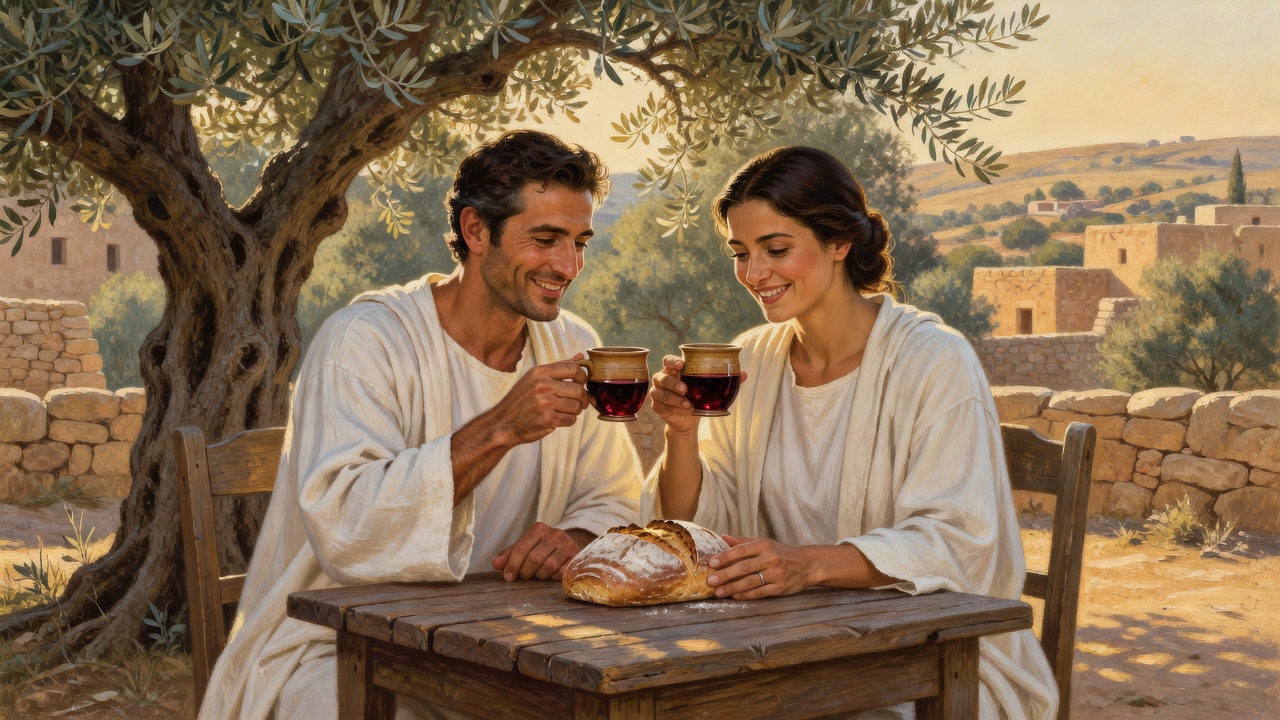
7Therefore go thou, just man, and eat thy bread in gladness, and drink thy wine with joy; for thy works please God.
8In each time thy clothes be white, and oil fail not from thine head.
9Use thou life with the wife which thou lovest, in all the days of the life of thine unstableness, that be given to thee under the sun, in all the time of thy vanity; for this is thy part in thy life and [thy] travail, by which thou travailest under the sun.
10Work thou busily, whatever thing thine hand may do; for neither work, neither reason, nor knowing, nor wisdom, shall be at hells [or with hell], whither thou hastest.
11I turned me to another thing, and I saw under [the] sun, that running [or course] is not of swift men, neither battle is of strong men, neither bread is of wise men, neither riches be of teachers, nor grace is of craftsmen; but time and hap is in all things.
12A man knoweth not his end; but as fishes be taken with an hook, and as birds be taken with a snare, so men be taken in evil time, when it cometh suddenly [up] on them.
Wisdom Is Better than Strength
13Also I saw this wisdom under the sun, and I proved it the most.
14A little city, and few men therein; a great king came against it, and compassed it with pales, and he builded strongholds, either engines, by compass; and [the] besieging was made perfect.
15And a poor man and a wise was found therein; and he delivered the city by his wisdom, and no man bethought afterward on that poor man.
16And I said, that wisdom is better than strength; how therefore is the wisdom of a poor man despised, and his words be not heard?
17The words of wise men be heard in silence, more than the cry of a prince among fools.
18Better is wisdom than armours [or arms] of battle; and he that sinneth in one thing, shall lose many goods.
¿Sabías que…?
Un destino común y el valor de la vida
- El autor aconseja celebrar la vida cotidiana mediante expresiones antiguas de alegría y honor: comer pan, beber vino, vestir ropas blancas y ungir la cabeza con aceite.Fuentes: el propio texto bíblico
- El pasaje alude al Seol como el reino de los muertos, describiéndolo como un estado donde cesan el trabajo, los planes, el conocimiento y la sabiduría, lo que subraya la urgencia de vivir activamente en el presente.Fuentes: el propio texto bíblico
- La guerra de asedio antigua se ilustra mediante el relato de un rey poderoso que construye grandes rampas de asedio contra una ciudad pequeña, la cual es liberada por la sabiduría de un hombre pobre y no por la fuerza militar.Fuentes: el propio texto bíblico
Notas escritas con ayuda de IA a partir de fuentes abiertas (Theographic Bible Metadata, CC BY-SA 4.0; Easton’s Bible Dictionary, dominio público) y revisadas antes de publicarse.
Créditos y licencia de esta traducción
Wycliffe's Bible with Modern Spelling
English: Wycliffe's Bible Modern Spelling (with Deuterocanon)
Copyright © 2001,2010,2011,2012,2013,2015 Terry Noble
Language: English
Dialect: Archaic
Translation by: Terry Noble
Wycliffe’s Bible with Modern Spelling, was made in response to requests from readers who wanted my Wycliffe’s Old and New Testaments and Apocrypha in one volume. Printing limitations dictated the number of pages available to me and the letter size. In my previous books, Wycliffe’s Bible, Wycliffe’s Old Testament, Vols. 1 amp 2, Wycliffe’s New Testament, and Wycliffe’s Apocrypha, I have tens of thousands of rewritten verses, presented in parentheses “( )”, to provide help in comprehending the 14th century Middle English vocabulary and grammar. In this present volume, with space at a premium, those “helps” had to be eliminated, to make room for the text of the Apocrypha.
This translation is made available to you under the terms of the
Creative Commons Attribution-Noncommercial-No Derivatives license 4.0.
You may share and redistribute this Bible translation or extracts from it in any format, provided that:
You include the above copyright and source information.
You do not sell this work for a profit.
You do not change any of the words or punctuation of the Scriptures.
Pictures included with Scriptures and other documents on this site are licensed just for use with those Scriptures and documents.
For other uses, please contact the respective copyright owners.
2019-09-26
Títulos de sección adaptados de la Berean Standard Bible (dominio público); no forman parte del texto bíblico de esta traducción.
Fuente: http://ebible.org/engwyc2017/ · eBible.org