Salmos 39
World Messianic Bible · Toca un versículo para ver sus referencias cruzadas.
For the Chief Musician. For Jeduthun. A Psalm by David.
I Will Watch My Ways
1I said, “I will watch my ways, so that I don’t sin with my tongue.
I will keep my mouth with a bridle while the wicked is before me.”
2I was mute with silence.
I held my peace, even from good.
My sorrow was stirred.
3My heart was hot within me.
While I meditated, the fire burned.
I spoke with my tongue:
4“LORD, show me my end,
what is the measure of my days.
Let me know how frail I am.
5Behold, you have made my days hand widths.
My lifetime is as nothing before you.
Surely every man stands as a breath.” Selah.
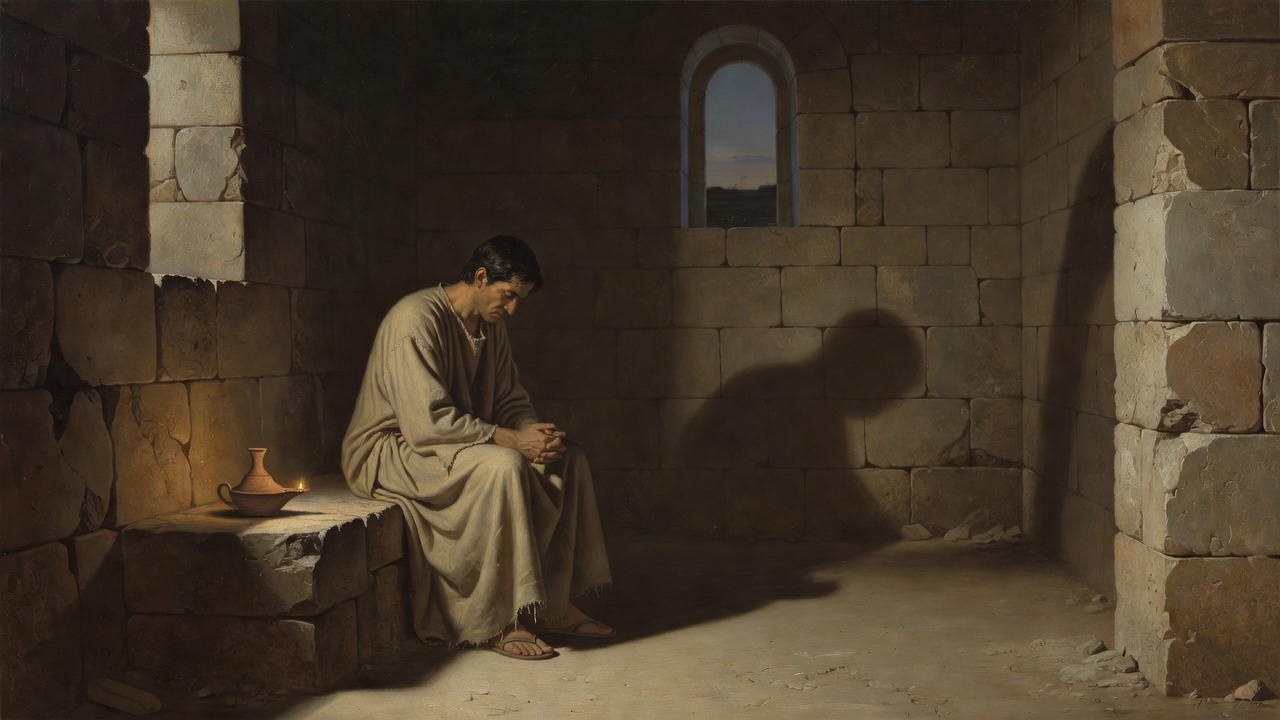
6“Surely every man walks like a shadow.
Surely they busy themselves in vain.
He heaps up, and doesn’t know who shall gather.
7Now, Lord, what do I wait for?
My hope is in you.
8Deliver me from all my transgressions.
Don’t make me the reproach of the foolish.
9I was mute.
I didn’t open my mouth,
because you did it.
10Remove your scourge away from me.
I am overcome by the blow of your hand.
11When you rebuke and correct man for iniquity,
you consume his wealth like a moth.
Surely every man is but a breath.” Selah.
12“Hear my prayer, LORD, and give ear to my cry.
Don’t be silent at my tears.
For I am a stranger with you,
a foreigner, as all my fathers were.
13Oh spare me, that I may recover strength,
before I go away and exist no more.”
¿Sabías que…?
La fragilidad y brevedad de la vida humana
- El encabezado dedica esta composición al director del coro y a Jedutún, atribuyendo la oración a David.Fuentes: el propio texto bíblico · David
- El salmo ilustra la brevedad de la existencia al describir la vida humana como apenas unos palmos—una medida antigua basada en el ancho de la mano—y como un soplo pasajero o una sombra.Fuentes: el propio texto bíblico
- El orador se identifica como un forastero y peregrino que habita junto a Dios, reflejando una postura de total dependencia de la misericordia y la hospitalidad divinas.Fuentes: el propio texto bíblico
Notas escritas con ayuda de IA a partir de fuentes abiertas (Theographic Bible Metadata, CC BY-SA 4.0; Easton’s Bible Dictionary, dominio público) y revisadas antes de publicarse.
Créditos y licencia de esta traducción
The World Messianic Bible
The World Messianic Bible is not copyrighted, however "World Messianic Bible" is a Trademark.
You may copy, publish, proclaim, distribute, redistribute, sell, give away, quote, memorize, read publicly, broadcast, transmit, share, back up, post on the Internet, print, reproduce, preach, teach from,
and use the World Messianic Bible as much as you want, and others may also do so. All we ask is that if you CHANGE the actual text of the World Messianic Bible in any way, you not call the result the World Messianic Bible
any more. This is to avoid confusion, not to limit your freedom. The Holy Bible is God's Word. It belongs to God. He gave it to us freely, and we who have worked on this translation freely give it to you by dedicating it
to the Public Domain.
Donations to help with the expenses of this project and thus help others have free access to the Word of God may be made to us, but are not required.
Please see https://MLJohnson.org/partner/ for more about partnering with us.
This edition uses U. S. A. spelling.
August 2022 stable text
Títulos de sección adaptados de la Berean Standard Bible (dominio público); no forman parte del texto bíblico de esta traducción.
Fuente: http://ebible.org/engwmb/ · eBible.org