Salmos 28
World English Bible Updated · Toca un versículo para ver sus referencias cruzadas.
By David.
The LORD Is My Strength
1To you, LORD, I call.
My rock, don’t be deaf to me,
lest, if you are silent to me,
I would become like those who go down into the pit.
2Hear the voice of my petitions, when I cry to you,
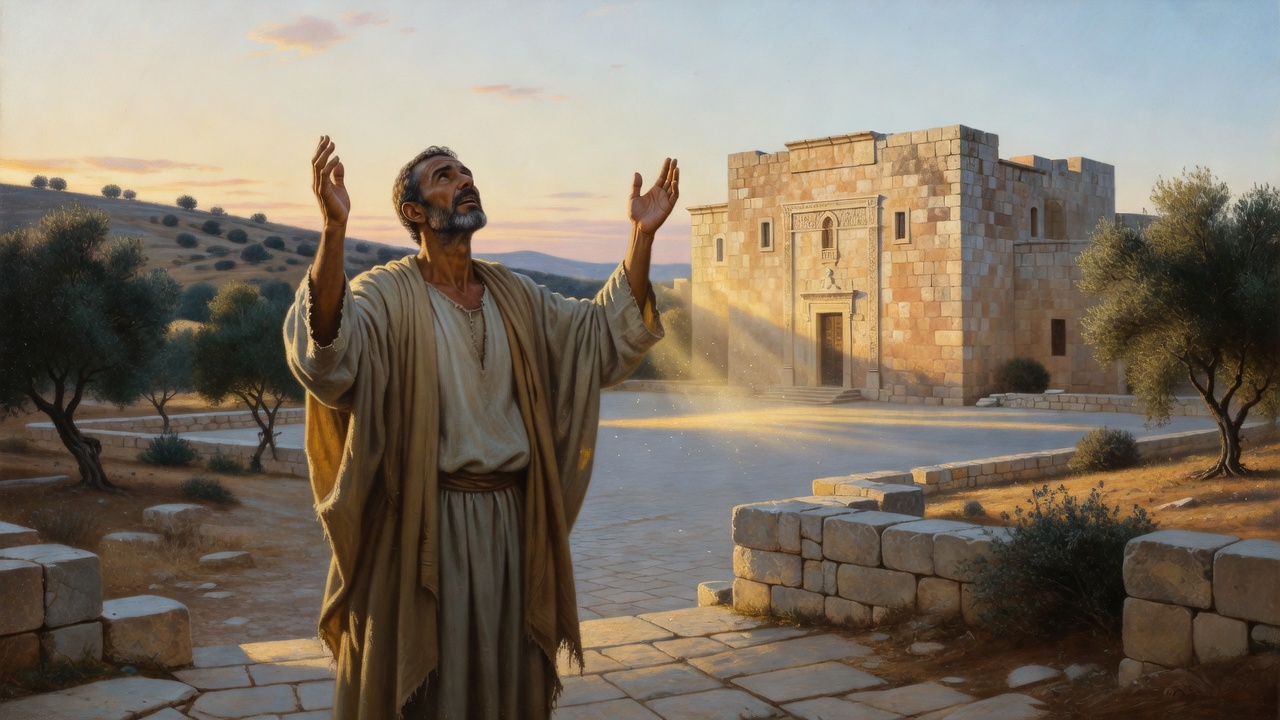
when I lift up my hands toward your Most Holy Place.
3Don’t draw me away with the wicked,
with the workers of iniquity who speak peace with their neighbors,
but mischief is in their hearts.
4Give them according to their work, and according to the wickedness of their doings.
Give them according to the operation of their hands.
Bring back on them what they deserve.
5Because they don’t respect the works of the LORD,
nor the operation of his hands,
he will break them down and not build them up.
6Blessed be the LORD,
because he has heard the voice of my petitions.
7The LORD is my strength and my shield.
My heart has trusted in him, and I am helped.
Therefore my heart greatly rejoices.
With my song I will thank him.
8The LORD is their strength.
He is a stronghold of salvation to his anointed.
9Save your people,
and bless your inheritance.
Be their shepherd also,
and bear them up forever.
¿Sabías que…?
Un Clamor por Misericordia y un Cántico de Confianza
- Alzar las manos hacia el santuario era una postura habitual de oración fervorosa en el antiguo Israel, reflejando visiblemente súplica, humildad y total dependencia de Dios.Fuentes: el propio texto bíblico
- El salmo pasa de manera notable de una súplica desesperada para no perecer junto a los malvados a una gozosa acción de gracias, concluyendo con una imagen pastoral donde se pide a Dios que pastoree y sostenga a Su pueblo para siempre.Fuentes: el propio texto bíblico
Notas escritas con ayuda de IA a partir de fuentes abiertas (Theographic Bible Metadata, CC BY-SA 4.0; Easton’s Bible Dictionary, dominio público) y revisadas antes de publicarse.
Lugares de este capítulo
- Most Holy Place · Hoy: on Mount Moriah · 31.778, 35.236 · versículo 2
Solo aparecen lugares identificados con alta confianza (90 % o más según las fuentes académicas reunidas por OpenBible). Mapa de la época: DARE (Digital Atlas of the Roman Empire), CC BY 4.0; mapa actual: © colaboradores de OpenStreetMap; lugares: OpenBible.info (CC BY 4.0).
Créditos y licencia de esta traducción
The World English Bible
The World English Bible is in the Public Domain. That means that it is not copyrighted. However, "World English Bible" is a Trademark of eBible.org.
You may copy, publish, proclaim, distribute, redistribute, sell, give away, quote, memorize, read publicly, broadcast, transmit, share, back up, post on the Internet, print, reproduce, preach, teach from, and use
the World English Bible as much as you want, and others may also do so. All we ask is that if you CHANGE the actual text of the World English Bible in any way, you not call the result the World English Bible any more.
This is to avoid confusion, not to limit your freedom. The Holy Bible is God's Word. It belongs to God. He gave it to us freely, and we who have worked on this translation freely give it to you by dedicating it to the
Public Domain.
Donations to help with the expenses of this project and thus help others have free access to the Word of God may be made to us, but are not required. Please see
https://MLJohnson.org/partner/ if you are interested in helping to fund this work.
This is the "updated" version of the World English Bible which uses "LORD" or "GOD" in place of "Yahweh" or "Yah" in the Old Testament. Typo corrections and updates, if any, will be posted on https://eBible.org/engwebu/ and at https://WorldEnglish.Bible .
Títulos de sección adaptados de la Berean Standard Bible (dominio público); no forman parte del texto bíblico de esta traducción.
Fuente: http://ebible.org/engwebu/ · eBible.org