Eclesiastés 7
World English Bible Updated · Toca un versículo para ver sus referencias cruzadas.
The Value of Wisdom
1A good name is better than fine perfume; and the day of death better than the day of one’s birth. 2It is better to go to the house of mourning than to go to the house of feasting; for that is the end of all men, and the living should take this to heart. 3Sorrow is better than laughter; for by the sadness of the face the heart is made good. 4The heart of the wise is in the house of mourning; but the heart of fools is in the house of mirth. 5It is better to hear the rebuke of the wise than for a man to hear the song of fools. 6For as the crackling of thorns under a pot, so is the laughter of the fool. This also is vanity. 7Surely extortion makes the wise man foolish; and a bribe destroys the understanding. 8Better is the end of a thing than its beginning.
The patient in spirit is better than the proud in spirit. 9Don’t be hasty in your spirit to be angry, for anger rests in the bosom of fools. 10Don’t say, “Why were the former days better than these?” For you do not ask wisely about this.
11Wisdom is as good as an inheritance. Yes, it is more excellent for those who see the sun. 12For wisdom is a defense, even as money is a defense; but the excellency of knowledge is that wisdom preserves the life of him who has it.
13Consider the work of God, for who can make that straight which he has made crooked? 14In the day of prosperity be joyful, and in the day of adversity consider; yes, God has made the one side by side with the other, to the end that man should not find out anything after him.
The Limits of Human Wisdom
15All this I have seen in my days of vanity: there is a righteous man who perishes in his righteousness, and there is a wicked man who lives long in his evildoing. 16Don’t be overly righteous, neither make yourself overly wise. Why should you destroy yourself? 17Don’t be too wicked, neither be foolish. Why should you die before your time? 18It is good that you should take hold of this. Yes, also don’t withdraw your hand from that; for he who fears God will come out of them all. 19Wisdom is a strength to the wise man more than ten rulers who are in a city. 20Surely there is not a righteous man on earth who does good and doesn’t sin. 21Also don’t take heed to all words that are spoken, lest you hear your servant curse you; 22for often your own heart knows that you yourself have likewise cursed others. 23All this I have proved in wisdom. I said, “I will be wise;” but it was far from me. 24That which is, is far off and exceedingly deep. Who can find it out? 25I turned around, and my heart sought to know and to search out, and to seek wisdom and the scheme of things, and to know that wickedness is stupidity, and that foolishness is madness.
26I find more bitter than death the woman whose heart is snares and traps, whose hands are chains. Whoever pleases God shall escape from her; but the sinner will be ensnared by her.
27“Behold, I have found this,” says the Preacher, “to one another, to find an explanation 28which my soul still seeks, but I have not found. I have found one man among a thousand, but I have not found a woman among all those. 29Behold, I have only found this: that God made mankind upright; but they search for many inventions.”
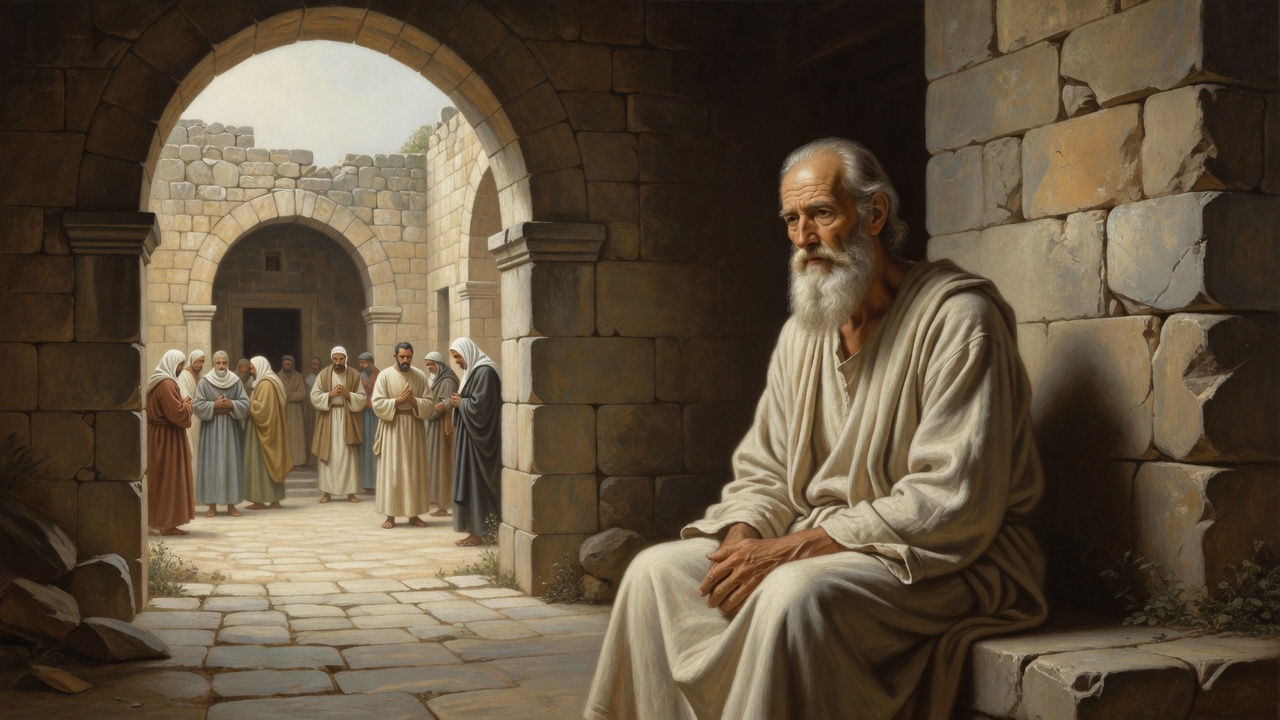
¿Sabías que…?
Sabiduría, mortalidad y los límites del entendimiento
- Eclesiastés 7 comienza con una serie de proverbios comparativos que sostienen que los momentos de reflexión sobria, como acudir a una casa de duelo o afrontar la tristeza, brindan una comprensión más profunda de la vida que la risa superficial y las fiestas.Fuentes: el propio texto bíblico
- El Maestro reflexiona sobre la realidad de la experiencia humana, señalando que Dios dispuso tanto los días prósperos como los adversos para que nadie pueda prever su futuro, y que a veces el justo perece mientras que el malvado prolonga sus días.Fuentes: el propio texto bíblico
- El capítulo resalta el límite universal de la bondad humana al observar que no hay nadie en la tierra que haga el bien y nunca peque, y concluye que, aunque Dios hizo íntegro al ser humano, las personas han buscado muchas maquinaciones.Fuentes: el propio texto bíblico
Notas escritas con ayuda de IA a partir de fuentes abiertas (Theographic Bible Metadata, CC BY-SA 4.0; Easton’s Bible Dictionary, dominio público) y revisadas antes de publicarse.
Créditos y licencia de esta traducción
The World English Bible
The World English Bible is in the Public Domain. That means that it is not copyrighted. However, "World English Bible" is a Trademark of eBible.org.
You may copy, publish, proclaim, distribute, redistribute, sell, give away, quote, memorize, read publicly, broadcast, transmit, share, back up, post on the Internet, print, reproduce, preach, teach from, and use
the World English Bible as much as you want, and others may also do so. All we ask is that if you CHANGE the actual text of the World English Bible in any way, you not call the result the World English Bible any more.
This is to avoid confusion, not to limit your freedom. The Holy Bible is God's Word. It belongs to God. He gave it to us freely, and we who have worked on this translation freely give it to you by dedicating it to the
Public Domain.
Donations to help with the expenses of this project and thus help others have free access to the Word of God may be made to us, but are not required. Please see
https://MLJohnson.org/partner/ if you are interested in helping to fund this work.
This is the "updated" version of the World English Bible which uses "LORD" or "GOD" in place of "Yahweh" or "Yah" in the Old Testament. Typo corrections and updates, if any, will be posted on https://eBible.org/engwebu/ and at https://WorldEnglish.Bible .
Títulos de sección adaptados de la Berean Standard Bible (dominio público); no forman parte del texto bíblico de esta traducción.
Fuente: http://ebible.org/engwebu/ · eBible.org