Levítico 17
Noah Webster Bible · Toca un versículo para ver sus referencias cruzadas.
The Place of Sacrifice
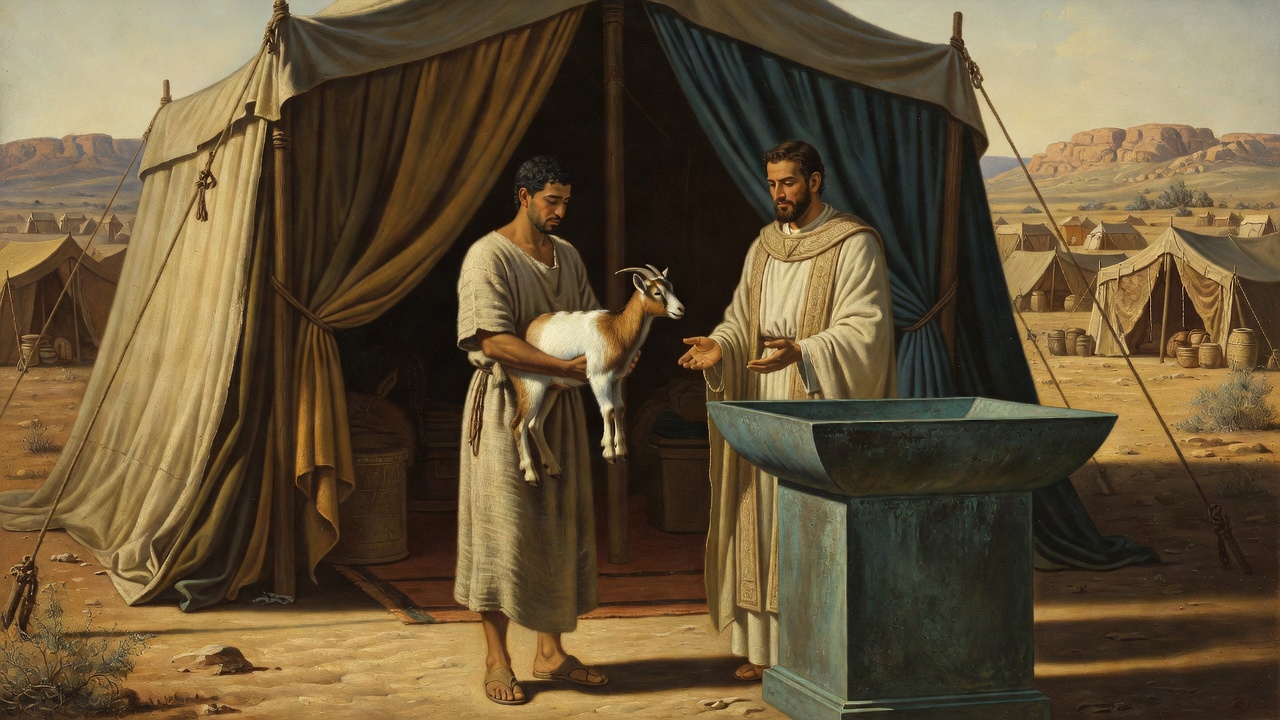
1And the LORD spoke to Moses, saying, 2Speak to Aaron, and to his sons, and to all the children of Israel, and say to them, This is the thing which the LORD hath commanded, saying, 3Whatever man there may be of the house of Israel, that killeth an ox, or lamb, or goat in the camp, or that killeth it out of the camp, 4And bringeth it not to the door of the tabernacle of the congregation, to offer an offering to the LORD before the tabernacle of the LORD; blood shall be imputed to that man; he hath shed blood; and that man shall be cut off from among his people: 5To the end that the children of Israel may bring their sacrifices which they offer in the open field, even that they may bring them to the LORD, to the door of the tabernacle of the congregation, to the priest, and offer them for peace-offerings to the LORD. 6And the priest shall sprinkle the blood upon the altar of the LORD at the door of the tabernacle of the congregation, and burn the fat for a sweet savor to the LORD. 7And they shall no more offer their sacrifices to idols, with which they have committed idolatry: This shall be a statute for ever to them throughout their generations. 8And thou shalt say to them, Whatever man there may be of the house of Israel, or of the strangers which sojourn among you, that offereth a burnt-offering or sacrifice, 9And bringeth it not to the door of the tabernacle of the congregation, to offer it to the LORD; even that man shall be cut off from among his people.
Laws against Eating Blood
10And whatever man there may be of the house of Israel, or of the strangers that sojourn among you, that eateth any manner of blood; I will even set my face against that soul that eateth blood, and will cut him off from among his people. 11For the life of the flesh is in the blood: and I have given it to you upon the altar, to make an atonement for your souls: for it is the blood that maketh an atonement for the soul. 12Therefore I said to the children of Israel, No soul of you shall eat blood, neither shall any stranger that sojourneth among you eat blood. 13And whatever man there may be of the children of Israel, or of the strangers that sojourn among you, who hunteth and catcheth any beast or fowl that may be eaten; he shall even pour out its blood, and cover it with dust. 14For it is the life of all flesh, the blood of it is for the life of it; therefore I said to the children of Israel, Ye shall eat the blood of no manner of flesh: for the life of all flesh is its blood: whoever eateth it shall be cut off. 15And every soul that eateth that which died of itself , or that which was torn with beasts , ( whether it is one of your own country, or a stranger) he shall both wash his clothes, and bathe himself in water, and be unclean until the evening; then shall he be clean. 16But if he doth not wash them , nor bathe his flesh; then he shall bear his iniquity.
¿Sabías que…?
El sacrificio de animales y la santidad de la sangre
- Levítico ordena que los animales domésticos como bueyes, corderos y cabras sean llevados directamente a la entrada de la Tienda de Reunión en lugar de ser sacrificados en campo abierto. Esta regla aseguraba que los sacrificios se ofrecieran exclusivamente como ofrendas de paz al SEÑOR y ponía fin a los sacrificios ilícitos a demonios en forma de cabra.Fuentes: el propio texto bíblico
- Tanto a los israelitas nativos como a los extranjeros residentes se les prohibía estrictamente comer sangre, bajo pena de ser cortados de su pueblo. El texto fundamenta esta ley en el principio teológico de que la vida de la carne está en la sangre, la cual Dios dispuso específicamente para hacer expiación sobre el altar.Fuentes: el propio texto bíblico
- Al cazar animales salvajes o aves permitidas para el consumo, los israelitas y extranjeros debían drenar la sangre sobre el suelo y cubrirla con tierra. Esta instrucción reforzaba que la vida pertenece a Dios y preservaba la santidad de la sangre fuera del santuario sacrificial.Fuentes: el propio texto bíblico
Notas escritas con ayuda de IA a partir de fuentes abiertas (Theographic Bible Metadata, CC BY-SA 4.0; Easton’s Bible Dictionary, dominio público) y revisadas antes de publicarse.
Créditos y licencia de esta traducción
Noah Webster Bible
The Holy Bible, Containing the Old and New Testaments, in the Common Version, with Amendments of the language by Noah Webster, LL.D.
Public Domain
Language: English
Dialect: archaic American
Translation by: Noah Webster
2024-08-01
Títulos de sección adaptados de la Berean Standard Bible (dominio público); no forman parte del texto bíblico de esta traducción.
Fuente: http://ebible.org/engwebster/ · eBible.org