Levítico 22
Targum Onkelos Etheridge · Toca un versículo para ver sus referencias cruzadas.
Restrictions against the Unclean
1And the Lord spake with Mosheh, saying: 2Speak with Aharon and with his sons, and let them keep separate from the consecrated things of the children of Israel, that they profane not the Name of My Holiness which they (are to) sanctify before Me: I am the Lord. 3Say to them, Any man of all the sons of your generations who shall touch the hallowed things which the children of Israel consecrate before the Lord, having his uncleanness upon him, that man shall perish before Me: I am the Lord. 4Any man of Aharon’s offspring who hath leprosy or an unclean effusion shall not eat of the consecrated things until he be clean; and whosoever toucheth any unclean animal, or a man whose seed goeth from him, 5Or a man who toucheth any reptile that maketh him unclean, or a man who maketh him unclean by any of his uncleanness, 6The man who toucheth him shall be unclean until the evening, and may not eat of things consecrated unless he wash his flesh with water. 7But when the sun hath gone down, and he shall have purified himself, he may afterward eat of the hallowed things, for it is his food. 8A carcase which hath been torn he may not eat, to defile himself therewith: I am the Lord. 9But let them keep the keeping of My word, lest they bring guilt upon themselves, and die for it, because they have profaned it, I am the Lord who sanctify them.
10No stranger shall eat of that which is consecrated, neither a sojourner with a priest, or a hireling, may eat of the consecrated thing. 11But if the priest buy a person with a purchase of his money, he may eat of it, and he who hath been born in his house, they may eat of his bread. 12And the daughter of a priest, if she be married to a stranger, may not eat of things set apart and hallowed. 13But if the priest’s daughter be a widow, or divorced, and, having, no child, hath returned to her father’s house, as in her youth, she may eat of her father’s meat; but no stranger shall eat thereof. 14And if a man eat some consecrated thing through ignorance, he shall add a fifth unto it, and give the consecrated thing unto the priest. 15And let them not profane the hallowed things of the children of Israel which are set apart before the Lord, 16nor bring upon themselves iniquities and sins, when they eat in uncleanness the things that are holy. I am the Lord, who sanctify them.
Worthy Offerings
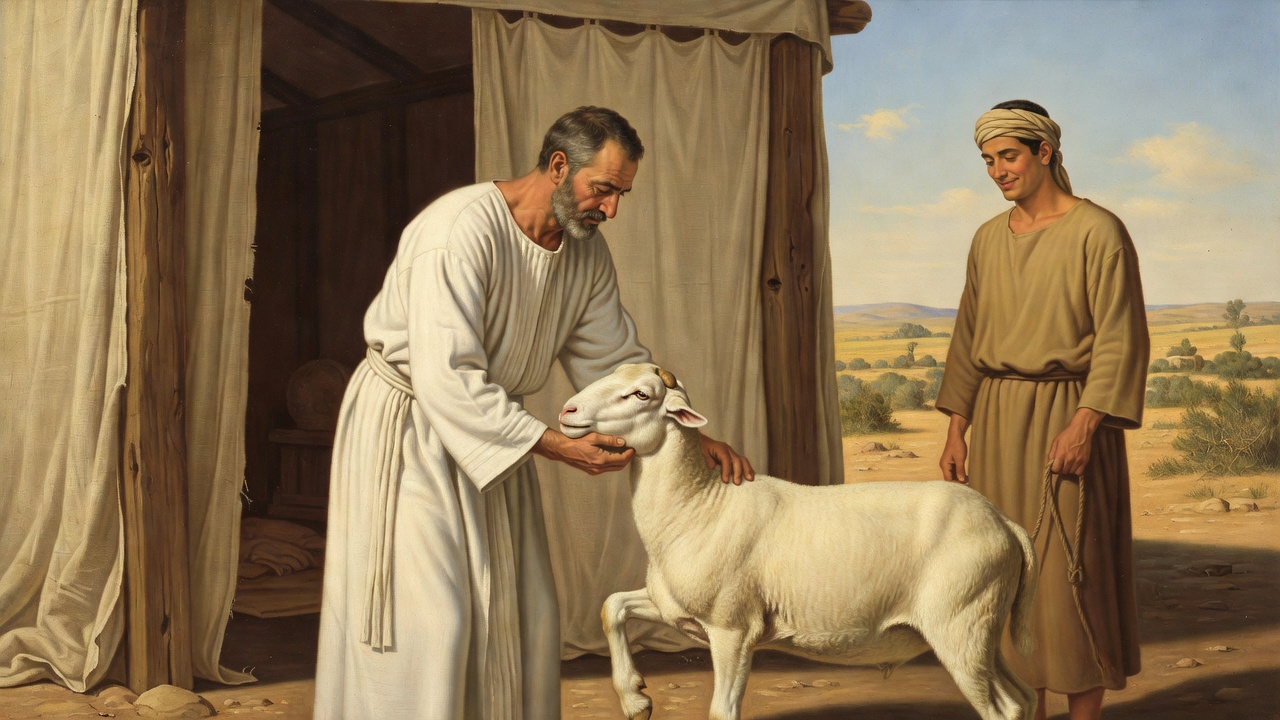
17And the Lord spake with Mosheh, saying: 18Speak with Aharon, and with his sons, and with all the children of Israel, and say to them: When any man of the sons of Israel, or of the sojourners in Israel, will offer the oblation of any of their vows or any of their free-will oblations which they may offer before the Lord for a burnt sacrifice; 19That it may be acceptable from you, (let it be) a male without blemish, of the bullocks, or of the lambs, or of the goats. 20But whatever hath a blemish in it you shall not offer, for it will not be acceptable for you. 21And if a man present a consecrated victim before the Lord, as a vow set apart, or a free-will offering of the herd or of the flock, it must be perfect, to be acceptable; there shall be no blemish in it. 22Blind, or broken, or mutilated, or having imposthumes, or ulcers, or blotches, these you shall not offer before the Lord, nor of them present an oblation upon the altar before the Lord. 23But a bullock or a lamb that hath anything superfluous or deficient you may make a free-will offering, but for a vow it will not be acceptable. 24And that which is crushed, or rent, or worn out, or emasculated, you shall not offer before the Lord, nor do it in your land. 25Nor from (the hand of) a son of the Gentiles may you offer an oblation to your God of any of these, because their corruption is in them, a blemish is in them; they will not be acceptable for you.
26And the Lord spake with Mosheh, saying: 27When a bullock, or lamb, or goat, is brought forth, it shall be seven days with its dam, and on the eighth day and thenceforward it will be acceptable to be offered as an oblation before the Lord. 28Whether it be a cow or ewe, ye shall not immolate (both) her and her offspring on one day. 29And when you present a thank-offering before the Lord, offer it so as to be acceptable for you. 30It is to be eaten on that day, nothing shall remain of it till the morning. I am the Lord.
31And you shall observe My commandments, and do them. I am the Lord. 32Nor shall you profane My holy Name, for I will be hallowed among the sons of Israel. I am the Lord who sanctify you, 33who have led you forth from the land of Mizraim to be unto you Eloha: I am the Lord.
¿Sabías que…?
Santidad en las Ofrendas y el Sacerdocio
- Las ofrendas sagradas consagradas por los israelitas estaban destinadas como alimento para los sacerdotes y sus familias. Sin embargo, normas estrictas regulaban su consumo: un descendiente de Aarón impuro no podía comer hasta el atardecer tras lavarse con agua, los extraños y jornaleros quedaban excluidos, mientras que los siervos comprados o nacidos en la casa sí podían comerlas.Fuentes: el propio texto bíblico
- Los animales ofrecidos en holocausto o sacrificios de paz debían ser sin defecto físico, libres de ceguera, heridas o llagas. Asimismo, las crías de ganado debían permanecer con su madre durante siete días antes de ser aptas para el sacrificio a partir del octavo día.Fuentes: el propio texto bíblico
- Si una persona ajena al sacerdocio comía de las ofrendas sagradas por inadvertencia, debía restituir su valor más una quinta parte adicional entregada al sacerdote. Esto aseguraba que las cosas consagradas a Dios fueran tratadas con debido respeto.Fuentes: el propio texto bíblico
Notas escritas con ayuda de IA a partir de fuentes abiertas (Theographic Bible Metadata, CC BY-SA 4.0; Easton’s Bible Dictionary, dominio público) y revisadas antes de publicarse.
Lugares de este capítulo
- Egypt · 30.129, 31.308 · versículo 33
Solo aparecen lugares identificados con alta confianza (90 % o más según las fuentes académicas reunidas por OpenBible). Mapa de la época: DARE (Digital Atlas of the Roman Empire), CC BY 4.0; mapa actual: © colaboradores de OpenStreetMap; lugares: OpenBible.info (CC BY 4.0).
Créditos y licencia de esta traducción
Targum Onkelos Etheridge
The Targums of Onkelos and Jonathan Ben Uzziel On the Pentateuch With The Fragments of the Jerusalem Targum From the Chaldee by J. W. Etheridge, M.A. First Published 1862-65.
Public Domain
Language: English
2020-12-20
Títulos de sección adaptados de la Berean Standard Bible (dominio público); no forman parte del texto bíblico de esta traducción.
Fuente: http://ebible.org/engoke/ · eBible.org