Levítico 17
Targum Onkelos Etheridge · Toca un versículo para ver sus referencias cruzadas.
The Place of Sacrifice
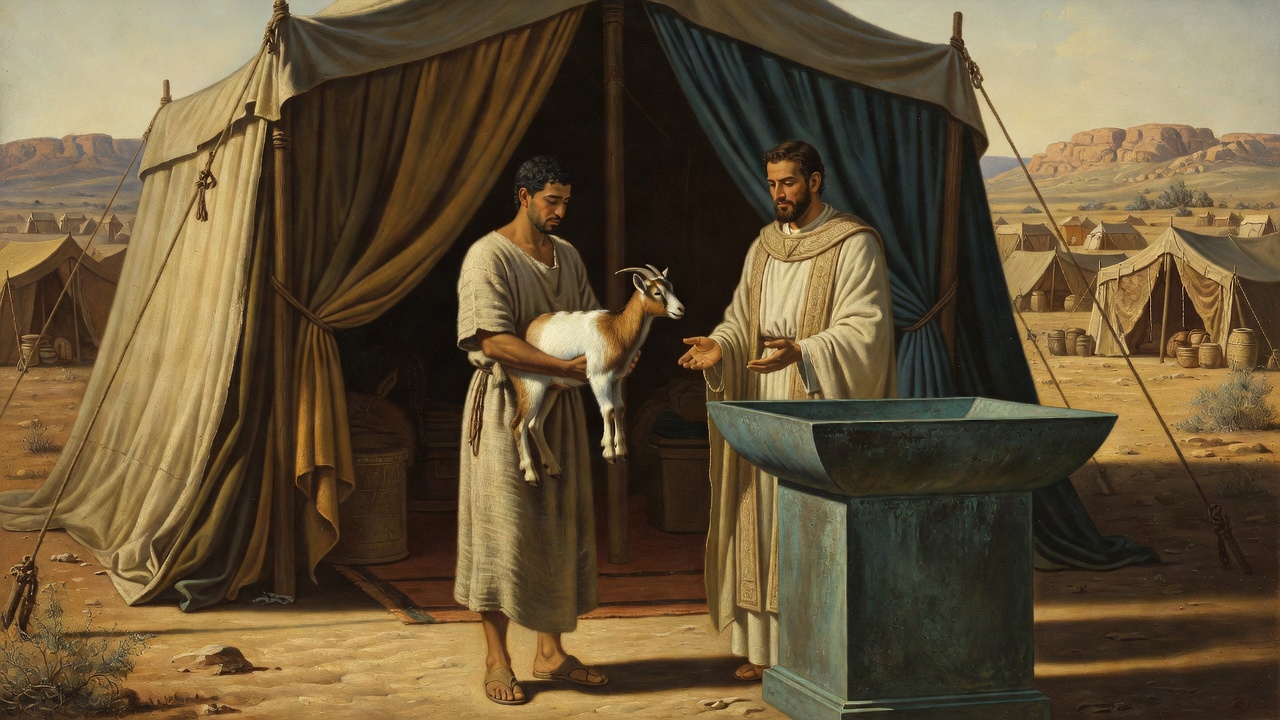
1And the Lord spake with Mosheh, saying: 2Speak with Aharon, and with his sons, and with all the sons of Israel, and say to them: This is the word which the Lord hath commanded, saying: 3Any man of the house of Israel who shall kill bullock or lamb or goat in the camp, or who shall kill (such as sacrifices) without the camp, 4and bring it not to the door of the tabernacle of ordinance, that it may be offered an oblation in the presence of the Lord before the tabernacle of the Lord, blood shall be reckoned to that man; he hath shed blood, and that man shall be destroyed from his people. 5In order that the sons of Israel may bring their victims which they (formerly) sacrificed upon the face of the field, before the Lord at the door of the tabernacle of ordinance, unto the priest, and offer them as consecrated oblations in the presence of the Lord. 6And the priest shall sprinkle the blood upon the altar of the Lord at the door of the tabernacle of ordinance, and burn the fat to be received with acceptance before the Lord. 7And they shall no more sacrifice their victims unto demons after which they have wandered: this shall be an everlasting statute to you unto your generations.
8And say thou to them, Whatever man of the house of Israel, or the stranger who sojourneth among you, who sacrificeth a burnt offering or a consecrated victim, 9And bringeth it not to the door of the tabernacle of ordinance, that it may be performed before the Lord, that man shall be destroyed from his people.
Laws against Eating Blood
10And what man soever of the house of Israel or of the strangers who sojourn among you, who shall eat any blood, I will set my anger upon the man who shall have eaten blood, and will destroy him from among his people. 11Because the life of flesh is in the blood, and I have given it to you upon the altar to make atonement for your souls; for it IS THE BLOOD THAT ATONETH FOR THE SOUL. 12Therefore have I said to the children of Israel, Let no man of you eat blood, nor let the strangers who sojourn among you eat blood; 13And whatever man of the sons of Israel, or of the strangers who sojourn among you, that hunteth venison of beast or bird which may be eaten, let him pour out its blood and cover it in the earth (or in the dust).
14For the life of all flesh is its blood; it is for its life; and I have said to the children of Israel, You shall not eat the blood of any flesh, for the life of all flesh is its blood; everyone who eateth of it shall be destroyed. 15And everyone who eateth of a carcase (that hath died of itself) or hath been torn, whether he be native-born or of the strangers, let him wash his clothes, and bathe in water, and be unclean until the evening, and (then) shall he be clean. 16But if he wash not, nor bathe his flesh, he shall bear his transgression.
¿Sabías que…?
El sacrificio de animales y la santidad de la sangre
- Levítico ordena que los animales domésticos como bueyes, corderos y cabras sean llevados directamente a la entrada de la Tienda de Reunión en lugar de ser sacrificados en campo abierto. Esta regla aseguraba que los sacrificios se ofrecieran exclusivamente como ofrendas de paz al SEÑOR y ponía fin a los sacrificios ilícitos a demonios en forma de cabra.Fuentes: el propio texto bíblico
- Tanto a los israelitas nativos como a los extranjeros residentes se les prohibía estrictamente comer sangre, bajo pena de ser cortados de su pueblo. El texto fundamenta esta ley en el principio teológico de que la vida de la carne está en la sangre, la cual Dios dispuso específicamente para hacer expiación sobre el altar.Fuentes: el propio texto bíblico
- Al cazar animales salvajes o aves permitidas para el consumo, los israelitas y extranjeros debían drenar la sangre sobre el suelo y cubrirla con tierra. Esta instrucción reforzaba que la vida pertenece a Dios y preservaba la santidad de la sangre fuera del santuario sacrificial.Fuentes: el propio texto bíblico
Notas escritas con ayuda de IA a partir de fuentes abiertas (Theographic Bible Metadata, CC BY-SA 4.0; Easton’s Bible Dictionary, dominio público) y revisadas antes de publicarse.
Créditos y licencia de esta traducción
Targum Onkelos Etheridge
The Targums of Onkelos and Jonathan Ben Uzziel On the Pentateuch With The Fragments of the Jerusalem Targum From the Chaldee by J. W. Etheridge, M.A. First Published 1862-65.
Public Domain
Language: English
2020-12-20
Títulos de sección adaptados de la Berean Standard Bible (dominio público); no forman parte del texto bíblico de esta traducción.
Fuente: http://ebible.org/engoke/ · eBible.org