Éxodo 11
Targum Onkelos Etheridge · Toca un versículo para ver sus referencias cruzadas.
The Plague on the Firstborn Foretold
1But the Lord said to Mosheh, Yet one plague will I bring upon Pharoh and upon Mizraim; after which he will send you hence. When sending away he thoroughly driving will drive you from hence. 2Speak now before the people of Israel that a man shall require of his companion, and a woman of her companion, vessels of silver and vessels of gold. 3And the Lord gave the people favour in the eyes of the Mizraee; also the man Mosheh was very great in the land of Mizraim, in the eyes of the servants of Pharoh and in the eyes of the people.
4And Mosheh said, Thus saith the Lord, At the dividing of the night I will be revealed in the midst of Mizraim, 5And all the firstborn in the land of Mizraim shall die; from the firstborn of Pharoh who would sit upon the throne of his kingdom, unto the firstborn of the womanservant who is behind the mills, and all the firstborn of cattle. 6And there shall be a great cry in all the land of Mizraim, the like of which hath not been, nor will be the like of it again. 7But anyone of the sons of Israel no dog will hurt even with his tongue by barking, from man and to beast, so that you shall know that the Lord hath distinguished between the Mizraee and Israel. 8And all these thy servants shall come down to me, and beseech of me, saying, Go forth, thou and all thy people who are with thee: and after that I will go forth. And he went out from Pharoh with vehement anger. 9And the Lord said to Mosheh, Pharoh will not hearken to you; therefore will I multiply My wonders in the land of Mizraim.
10And Mosheh and Aharon wrought all these wonders before Pharoh; but the Lord hardened Pharoh’s heart, that he would not send the children of Israel from his land.
¿Sabías que…?
Una plaga más antes del Éxodo
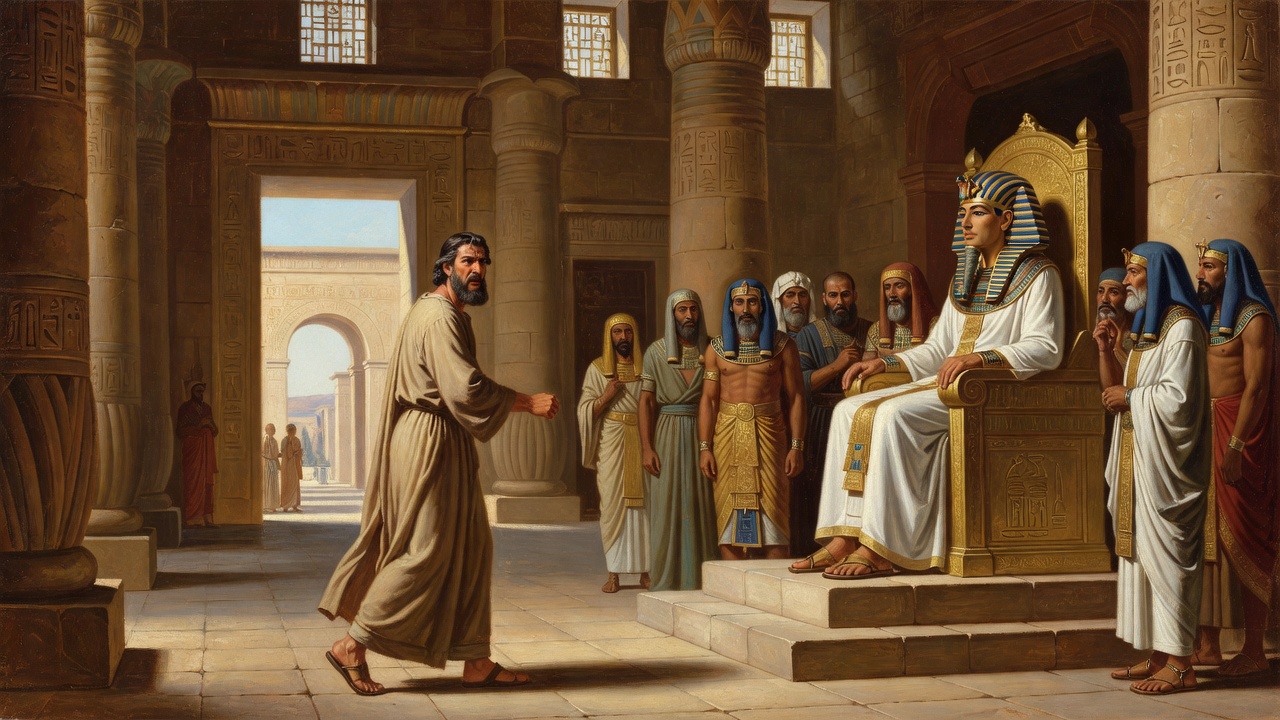
- El Easton's Bible Dictionary (1897) dice que el faraón del Éxodo fue probablemente Menephtah I, el decimocuarto hijo de Rameses II y el mayor de los hijos que sobrevivieron, pero también señala que aún es una cuestión si él o Seti II fue ese rey; algunos se inclinan por Seti II. La misma entrada dice que ese faraón residía en Zoán, donde tuvieron lugar sus entrevistas con Moisés y Aarón. Este capítulo termina con Moisés, ardiendo de ira, saliendo de la presencia del faraón.Fuentes: Pharaoh (of the Exodus) · el propio texto bíblico
- El Easton's Bible Dictionary (1897) afirma que Jacob y sus hijos bajaron a Egipto probablemente unos 350 años antes del nacimiento de Moisés, y que el rey les dio lo mejor de la tierra, Gosén, para habitar. En este capítulo se indica a los hombres y a las mujeres de Israel que pidan a sus vecinos artículos de plata y de oro, y el relato dice que el SEÑOR concedió al pueblo favor ante los egipcios.Fuentes: Moses · el propio texto bíblico
- Un registro de eventos fecha el inicio del Éxodo de Egipto en 1490 a. C. En este capítulo, el SEÑOR dice a Moisés que, después de una plaga más, el faraón dejará salir al pueblo y lo expulsará por completo.Fuentes: Exodus from Egypt · el propio texto bíblico
Notas escritas con ayuda de IA a partir de fuentes abiertas (Theographic Bible Metadata, CC BY-SA 4.0; Easton’s Bible Dictionary, dominio público) y revisadas antes de publicarse.
Lugares de este capítulo
Solo aparecen lugares identificados con alta confianza (90 % o más según las fuentes académicas reunidas por OpenBible). Mapa de la época: DARE (Digital Atlas of the Roman Empire), CC BY 4.0; mapa actual: © colaboradores de OpenStreetMap; lugares: OpenBible.info (CC BY 4.0).
Créditos y licencia de esta traducción
Targum Onkelos Etheridge
The Targums of Onkelos and Jonathan Ben Uzziel On the Pentateuch With The Fragments of the Jerusalem Targum From the Chaldee by J. W. Etheridge, M.A. First Published 1862-65.
Public Domain
Language: English
2020-12-20
Títulos de sección adaptados de la Berean Standard Bible (dominio público); no forman parte del texto bíblico de esta traducción.
Fuente: http://ebible.org/engoke/ · eBible.org