Salmos 125
The Orthodox Jewish Bible · Toca un versículo para ver sus referencias cruzadas.
The LORD Surrounds His People
1(Shir HaMa'alot [Song of Ascents])
1They that trust in Hashem
shall be as Mount Tziyon, which is immoveable,
and abideth l'olam.
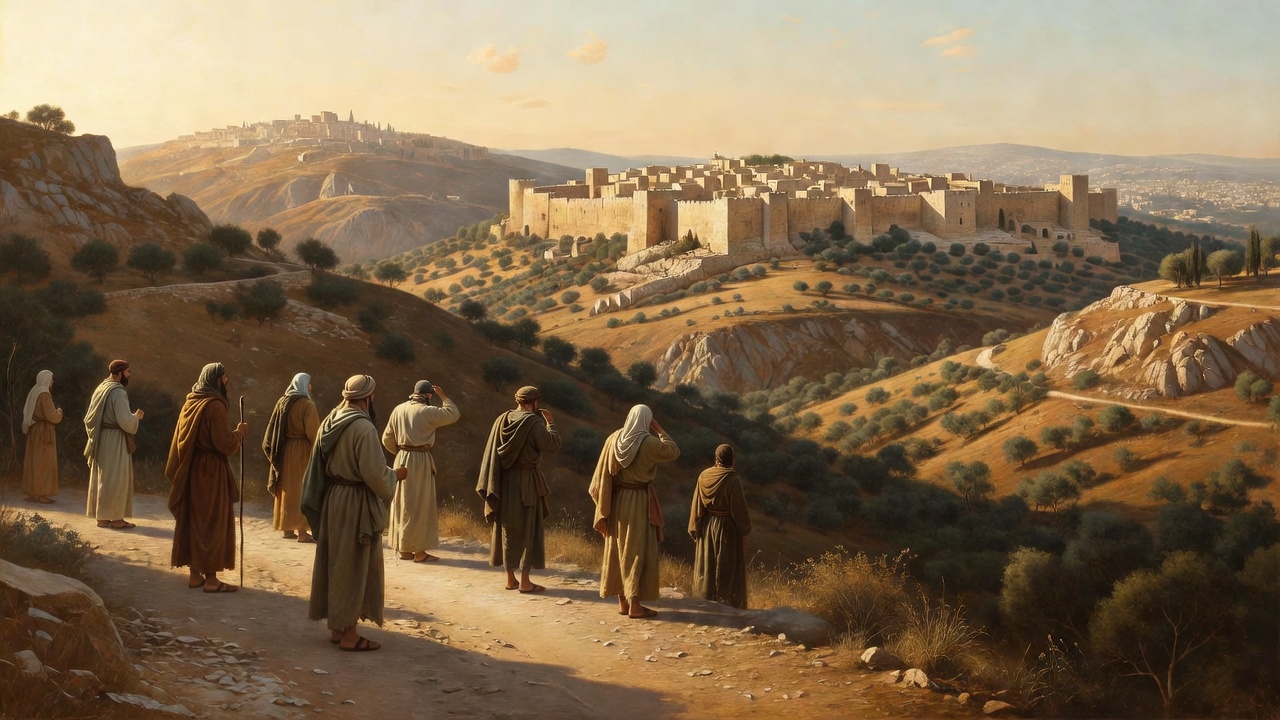
2As harim (the mountains) surround Yerushalayim,
so Hashem surrounds His people
from henceforth v'ad olam (and to forever).
3For the shevet (scepter) of the resha shall not rest
upon the goral (allotment, property) of the tzaddikim;
lest the tzaddikim put forth
their hands unto iniquity.
4Do good, Hashem, unto the tovim,
and to them that are upright in their hearts.
5As for such as turn aside unto their crooked ways,
Hashem shall turn them away with the workers of iniquity;
but shalom shall be upon Yisroel.
¿Sabías que…?
La seguridad inquebrantable en Jerusalén
- El Salmo 125 es uno de los Cánticos de las Subidas y compara a los que confían en Dios con el monte Sion. El monte Sion era una colina naturalmente fortificada en Jerusalén, rodeada por valles profundos en casi todos sus lados, lo que lo convertía en un símbolo de estabilidad duradera.Fuentes: el propio texto bíblico · Mount Zion
- El salmista recurre a la geografía local al destacar cómo los montes rodean a Jerusalén. Establecida como una fortaleza montañosa rodeada de alturas contiguas, la ciudad ofrecía una elocuente ilustración física de la protección divina alrededor de su pueblo.Fuentes: el propio texto bíblico · Jerusalem
- El salmo concluye con una súplica de paz para Israel, lo cual guarda armonía con la interpretación tradicional del nombre de Jerusalén como posesión o cimiento de paz.Fuentes: el propio texto bíblico · Jerusalem
Notas escritas con ayuda de IA a partir de fuentes abiertas (Theographic Bible Metadata, CC BY-SA 4.0; Easton’s Bible Dictionary, dominio público) y revisadas antes de publicarse.
Lugares de este capítulo
Solo aparecen lugares identificados con alta confianza (90 % o más según las fuentes académicas reunidas por OpenBible). Mapa de la época: DARE (Digital Atlas of the Roman Empire), CC BY 4.0; mapa actual: © colaboradores de OpenStreetMap; lugares: OpenBible.info (CC BY 4.0).
Créditos y licencia de esta traducción
The Orthodox Jewish Bible
The Orthodox Jewish Bible - Tanakh and Orthodox Jewish Brit Chadasha - The Holy Bible
copyright © 2002-2011, 2021, 2024 Artists for Israel International
Language: English
Contributor: Artists for Israel International
THE ORTHODOX JEWISH TANAKH
Artists For Israel Intl Inc.
This version also appears with the Orthodox Yiddish Triglot which presents the Hebrew Yiddish script in Latin script and an English word for word translation, available at afii.org/Torah
To donate PayPal.Me
This translation is made available to you under the terms of the
Creative Commons Attribution license 4.0.
You may share and redistribute this Bible translation or extracts from it in any format, provided that:
You include the above copyright and source information.
If you make any changes to the text, you must indicate that you did so in a way that makes it clear that the original licensor is not necessarily endorsing your changes.
Pictures included with Scriptures and other documents on this site are licensed just for use with those Scriptures and documents.
For other uses, please contact the respective copyright owners.
Note that in addition to the rules above, revising and adapting God's Word involves a great responsibility to be true to God's Word. See Revelation 22:18-19.
2026-01-06
Títulos de sección adaptados de la Berean Standard Bible (dominio público); no forman parte del texto bíblico de esta traducción.
Fuente: http://ebible.org/engojb/ · eBible.org