Proverbios 21
The Orthodox Jewish Bible · Toca un versículo para ver sus referencias cruzadas.
The King’s Heart
1The lev melech is in the yad Hashem, as the channels of mayim;
He directeth it wherever He will.
2Every derech ish is yashar (right) in his own eynayim,
but Hashem weigheth the hearts.
3To do tzedakah and mishpat
is more acceptable to Hashem than zevach.
4A high and haughty eye,
and a proud levner resha'im (the lamp of the wicked ones) — are chattat (sin).
5The plans of the kharutz (diligent) lead surely to profit;
but of every one that is hasty surely to machsor (poverty, want).
6The getting of otzarot by a lashon sheker
is hevel (vain, empty, meaningless) and fleeting
for them that seek mavet.
7The violence of the resha'im shall drag them away;
because they refuse to do mishpat (justice).
8The derech of the guilty ish is hafachpach (crooked, tortuous),
but as for the pure, his conduct is yashar (right).
9It is better to dwell in a corner of the gag (roof),
than with a quarrelsome isha in a shared bais.
10The nefesh of the rashah desireth rah;
his re'a findeth no mercy in his eynayim.
11When the scoffer is punished, the simple is made wise,
and when insight is disclosed to the chacham, he receiveth da'as.
12The tzaddik (righteous one) wisely considereth the bais of the rashah,
and hurleth the resha'im to rah.
13He who stoppeth his ozen at the cry of the dal (poor),
he also shall cry out himself, but shall not be heard.
14A mattan (gift) in secret pacifieth af (anger),
and a shochad (bribe) in the kheyk (bosom), strong wrath.
15It is simchah to the tzaddik to do mishpat,
but terror for the po'alei aven (workers of iniquity).
16The adam that wandereth astray from the derech haseichel (road of understanding)
shall rest in the kahal of the refa'im (congregation of the dead).
17The ohev simchah (lover of pleasure) shall be an ish machsor (man of poverty, want, shortage);
he that loveth yayin and shemen shall not be rich.
18The reshah shall be a kofer (ransom) for the tzaddik,
and the boged (the unfaithful) for the yesharim.
19It is better to dwell in eretz midbar,
than with a quarrelsome and an angry isha.
20There is otzar to be desired and shemen in the naveh (dwelling) of the chacham;
but a kesil adam squanders it.
21He that pursueth tzedakah and chesed
findeth chayyim, tzedakah, and kavod.
22A chacham scaleth the city of the gibborim (mighty ones),
and casteth down the trusted stronghold thereof.
23He who is shomer over his peh (mouth) and his lashon (tongue)
is shomer over his nefesh from tzoros.
24Proud and haughty scoffer is shmo,
who acteth in superfluity of zadon (pride).
25The ta'avah (desire, craving) of the atzel (sluggard, lazy one) killeth him,
for his yadayim refuse to work.
26He craveth greedily kol hayom,
but the tzaddik giveth and spareth not.
27The zevach of the resha'im is to'evah (detestable, abomination);
how much more, when he bringeth it with zimmah (evil intent).
28An ed kezavim (lying witness) shall perish,
but the ish that heareth [emes] speaketh lanetzach (unto eternity).
29An ish rasha defiantly hardeneth his face,
but as for the yashar (upright) he maketh his derech (road) sure.
30There is no chochmah nor tevunah (understanding)
nor etzah against Hashem.
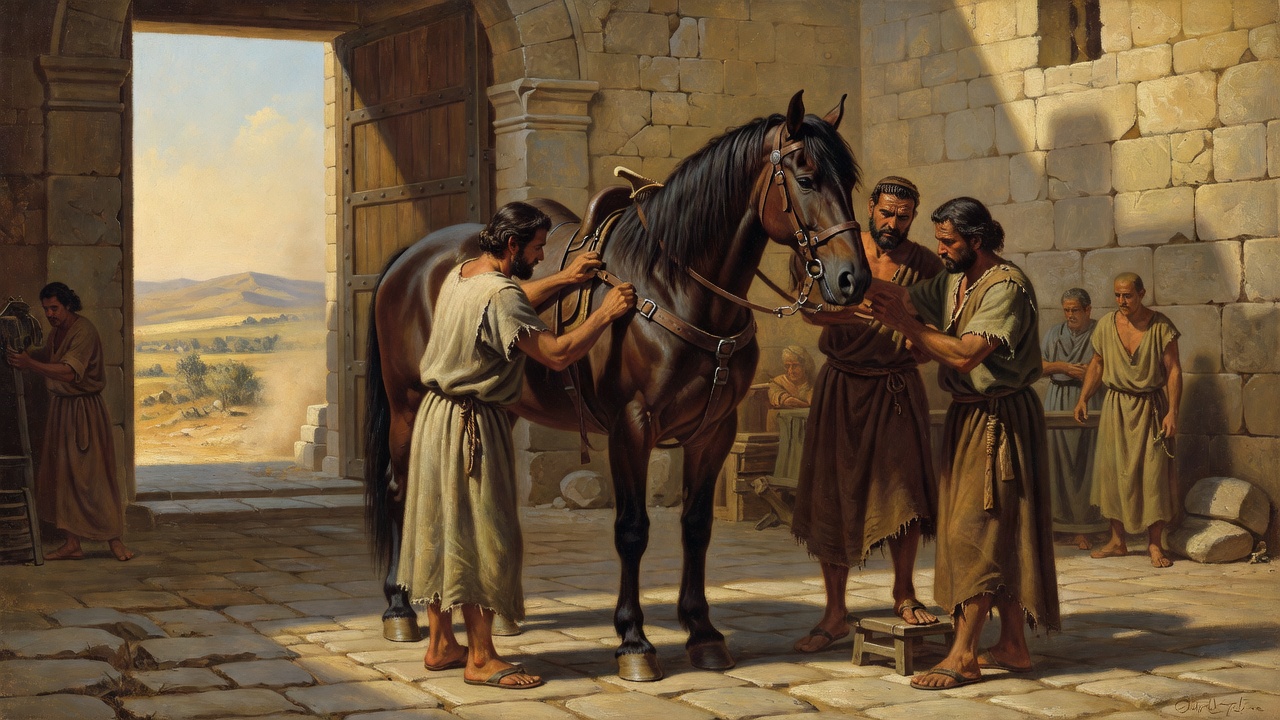
31The sus is prepared against the yom milchamah,
but teshuah (victory, deliverance) is from Hashem.
¿Sabías que…?
Soberanía Divina y Vida Justa
- Proverbios 21 enfatiza que la soberanía divina gobierna el poder humano y los conflictos, afirmando que el corazón del rey es guiado por el SEÑOR como una corriente de agua y que la victoria en la batalla pertenece a Dios y no a los caballos de guerra.Fuentes: el propio texto bíblico
- El capítulo sitúa la conducta ética por encima de la práctica ritual, enseñando que practicar la justicia y el derecho es más aceptable para el SEÑOR que ofrecer sacrificios.Fuentes: el propio texto bíblico
- Los proverbios contrastan la diligencia constante con las actitudes apresuradas o perezosas, señalando que los planes cuidadosos producen abundancia, mientras que la prisa y negarse a trabajar conducen a la pobreza.Fuentes: el propio texto bíblico
Notas escritas con ayuda de IA a partir de fuentes abiertas (Theographic Bible Metadata, CC BY-SA 4.0; Easton’s Bible Dictionary, dominio público) y revisadas antes de publicarse.
Créditos y licencia de esta traducción
The Orthodox Jewish Bible
The Orthodox Jewish Bible - Tanakh and Orthodox Jewish Brit Chadasha - The Holy Bible
copyright © 2002-2011, 2021, 2024 Artists for Israel International
Language: English
Contributor: Artists for Israel International
THE ORTHODOX JEWISH TANAKH
Artists For Israel Intl Inc.
This version also appears with the Orthodox Yiddish Triglot which presents the Hebrew Yiddish script in Latin script and an English word for word translation, available at afii.org/Torah
To donate PayPal.Me
This translation is made available to you under the terms of the
Creative Commons Attribution license 4.0.
You may share and redistribute this Bible translation or extracts from it in any format, provided that:
You include the above copyright and source information.
If you make any changes to the text, you must indicate that you did so in a way that makes it clear that the original licensor is not necessarily endorsing your changes.
Pictures included with Scriptures and other documents on this site are licensed just for use with those Scriptures and documents.
For other uses, please contact the respective copyright owners.
Note that in addition to the rules above, revising and adapting God's Word involves a great responsibility to be true to God's Word. See Revelation 22:18-19.
2026-01-06
Títulos de sección adaptados de la Berean Standard Bible (dominio público); no forman parte del texto bíblico de esta traducción.
Fuente: http://ebible.org/engojb/ · eBible.org