Proverbios 19
The Orthodox Jewish Bible · Toca un versículo para ver sus referencias cruzadas.
The Man of Integrity
1Better is the poor that walketh in his tohm (integrity, guilelessness),
than he that is perverse in his sfatayim (lips), and is a kesil (fool).
2Also, that the nefesh (desire) be without da'as, it is not tov,
and he that hasteth with his raglayim (feet) sinneth.
3The folly of adam maketh his derech crooked,
yet his lev rages against Hashem.
4Wealth maketh many friends,
but the dal (poor) is separated from his re'a (neighbor).
5An ed shekarim (false witness) shall not go unpunished,
and he that speaketh kezavim (lies) shall not escape.
6Rabbim (many) will entreat the favor of the ruler,
and every ish is the re'a (friend) to him that giveth mattan (gifts).
7All the kin of the rahsh (pauper) do hate him;
how much more does his friend avoid him?
He pursueth them with words,
yet they are not there.
8He that getteth lev loveth his own nefesh;
he that is shomer over tevunah (understanding) shall find tov.
9An ed shekarim (false witness) shall not go unpunished,
and he that speaketh kezavim (lies) shall perish.
10Luxury is not fitting for a kesil (fool);
much less for an eved to have rule over sarim.
11The seichel adam deferreth his anger,
and it is his tiferet (glory) to pass over a peysha (transgression).
12The wrath of a melech is like the roaring of a lion,
but his ratzon (favor) is as tal (dew) upon the esev (grass).
13A ben kesil is the calamity of aviv (his father),
and the contentions of an isha are a constant dripping.
14Bais and hon (wealth) are the nachalah avot,
and a prudent isha (wife) is from Hashem.
15Atzlah (slothfulness, laziness) casteth into a tardemah (deep sleep),
and a nefesh remiyyah (a deceitfully lazy soul) shall suffer hunger.
16He that is shomer over the mitzvah is shomer over his own nefesh,
but he that is reckless in his drakhim shall die.
17He that hath compassion on the dal (poor) lendeth unto Hashem;
and for his benefits He will repay him.
18Chasten binecha (thy son) while there is yet tikvah,
and give not in to thy nefesh (desire) to kill him.
19One of gadol chemah (great temper) shall bear onesh (punishment),
for if thou deliver him, yet thou must do it again.
20Hear etzah, and accept musar,
that thou mayest be wise in thy acharit (latter end, future).
21There are many plans in a lev ish;
nevertheless it is the etzah of Hashem that shall stand.
22The ta'avah (what is desirable) in an adam is his chesed,
and a rahsh (pauper) is better than an ish kazav (liar).
23The Yirat Hashem tendeth to chayyim,
and he that hath it shall rest secure;
he shall not be visited by rah.
24An atzel (sluggard, lazy one) thrusteth his yad into his dish,
and will not so much as bring it back to his peh (mouth) again.
25Strike a scoffer, and the simple will learn what is prudent,
and reprove one that hath understanding, and he will understand da'as.
26He that mistreateth his av, and driveth out his em,
is a ben that causeth shame, and bringeth cherpah.
27Cease, beni (my son), to hear musar
and thou shalt go astray from the words of da'as.
28An ed beliya'al (corrupt witness) scorneth mishpat (justice),
and the peh (mouth) of the resha'im devoureth iniquity.
29Shefatim (penalties, judgments) are prepared for scoffers,
and for kesilim, beatings for the back.
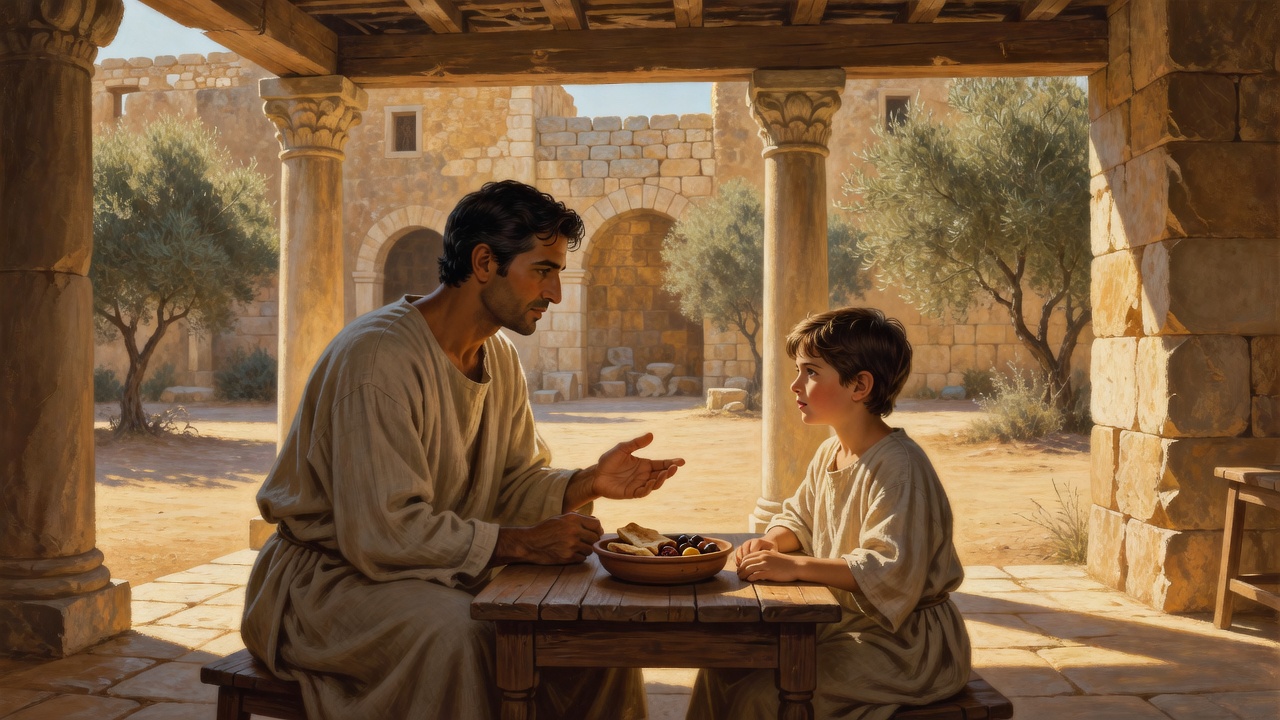
¿Sabías que…?
Sabiduría sobre Riqueza, Relaciones y Carácter
- Proverbios 19 destaca cómo la posición social influye en las relaciones humanas, señalando que las riquezas atraen a muchos compañeros, mientras que el pobre suele ser abandonado incluso por sus propios familiares. En contraste con esta tendencia humana, la compasión hacia los pobres se describe como un préstamo hecho directamente al SEÑOR, quien asegura la recompensa.Fuentes: el propio texto bíblico
- El capítulo utiliza vívidas imágenes de la naturaleza para describir la autoridad de un gobernante, comparando la ira del rey con el rugido de un león y su favor con el rocío refrescante sobre la hierba. En el mundo antiguo, obtener la benevolencia de un monarca era crucial para la protección y la prosperidad.Fuentes: el propio texto bíblico
- Las realidades domésticas cotidianas se reflejan en proverbios elocuentes, como comparar a un cónyuge conflictivo con un goteo incesante y caricaturizar al perezoso extremo que hunde la mano en el plato comunitario pero se niega a llevarla a la boca.Fuentes: el propio texto bíblico
Notas escritas con ayuda de IA a partir de fuentes abiertas (Theographic Bible Metadata, CC BY-SA 4.0; Easton’s Bible Dictionary, dominio público) y revisadas antes de publicarse.
Créditos y licencia de esta traducción
The Orthodox Jewish Bible
The Orthodox Jewish Bible - Tanakh and Orthodox Jewish Brit Chadasha - The Holy Bible
copyright © 2002-2011, 2021, 2024 Artists for Israel International
Language: English
Contributor: Artists for Israel International
THE ORTHODOX JEWISH TANAKH
Artists For Israel Intl Inc.
This version also appears with the Orthodox Yiddish Triglot which presents the Hebrew Yiddish script in Latin script and an English word for word translation, available at afii.org/Torah
To donate PayPal.Me
This translation is made available to you under the terms of the
Creative Commons Attribution license 4.0.
You may share and redistribute this Bible translation or extracts from it in any format, provided that:
You include the above copyright and source information.
If you make any changes to the text, you must indicate that you did so in a way that makes it clear that the original licensor is not necessarily endorsing your changes.
Pictures included with Scriptures and other documents on this site are licensed just for use with those Scriptures and documents.
For other uses, please contact the respective copyright owners.
Note that in addition to the rules above, revising and adapting God's Word involves a great responsibility to be true to God's Word. See Revelation 22:18-19.
2026-01-06
Títulos de sección adaptados de la Berean Standard Bible (dominio público); no forman parte del texto bíblico de esta traducción.
Fuente: http://ebible.org/engojb/ · eBible.org