Proverbios 16
The Orthodox Jewish Bible · Toca un versículo para ver sus referencias cruzadas.
The Reply of the Tongue Is from the LORD
1The plans of the lev belong to adam,
and the answer of the lashon is from Hashem.
2All the drakhei ish are pure in his own eynayim,
but Hashem weigheth the ruchot.
3Commit thy ma'asim (works) unto Hashem,
and thy plans shall be established.
4Hashem works out all things for Himself,
indeed, even the rasha (wicked) for the Yom Ra'ah (day of evil).
5Every one that is proud in lev
is to'evat Hashem;
though yad join in yad, he shall not go unpunished.
6By chesed and emes avon is purged,
and by the Yirat Hashem men depart from rah.
7When drakhei ish please Hashem,
He maketh even his oyevim to be in shalom with him.
8Better is a little with tzedakah
than great revenues without mishpat (justice).
9The lev adam plans his derech,
but Hashem directeth his steps.
10A kesem (oracle) is on the sfatayim (lips) of Melech,
his peh (mouth) must not betray mishpat.
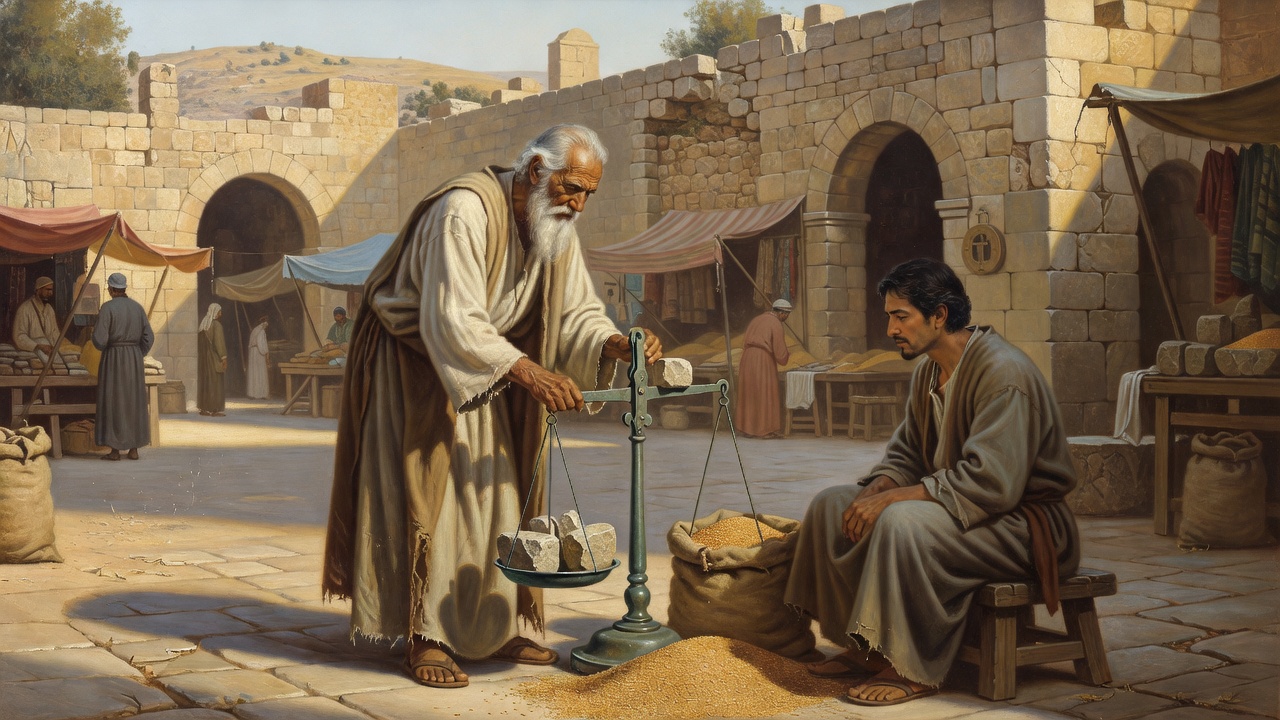
11A just weight and balance are Hashemʼs,
all the weights of the bag are His concern.
12It is to'evat melachim to commit resha (wickedness),
for the kisse is established through tzedakah.
13Sfatayim (lips) of tzedek are the delight of melachim;
and they love him that speaketh yesharim (upright things).
14The wrath of a melech is as malachim of mavet,
but an ish chacham will appease it.
15In the light of the countenance of melech is chayyim,
and his favor is like the cloud of a spring rain.
16How much better is it to acquire chochmah than gold,
and acquiring binah (understanding) a better choice than kesef!
17The mesilat yesharim (highway of the upright)
is to depart from rah;
he that guards his derech is shomer over his nefesh (soul).
18Ga'on (pride) goeth before shever (destruction),
and a ruach of haughtiness before a fall.
19Better it is to be of a humble ruach among the anayim,
than to divide the plunder with the proud.
20He that wisely heeds the Davar shall find tov (good),
and he who trusteth in Hashem, happy is he.
21The chacham lev shall be called prudent,
and the sweetness of the sfatayim (lips) adds to learning.
22Seichel is a Makor Chayyim unto him that hath it,
but the musar (instruction, discipline) of fools is folly.
23The lev chacham guides his peh (mouth),
and addeth learning to his sfatayim (lips).
24Pleasant words are as a honeycomb,
sweet to the nefesh, and marpeh (healing) to the atzmot (bones).
25There is a derech that seemeth yashar (right) before an ish,
but its acharit (future, latter end) is the drakhei mavet.
26The nefesh (appetite) of the laborer works for him,
for his peh (mouth) of hunger driveth him on.
27An ish Beliya'al diggeth up ra'ah,
and in his sfatayim (lips) there is as a scorching eish.
28A perverse ish soweth madon (strife, dissension),
and a whisperer separateth close friends.
29An ish chamas enticeth his re'a,
and leadeth him into the derech that is not good.
30He winking his eynayim to plot perverse things,
compressing his sfatayim (lips),
bringeth ra'ah to pass.
31The silvery hair is an ateret tiferet;
it is found in the derech tzedakah.
32He that is slow to anger
is better than the gibbor;
and he that ruleth his ruach
than he that captures a city.
33The goral is cast into the kheyk (lap),
but the whole decision thereof is from Hashem.
¿Sabías que…?
Guía Divina y Sabiduría Práctica
- Proverbios 16 resalta el contraste entre las intenciones humanas y la dirección divina, señalando que, aunque las personas planifiquen su camino y echen suertes, la decisión final pertenece al Señor.Fuentes: el propio texto bíblico
- El capítulo vincula el comercio justo con la rectitud, afirmando que las balanzas honestas y todas las pesas que el comerciante lleva en su bolsa son de directo interés del Señor.Fuentes: el propio texto bíblico
- El hablar sabio y el dominio propio reciben un énfasis especial en esta colección, comparando las palabras amables con un panal de miel y declarando que controlar la ira es mayor que conquistar una ciudad fortificada.Fuentes: el propio texto bíblico
Notas escritas con ayuda de IA a partir de fuentes abiertas (Theographic Bible Metadata, CC BY-SA 4.0; Easton’s Bible Dictionary, dominio público) y revisadas antes de publicarse.
Créditos y licencia de esta traducción
The Orthodox Jewish Bible
The Orthodox Jewish Bible - Tanakh and Orthodox Jewish Brit Chadasha - The Holy Bible
copyright © 2002-2011, 2021, 2024 Artists for Israel International
Language: English
Contributor: Artists for Israel International
THE ORTHODOX JEWISH TANAKH
Artists For Israel Intl Inc.
This version also appears with the Orthodox Yiddish Triglot which presents the Hebrew Yiddish script in Latin script and an English word for word translation, available at afii.org/Torah
To donate PayPal.Me
This translation is made available to you under the terms of the
Creative Commons Attribution license 4.0.
You may share and redistribute this Bible translation or extracts from it in any format, provided that:
You include the above copyright and source information.
If you make any changes to the text, you must indicate that you did so in a way that makes it clear that the original licensor is not necessarily endorsing your changes.
Pictures included with Scriptures and other documents on this site are licensed just for use with those Scriptures and documents.
For other uses, please contact the respective copyright owners.
Note that in addition to the rules above, revising and adapting God's Word involves a great responsibility to be true to God's Word. See Revelation 22:18-19.
2026-01-06
Títulos de sección adaptados de la Berean Standard Bible (dominio público); no forman parte del texto bíblico de esta traducción.
Fuente: http://ebible.org/engojb/ · eBible.org