Números 30
The Orthodox Jewish Bible · Toca un versículo para ver sus referencias cruzadas.
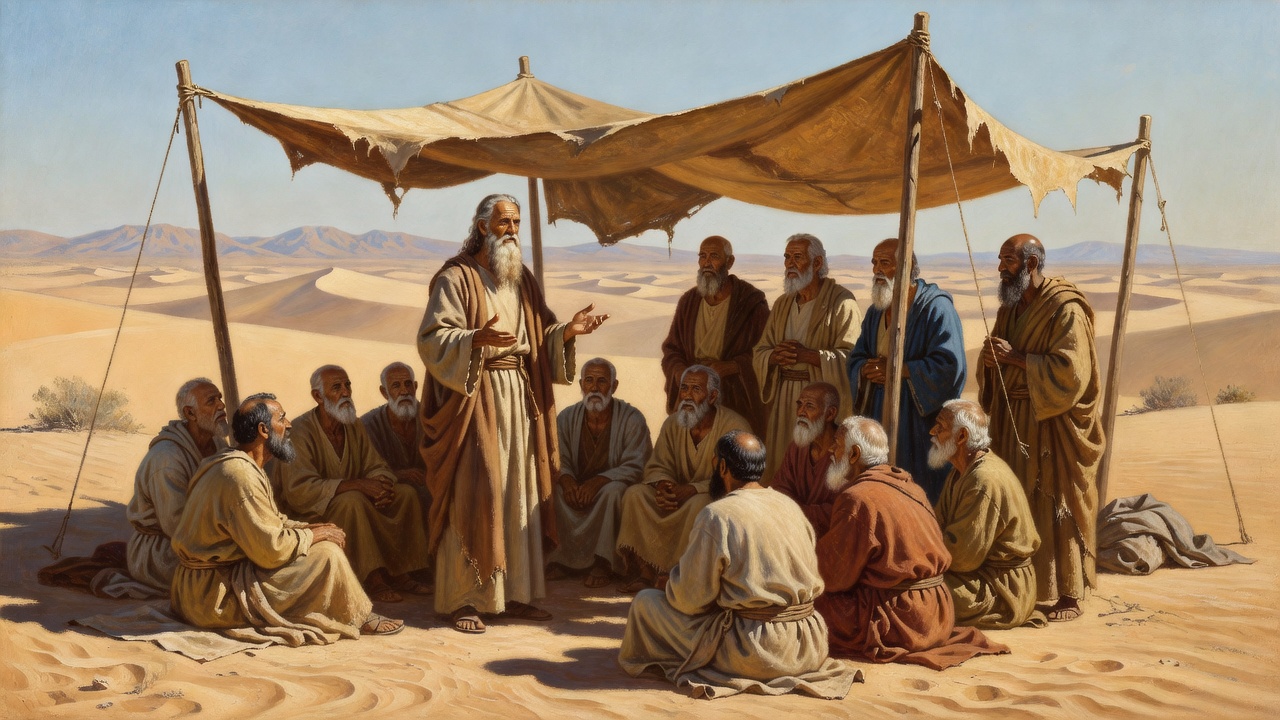
1And Moshe told the Bnei Yisroel according to all that Hashem commanded Moshe.
[MATOT]
2And Moshe spoke unto the Rashei HaMattot (Heads of the Tribes) concerning the Bnei Yisroel saying, This is the thing which Hashem hath commanded:
3If an ish vow a neder unto Hashem, or swear a shevu'ah (oath) to bind his nefesh with an issar (negative vow, prohibition), he shall not break his devar, he shall do according to all that proceedeth out of his mouth.
4If an isha also vow a neder unto Hashem, and bind herself by an issar, being in her bais avi in her youth; 5And her av hear her neder, and her issar wherewith she hath bound her nefesh, and her av says nothing to her, then all her nedarim shall stand, and every issar wherewith she hath bound her nefesh shall stand. 6But if her av disallow her in the yom that he heareth, not any of her nedarim, or of her issurim (negative vows, prohibitions) wherewith she hath bound her nefesh, shall stand; and Hashem shall forgive her, because her av forbade her. 7And if she had at all an ish, when she made nedarim or utterance of her lips, wherewith she bound her nefesh; 8And her ish heard it, and said nothing to her in the yom that he heard it, then her nedarim shall stand, and her issurim wherewith she bound her nefesh shall stand. 9But if her ish forbade her on the yom that he heard it, then he shall nullify her neder which she vowed, and that which she uttered with her lips, wherewith she bound her nefesh; and Hashem shall forgive her. 10But every neder of an almanah, and of a gerushah (divorced woman), wherewith she have bound her nefesh, shall stand against her. 11And if she vowed in her bais ish, or bound her nefesh by an issar with a shevuah, 12And her ish heard it, and said nothing to her, and forbade her not, then all her nedarim shall stand, and every issar wherewith she bound her nefesh shall stand. 13But if her ish hath utterly nullified them on the yom he heard them, then whatsoever proceeded out of her lips concerning her nedarim, or concerning the issar of her nefesh, shall not stand; her ish hath nullified them; and Hashem shall forgive her.
14Every neder, and every shevuat issar to afflict the nefesh, her ish may let it stand, or her ish may let it have a hafarah. 15But if her ish say nothing to her from yom to yom, then he will have let stand all her nedarim or all her issurim, which are upon her; he will have let them stand, because he said nothing to her in the yom that he heard them. 16But if he shall revoke them after that he hath heard them, then nasa (he shall bear) her avon.
17These are the chukkim, which Hashem commanded Moshe, between an ish and his isha, between the av and his bat, being yet in her youth in her bais avi.
¿Sabías que…?
Leyes Sobre Votos y Promesas
- Moisés entregó estas normas específicamente a los jefes de las tribus de Israel. Conforme a estos estatutos, un hombre adulto quedaba incondicionalmente obligado a cumplir cualquier voto, juramento o promesa hecho al Señor sin faltar a su palabra.Fuentes: el propio texto bíblico
- El padre o el esposo tenía la facultad de confirmar o anular el voto realizado por una hija joven en su casa o por su esposa. Si el jefe del hogar no expresaba objeción el día en que se enteraba, la promesa quedaba en pie; si la anulaba de inmediato, ella quedaba absuelta.Fuentes: el propio texto bíblico
- La ley trataba a las viudas y a las mujeres divorciadas de manera diferente a las dependientes en el hogar de un padre o esposo. Cualquier voto o compromiso asumido por una viuda o mujer divorciada era vinculante por completo, sin que una autoridad masculina pudiera anularlo.Fuentes: el propio texto bíblico
Notas escritas con ayuda de IA a partir de fuentes abiertas (Theographic Bible Metadata, CC BY-SA 4.0; Easton’s Bible Dictionary, dominio público) y revisadas antes de publicarse.
Créditos y licencia de esta traducción
The Orthodox Jewish Bible
The Orthodox Jewish Bible - Tanakh and Orthodox Jewish Brit Chadasha - The Holy Bible
copyright © 2002-2011, 2021, 2024 Artists for Israel International
Language: English
Contributor: Artists for Israel International
THE ORTHODOX JEWISH TANAKH
Artists For Israel Intl Inc.
This version also appears with the Orthodox Yiddish Triglot which presents the Hebrew Yiddish script in Latin script and an English word for word translation, available at afii.org/Torah
To donate PayPal.Me
This translation is made available to you under the terms of the
Creative Commons Attribution license 4.0.
You may share and redistribute this Bible translation or extracts from it in any format, provided that:
You include the above copyright and source information.
If you make any changes to the text, you must indicate that you did so in a way that makes it clear that the original licensor is not necessarily endorsing your changes.
Pictures included with Scriptures and other documents on this site are licensed just for use with those Scriptures and documents.
For other uses, please contact the respective copyright owners.
Note that in addition to the rules above, revising and adapting God's Word involves a great responsibility to be true to God's Word. See Revelation 22:18-19.
2026-01-06
Fuente: http://ebible.org/engojb/ · eBible.org