Mateo 2
The Orthodox Jewish Bible · Toca un versículo para ver sus referencias cruzadas.
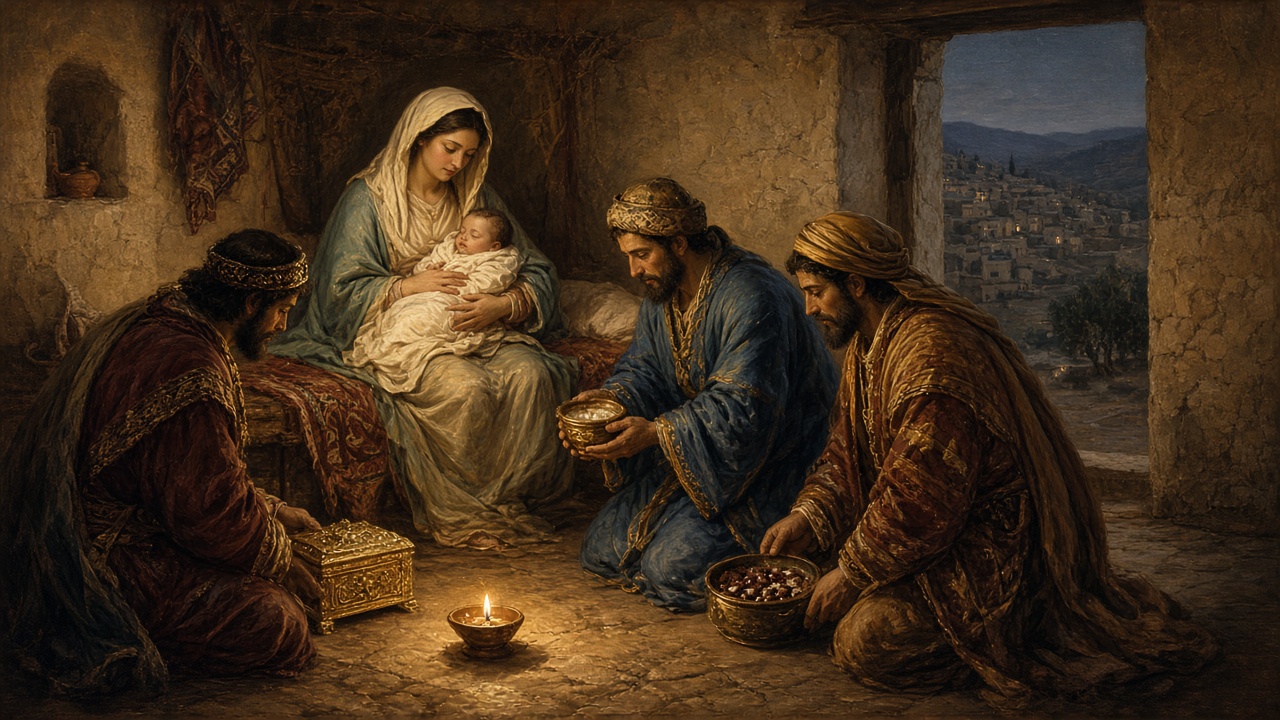
The Pilgrimage of the Magi
1Now after Yehoshua was born in Beit-Lechem Yehudah, in the days of Herod king — hinei! — chachamim from eretz Mizrach (the land of the East) arrived in Yerushalayim, 2saying, Where is he that is born Melech HaYehudim? For we have seen his KOCHAV (star) in the Mizrach and come to fall down before him. 3Because Herod the king heard this, he was terribly shaken, and all Yerushalayim with him. 4And assembling all the Rashei Hakohanim and Sofrim of the people, he inquired of them the place where Rebbe, Melech HaMoshiach was to be born. 5They told him, In Beit-Lechem Yehudah; because so it stands written by the Navi: 6And YOU, BEIT-LECHEM, (Bethlehem, Mic 5:1[2]) in eretz Yehudah are by no means least among the shtetlach (towns) or ruling of Yehudah; because out of you will come a Moshel (Ruler) who will be the Ro'eh Ami Yisroel.
7Then Herod secretly summoned the chachamim and ascertained from them the exact date of the manifestation of the KOCHAV. 8Then he sent them to Beit-Lechem, saying, Go and make a thorough search for the yeled (child); as soon as you have found him, report to me, so that I, as you, may come and fall down before him. 9After they heard the king, they departed, and hinei! The KOCHAV they had seen in the Mizrach (East) was going ahead of them until it came and stood above the place where the yeled was. 10When they saw the KOCHAV, they rejoiced with exceedingly great nachas (joy). 11And, entering the bais (house), they beheld the yeled with Miryam, his Em, and prostrated themselves before him. Then, opening their treasure chests, they offered gifts of gold, frankincense, and myrrh. 12And having been warned in a chalom (dream) not to return to Herod, they took refuge in their own country by another way.
The Flight to Egypt
13And when they had gone — hinei! — a malach Hashem appeared to Yosef in a chalom (dream), saying, Arise, and take the yeled and his Em, and flee to Eretz Mitzrayim (Egypt), and stay there until I tell you, for Herod is about to seek the yeled to destroy him. 14So, having got up, Yosef took the yeled, and his Em by night and departed for Eretz Mitzrayim. 15And Yosef was there until the mot Herod. This was to fulfill what had been spoken by Hashem through the Navi, UMIMITZRAYIM KARATI LIVNI (Out of Egypt have I called my Son).
Weeping and Great Mourning
16When Herod saw that he had been outwitted by the chachamim, he was greatly enraged, and he ordered the slaughter of all the yeladim in Beit-Lechem and its vicinity who were two years old or under, in accordance with the time that he had learned from the chachamim. 17Then came the fulfillment of what was spoken through Yirmeyah HaNavi: 18KOL BRAMAH NISHMAH (A voice was heard in Ramah), a voice of bitter weeping and mourning. Rachel is crying for her yeladim; she refuses to be comforted, because they are no more.
The Return to Nazareth
19When Herod died, hinei, in Eretz Mitzrayim a malach Hashem appeared to Yosef in a chalom (dream), 20saying, Arise, and take the yeled and his Em and go to Eretz Yisroel, for those seeking the life of the yeled are dead. 21And Yosef arose and took the yeled and his Em, and entered Eretz Yisroel. 22And when Yosef heard that Archelaus had succeeded his father Herod as king of Yehudah, Yosef was afraid to go there. And, having been warned in a chalom, he departed into the districts of the Galil. 23And Yosef made his home in the shtetl (Jewish village) called Natzeret, so that which was spoken by the Neviim might be fulfilled: He will be called a Natzri.
¿Sabías que…?
Magos, Herodes y Nazaret
- El rey Herodes de este capítulo es Herodes el Grande. Su hijo Arquelao, habido con Malthace, una mujer samaritana, heredó la tercera parte del reino: Idumea, Judea y Samaria. Hasta pocos días antes de la muerte de Herodes, otro hijo, Antipas, había sido nombrado sucesor, pero en sus últimos momentos Herodes nombró a Arquelao; por temor a él, José se apartó de Judea y se retiró a Galilea.Fuentes: Archelaus · el propio texto bíblico
- Mateo relaciona la muerte de los niños en Belén con palabras pronunciadas por el profeta Jeremías: una voz en Ramá, Raquel llorando por sus hijos. Raquel, una de las esposas de Jacob, murió al dar a luz a Benjamín y fue sepultada junto al camino de Efrata, es decir, Belén, justo al norte de la ciudad. Su sepulcro es objeto de gran veneración entre los judíos.Fuentes: el propio texto bíblico · Rachel · Bethlehem
- Belén, en la región montañosa de Judá, se llamaba antes Efrata y también era conocida como la ciudad de David; bajo los romanos quedaba en Judea, la más meridional de las tres divisiones de Palestina. José y María fueron en cambio a Nazaret, en Galilea, su hogar, un pueblo que no se menciona en el Antiguo Testamento. En general se supone que el nombre Nazaret proviene del hebreo netser, un renuevo o brote, aunque algunos lo relacionan con una palabra que significa guardar o vigilar.Fuentes: Bethlehem · Judea · Nazareth · el propio texto bíblico
Notas escritas con ayuda de IA a partir de fuentes abiertas (Theographic Bible Metadata, CC BY-SA 4.0; Easton’s Bible Dictionary, dominio público) y revisadas antes de publicarse.
Lugares de este capítulo
- Bethlehem · 31.704, 35.208 · versículos 1, 5, 6, 8, 9, 16
- East · Hoy: region around Amman · 31.955, 35.934 · versículos 1, 2, 9
- Jerusalem · 31.777, 35.234 · versículos 1, 3
- Judea · Hoy: Judea 1 · 31.777, 35.234 · versículos 1, 5, 22
- Egypt · 30.129, 31.308 · versículos 13, 14, 15, 19
- Galilee · 32.760, 35.527 · versículo 22
- Nazareth · 32.702, 35.298 · versículo 23
Solo aparecen lugares identificados con alta confianza (90 % o más según las fuentes académicas reunidas por OpenBible). Mapa de la época: DARE (Digital Atlas of the Roman Empire), CC BY 4.0; mapa actual: © colaboradores de OpenStreetMap; lugares: OpenBible.info (CC BY 4.0).
Créditos y licencia de esta traducción
The Orthodox Jewish Bible
The Orthodox Jewish Bible - Tanakh and Orthodox Jewish Brit Chadasha - The Holy Bible
copyright © 2002-2011, 2021, 2024 Artists for Israel International
Language: English
Contributor: Artists for Israel International
THE ORTHODOX JEWISH TANAKH
Artists For Israel Intl Inc.
This version also appears with the Orthodox Yiddish Triglot which presents the Hebrew Yiddish script in Latin script and an English word for word translation, available at afii.org/Torah
To donate PayPal.Me
This translation is made available to you under the terms of the
Creative Commons Attribution license 4.0.
You may share and redistribute this Bible translation or extracts from it in any format, provided that:
You include the above copyright and source information.
If you make any changes to the text, you must indicate that you did so in a way that makes it clear that the original licensor is not necessarily endorsing your changes.
Pictures included with Scriptures and other documents on this site are licensed just for use with those Scriptures and documents.
For other uses, please contact the respective copyright owners.
Note that in addition to the rules above, revising and adapting God's Word involves a great responsibility to be true to God's Word. See Revelation 22:18-19.
2026-01-06
Títulos de sección adaptados de la Berean Standard Bible (dominio público); no forman parte del texto bíblico de esta traducción.
Fuente: http://ebible.org/engojb/ · eBible.org