Malaquías 2
The Orthodox Jewish Bible · Toca un versículo para ver sus referencias cruzadas.
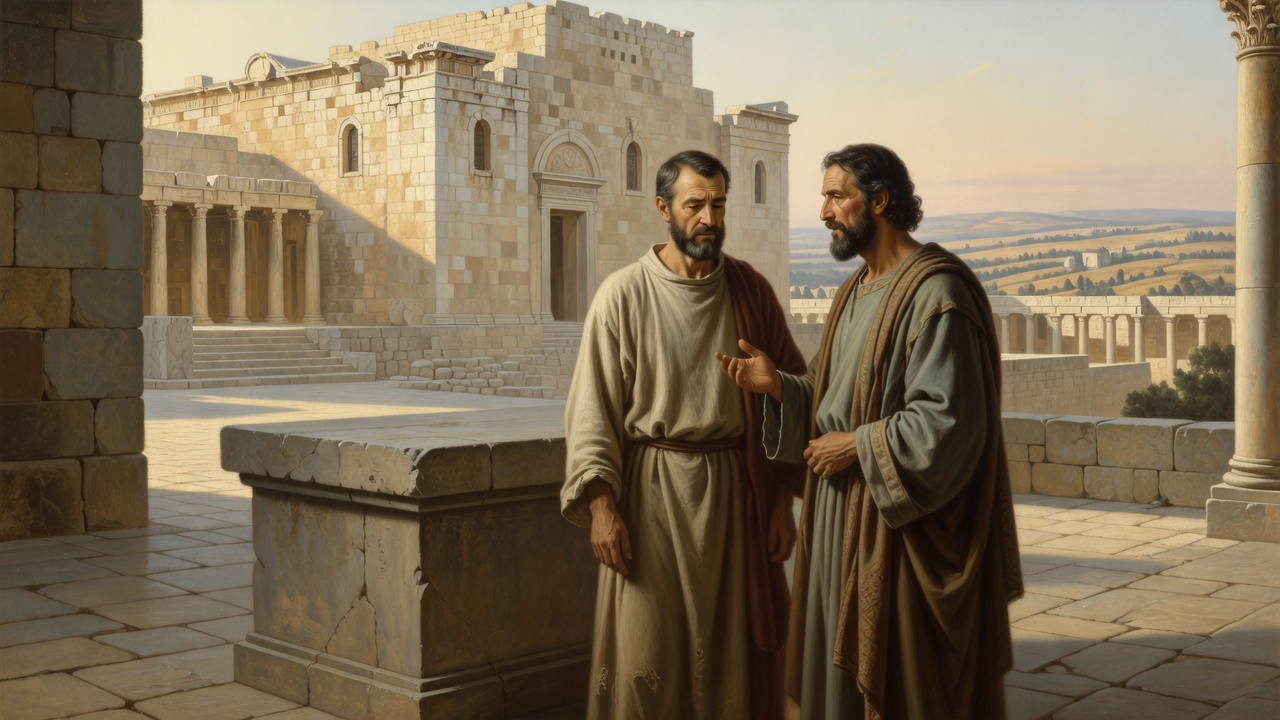
A Warning to the Priests
1And now, O ye kohanim, this mitzvah is for you:
2If ye will not hear,
and if ye will not take it to lev,
to give kavod unto My name,
saith Hashem Tzva'os,
I will even send a me'erah (curse) upon you,
and I will curse your brakhot; yea,
I have cursed them already,
because ye do not take it to lev.
3Hineni, I am rebuking your zera,
and I will spread dung upon your faces,
even the dung of your chagim;
and it will take you away with it.
4And ye shall have da'as
that I have sent this mitzvah unto you,
that My brit might continue with Levi,
saith Hashem Tzva'os.
5My brit was with him of chayyim and shalom;
and I gave them to him
that he might fear Me; so he feared Me,
and stood in reverence before My name.
6Torat emes was in his mouth,
and iniquity was not found on his lips:
he walked with Me in shalom and yashrus,
and did turn rabbim (many) away from avon (iniquity).
7For the kohenʼs lips should preserve da'as,
and they should seek torah at his mouth:
for he is the malach Hashem Tzva'os.
8But ye are departed out of HaDerech;
ye have caused rabbim to fall into a michshol (stumbling block) at the torah (teaching);
ye have corrupted the Brit of Levi,
saith Hashem Tzva'os.
9Therefore have I also made you
contemptible and shefalim before kol HaAm
because ye have not been shomrim of darkhei of Me,
but have shown partiality in torah.
Judah’s Unfaithfulness
10Have we not all Av Echad?
Hath not El Echad created us?
Why do we commit chillul Brit Avoteinu
by every man breaking faith with his brother?
11Yehudah hath broken faith,
and a toeva (abomination) is committed
in Yisroel and in Yerushalayim;
for Yehudah hath committed chillul against
the Beis Hamikdash Hashem loves,
by marrying the bat el nekhar.
12May Hashem cut off from the ohalim of Ya'akov the man that doeth this,
being awake and aware,
yet who offereth a minchah unto Hashem Tzva'os.
13And this too have ye done,
covering the mizbe'ach of Hashem with tears,
with weeping, and with crying out,
because that He regardeth not the minchah any more,
nor receiveth it with ratzon (good will) at your hand.
14Yet ye say: Wherefore?
Because Hashem hath been ed (witness)
between thee and the wife of thy youth,
against whom thou hast dealt treacherously, breaking faith:
yet is she thy chaveret,
and the wife of thy brit.
15And did not Hashem make echad?
And the remnant of the ruach is Hashemʼs.
And why echad?
That He might seek zera Elohim.
Therefore be shomer of your ruach,
and let none deal treacherously against the wife of his youth.
16For Hashem Elohei Yisroel saith
that He hateth putting away:
for it covereth oneʼs garment with chamas (violence),
saith the Hashem Tzva'os:
therefore, be shomer of your ruach,
that ye deal not treacherously, breaking faith.
17Ye have wearied Hashem with your devarim.
Yet ye say: Wherein have we wearied Him?
When ye say: Everyone that doeth rah
is tov in the sight of Hashem,
and in them Hashem finds chafetz;
or: Where is Elohei HaMishpat?
¿Sabías que…?
Reprensión de la Infidelidad y Honra a los Pactos
- El capítulo reprende severamente al sacerdocio al recordar el pacto de Dios con Leví. Se describe al sacerdote como un mensajero del Señor de los Ejércitos, cuyos labios deben guardar el conocimiento e impartir una instrucción fiel en lugar de hacer tropezar al pueblo.Fuentes: el propio texto bíblico · Levi (patriarch)
- El profeta confronta al pueblo de Judá y de Jerusalén por faltar a la lealtad mutua. El texto condena el unirse a la adoración de dioses extranjeros y el abandono de las esposas de su juventud, presentando el matrimonio como un pacto sagrado celebrado ante Dios.Fuentes: el propio texto bíblico · Jerusalem
Notas escritas con ayuda de IA a partir de fuentes abiertas (Theographic Bible Metadata, CC BY-SA 4.0; Easton’s Bible Dictionary, dominio público) y revisadas antes de publicarse.
Lugares de este capítulo
- Jerusalem · 31.777, 35.234 · versículo 11
Solo aparecen lugares identificados con alta confianza (90 % o más según las fuentes académicas reunidas por OpenBible). Mapa de la época: DARE (Digital Atlas of the Roman Empire), CC BY 4.0; mapa actual: © colaboradores de OpenStreetMap; lugares: OpenBible.info (CC BY 4.0).
Créditos y licencia de esta traducción
The Orthodox Jewish Bible
The Orthodox Jewish Bible - Tanakh and Orthodox Jewish Brit Chadasha - The Holy Bible
copyright © 2002-2011, 2021, 2024 Artists for Israel International
Language: English
Contributor: Artists for Israel International
THE ORTHODOX JEWISH TANAKH
Artists For Israel Intl Inc.
This version also appears with the Orthodox Yiddish Triglot which presents the Hebrew Yiddish script in Latin script and an English word for word translation, available at afii.org/Torah
To donate PayPal.Me
This translation is made available to you under the terms of the
Creative Commons Attribution license 4.0.
You may share and redistribute this Bible translation or extracts from it in any format, provided that:
You include the above copyright and source information.
If you make any changes to the text, you must indicate that you did so in a way that makes it clear that the original licensor is not necessarily endorsing your changes.
Pictures included with Scriptures and other documents on this site are licensed just for use with those Scriptures and documents.
For other uses, please contact the respective copyright owners.
Note that in addition to the rules above, revising and adapting God's Word involves a great responsibility to be true to God's Word. See Revelation 22:18-19.
2026-01-06
Títulos de sección adaptados de la Berean Standard Bible (dominio público); no forman parte del texto bíblico de esta traducción.
Fuente: http://ebible.org/engojb/ · eBible.org