Levítico 19
The Orthodox Jewish Bible · Toca un versículo para ver sus referencias cruzadas.
[KEDOSHIM]
1And Hashem spoke unto Moshe, saying, 2Speak unto kol Adat Bnei Yisroel, and say unto them, Ye shall be kedoshim (holy ones): for I Hashem Eloheichem am kadosh. 3Ye shall fear every man his em, and his av, and be shomer over My Shabbatot: I am Hashem Eloheichem.
4Turn ye not unto elilim, nor make to yourselves elohei massekhah (cast metal g-ds); I am Hashem Eloheichem.
5And if ye offer a zevach shelamim unto Hashem, ye shall offer it for your acceptance. 6It shall be eaten the same day ye offer it, and on the next day; and what remains until the yom hashelishi, it shall be burned in the eish. 7And if it be eaten at all on the yom hashelishi, it is piggul (unclean sacrificial flesh); it shall not be accepted. 8Therefore every one that eateth it shall bear his avon, because he hath desecrated as chillul the set-apart-as-kodesh thing of Hashem: and that nefesh shall be cut off from among his people.
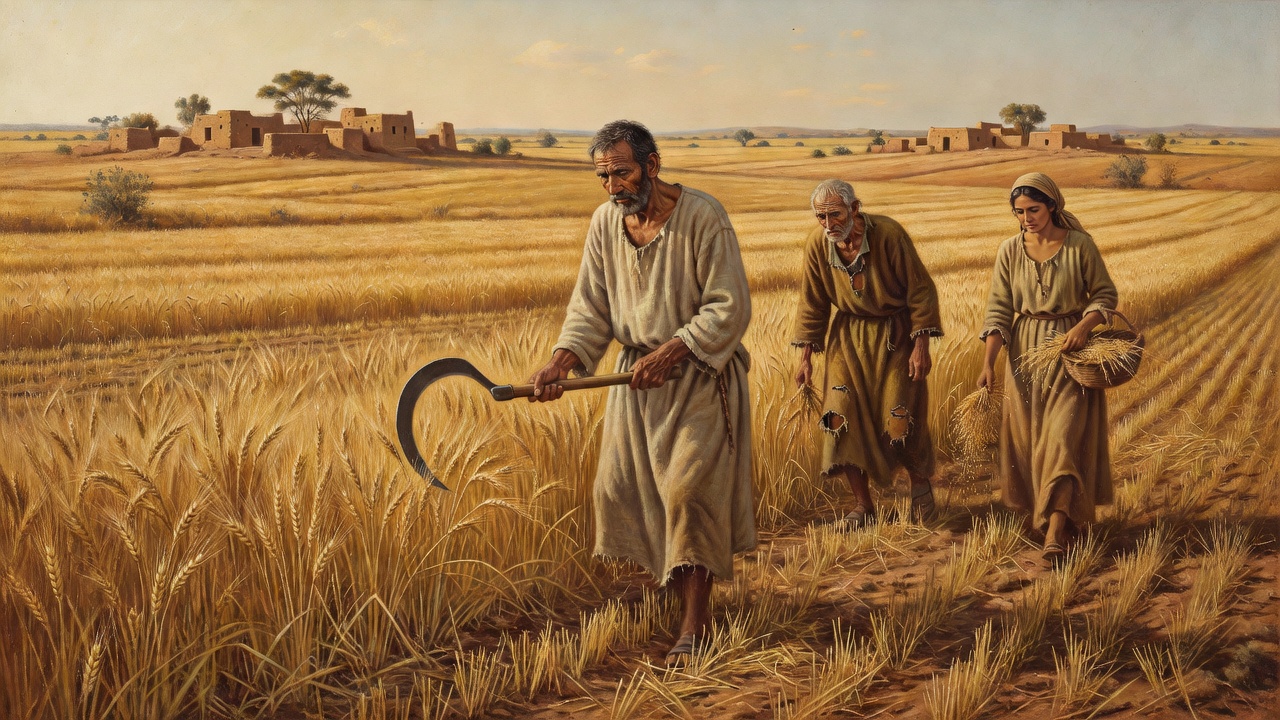
9And when ye reap the katzir of your land, thou shalt not wholly reap the corners of thy sadeh, neither shalt thou gather the gleanings of thy katzir. 10And thou shalt not glean thy kerem (vineyard), neither shalt thou gather every grape of thy kerem; thou shalt leave them for the oni (poor) and ger (stranger); I am Hashem Eloheichem.
11Ye shall not steal, neither deal falsely, neither speak sheker (falsehood, deception, lie) to another. 12And ye shall not swear by My Shem lasheker (falsely), neither shalt thou commit Chillul ha-shem Eloheicha; I am Hashem.
13Thou shalt not defraud thy re'a (neighbor), neither rob him; the wages of him that is a sakhir (hired man) shall not abide with thee ad boker (until morning).
14Thou shalt not curse the cheresh (deaf), nor put a michshol (stumbling block) before the ivver (blind), but shalt fear Eloheicha: I am Hashem.
15Ye shall do no avel bamishpat (perversion of justice); thou shalt not respect the person of the poor, nor favor the person of the gadol; but in tzedek shalt thou judge thy neighbor. 16Thou shalt not go up and down as a rakhil (talebearer, slanderer) among thy people; neither shalt thou stand aside while thy neighborʼs dahm is shed; I am Hashem.
17Thou shalt not hate thy brother in thine lev; thou shalt in any wise rebuke thy neighbor, and not bear chet because of him. 18Thou shalt not avenge, nor bear any grudge against the bnei ammecha (children of thy people), v'ahavta l'reacha kamocha (but thou shalt love thy neighbor as thyself): I am Hashem.
19Ye shall be shomer over My chukkot. Thou shalt not mate different kinds of animals; thou shalt not sow thy sadeh with mingled zera; neither shall a garment with shaatnez (mixed fibers) come upon thee.
20And whosoever lieth carnally with an isha, that is a shifcha betrothed to a husband, and not at all redeemed, nor chufshah (freedom) given her; she shall be scourged; they shall not be put to death, because she has not been chuppashah (freed). 21And he shall bring his asham (trespass offering, guilt offering) unto Hashem, unto the entrance of the Ohel Mo'ed, even a ram of asham. 22And the kohen shall make kapporah for him with the ram of the asham before Hashem for his chattat which he hath sinned; and the chattat which he hath sinned shall be forgiven him.
23And when ye shall come into ha'aretz, and shall have planted all manner of food trees, then ye shall treat the fruit thereof as forbidden; shalosh shanim shall it be as forbidden unto you; it shall not be eaten of. 24But in the shanah harev'i'it all the fruit thereof shall be kodesh to praise Hashem withal. 25And in the shanah hachamishit shall ye eat of the fruit thereof, that it may yield unto you the increase thereof: I am Hashem Eloheichem.
26Ye shall not eat any thing with the dahm; neither shall ye practice divination, nor practice sorcery.
27Ye shall not cut the edge of your scalp, neither shalt thou mar the corners of thy beard.
28Ye shall not make any cuttings in your basar for the dead, nor tattoo any marks upon you: I am Hashem.
29Do not prostitute thy bat, to cause her to be a harlot; lest ha'aretz fall to whoredom, and ha'aretz become full of depravity.
30Ye shall be shomer over My Shabbatot, and reverence My Mikdash; I am Hashem.
31Regard not them that have familiar spirits, neither seek after Ovos (Mediums) and Yidonim (Spiritists), to be defiled by them: I am Hashem Eloheichem.
32Thou shalt rise up before the old, and honor the face of the zaken, and fear Eloheicha: I am Hashem.
33And if a ger sojourn with thee in your land, ye shall not mistreat him. 34But the ger that dwelleth with you shall be unto you as one born among you, and thou shalt love him as thyself; for ye were gerim in Eretz Mitzrayim: I am Hashem Eloheichem.
35Ye shall do no unrighteousness in scales, in weights, and dry measures. 36Tzedek scales, tzedek weights, a tzedek ephah, and a tzedek hin, shall ye have: I am Hashem Eloheichem, which brought you out of Eretz Mitzrayim. 37Therefore shall ye be shomer (on guard to keep) over all My chukkot (statutes), and all My mishpatim (judgments), and do them: I am Hashem.
¿Sabías que…?
Santidad y Vida Comunitaria
- Levítico 19 contiene el mandato de amar al prójimo como a uno mismo. Esta exigencia se extiende explícitamente a los extranjeros residentes, recordando a los israelitas que ellos mismos fueron forasteros en la tierra de Egipto.Fuentes: el propio texto bíblico
- La ley exigía a los agricultores no segar hasta los bordes de sus campos ni recoger las espigas o uvas caídas. Esos remanentes estaban reservados específicamente para los pobres y los extranjeros residentes.Fuentes: el propio texto bíblico
- La santidad estaba vinculada directamente con la ética práctica, prohibiendo actos como maldecir al sordo, poner tropiezo ante el ciego, pervertir la justicia y retener el salario de un jornalero hasta la mañana siguiente.Fuentes: el propio texto bíblico
Notas escritas con ayuda de IA a partir de fuentes abiertas (Theographic Bible Metadata, CC BY-SA 4.0; Easton’s Bible Dictionary, dominio público) y revisadas antes de publicarse.
Lugares de este capítulo
Solo aparecen lugares identificados con alta confianza (90 % o más según las fuentes académicas reunidas por OpenBible). Mapa de la época: DARE (Digital Atlas of the Roman Empire), CC BY 4.0; mapa actual: © colaboradores de OpenStreetMap; lugares: OpenBible.info (CC BY 4.0).
Créditos y licencia de esta traducción
The Orthodox Jewish Bible
The Orthodox Jewish Bible - Tanakh and Orthodox Jewish Brit Chadasha - The Holy Bible
copyright © 2002-2011, 2021, 2024 Artists for Israel International
Language: English
Contributor: Artists for Israel International
THE ORTHODOX JEWISH TANAKH
Artists For Israel Intl Inc.
This version also appears with the Orthodox Yiddish Triglot which presents the Hebrew Yiddish script in Latin script and an English word for word translation, available at afii.org/Torah
To donate PayPal.Me
This translation is made available to you under the terms of the
Creative Commons Attribution license 4.0.
You may share and redistribute this Bible translation or extracts from it in any format, provided that:
You include the above copyright and source information.
If you make any changes to the text, you must indicate that you did so in a way that makes it clear that the original licensor is not necessarily endorsing your changes.
Pictures included with Scriptures and other documents on this site are licensed just for use with those Scriptures and documents.
For other uses, please contact the respective copyright owners.
Note that in addition to the rules above, revising and adapting God's Word involves a great responsibility to be true to God's Word. See Revelation 22:18-19.
2026-01-06
Fuente: http://ebible.org/engojb/ · eBible.org