Isaías 47
The Orthodox Jewish Bible · Toca un versículo para ver sus referencias cruzadas.
The Humiliation of Babylon
1Go down, and sit in the aphar,
O Betulat Bat Bavel,
sit on the ground; there is no kisse,
O Bat Kasdim (Chaldeans);
for thou shalt no more be called
tender and delicate.
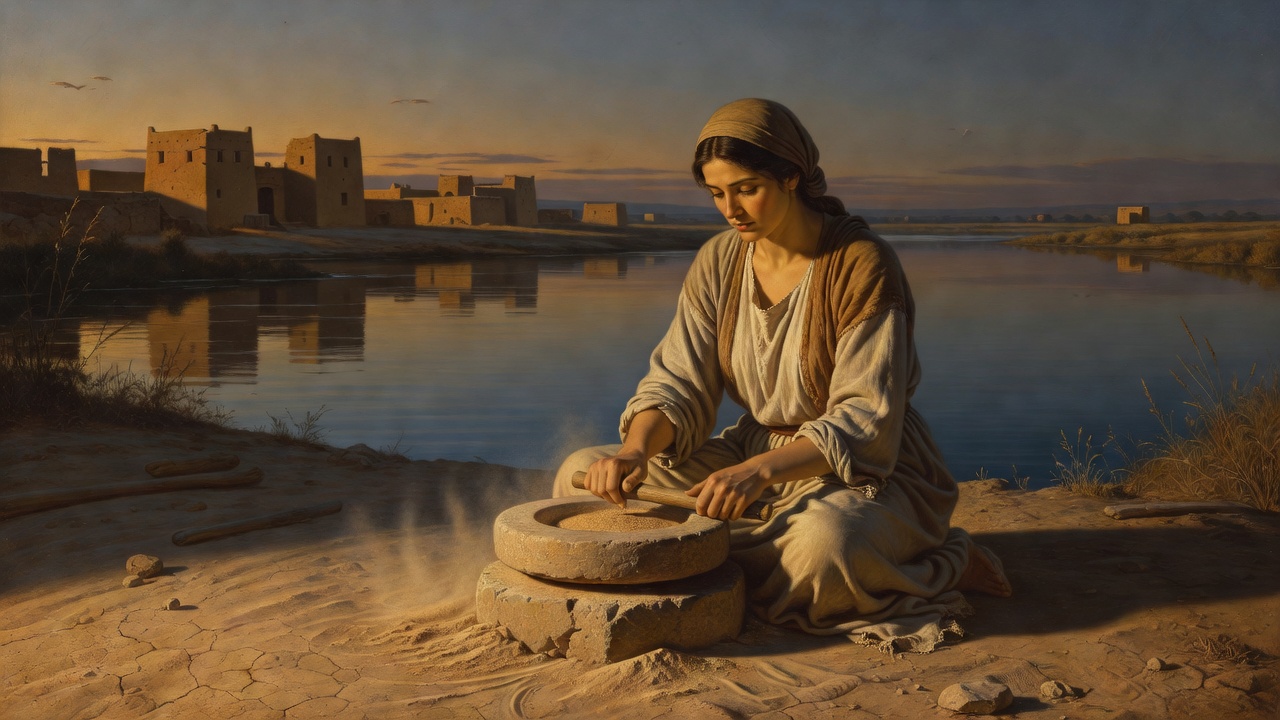
2Take the millstones, and grind meal;
uncover thy tzammah (hair, tresses), lift up thy shohvel (train, skirt),
bare the thigh, pass over the neharot.
3Thy ervat (nakedness) shall be exposed,
yes, thy cherpah (shame, reproach) shall be seen;
I will take nakam (vengeance)
and I will not be as adam when I meet thee.
4Go'aleinu, Hashem Tzva'os Shmo,
Kadosh Yisroel.
5Sit thou silent, and get thee into choshech,
O Bat Kasdim (Chaldeans);
for thou shalt no more be called,
Geveret Mamlachot (The Lady of Kingdoms).
6I was angry with My people,
I have profaned Mine nachalah,
and given them into thine yad;
thou didst show them no rachamim (mercy);
upon the zaken (ancient, old) hast thou very heavily laid thy ol (yoke).
7And thou saidst:
I shall be a Geveret ad l'olam (Lady forever):
so that thou didst not lay these things to thy lev,
neither didst remember her acharit (latter end, i.e. future destruction).
8Therefore hear now this, O adinah (voluptuous, wanton one)
that dwellest lavetach (carelessly, in security),
that sayest in her lev:
I am, and none else besides me;
I shall not live as an almanah,
neither shall I know shechol (the loss of children, bereavement);
9But these two things shall overtake thee
in a rega (moment), in yom echad,
shechol (the loss of children), and almon (widowhood);
they shall come upon thee in their perfection
for the multitude of thy kashefanut (sorceries, witchcraft)
and for the otzmah (great abundance) of thine khavarim (spells, magic, enchantments).
10For thou hast trusted in thy ra'ah (wickedness);
thou hast said: None seeth me.
Thy chochmah and thy da'as,
it hath perverted thee;
and thou hast said in thine lev:
I am, and none else beside me.
11Therefore shall ra'ah come upon thee;
thou shalt not know its shachar (dawn, from whence it riseth);
and tragedy will befall thee;
thou shalt not be able to make kofer (ransom) to ward it off;
and sho'ah (catastrophe) shall come upon thee pitom (suddenly),
which thou shalt not foresee or know.
12Stand now with thine khavarim (spells, magic, enchantments),
and with the multitude of thy kashefanut (sorceries, witchcraft)
wherein thou hast toiled from thy neurim;
perhaps thou shalt be able to succeed,
perhaps thou mayest cause terror.
13Thou art wearied in the multitude of thy etzot (counsels).
Let now stand up the hovrev Shomayim (the dissectors of the heavens, astrologers),
the chozim bakochavim (stargazers),
the ones that predict the future by Rosh Chodesh,
and save thee from these things
that shall come upon thee.
14Hinei, they shall be as kash (stubble, straw);
the eish shall burn them;
they shall not save their nefesh
from the power of the flame;
there shall not be a hot coal to warm them,
nor eish to sit before.
15Thus unto thee are they with whom thou hast toiled,
who have been thy socharim (traffickers, i.e., religious practitioners) from thy neurim (youth);
they shall wander about in their random exits;
none shall act as Moshi'a to thee.
¿Sabías que…?
La caída de Babilonia
- Babilonia es personificada como una reina consentida e hija noble que es humillada súbitamente. En lugar de sentarse segura en un trono de lujo, se le ordena sentarse en el polvo y realizar el trabajo servil de moler harina con piedras de molino.Fuentes: el propio texto bíblico
- El capítulo resalta la dependencia de Babilonia de las prácticas ocultas y la observación de las estrellas. El profeta desafía a los astrólogos, hechiceros y pronosticadores mensuales de la ciudad a presentarse, declarando que sus artes arderán como rastrojo y no podrán evitar la ruina repentina.Fuentes: el propio texto bíblico
- Babilonia, situada a orillas del río Éufrates en Caldea, había recibido autoridad para dominar al pueblo de Dios como instrumento de juicio. Sin embargo, el texto reprende al imperio por no mostrar misericordia, señalando que impuso yugos pesados incluso sobre los ancianos.Fuentes: Babylon · el propio texto bíblico
Notas escritas con ayuda de IA a partir de fuentes abiertas (Theographic Bible Metadata, CC BY-SA 4.0; Easton’s Bible Dictionary, dominio público) y revisadas antes de publicarse.
Lugares de este capítulo
Solo aparecen lugares identificados con alta confianza (90 % o más según las fuentes académicas reunidas por OpenBible). Mapa de la época: DARE (Digital Atlas of the Roman Empire), CC BY 4.0; mapa actual: © colaboradores de OpenStreetMap; lugares: OpenBible.info (CC BY 4.0).
Créditos y licencia de esta traducción
The Orthodox Jewish Bible
The Orthodox Jewish Bible - Tanakh and Orthodox Jewish Brit Chadasha - The Holy Bible
copyright © 2002-2011, 2021, 2024 Artists for Israel International
Language: English
Contributor: Artists for Israel International
THE ORTHODOX JEWISH TANAKH
Artists For Israel Intl Inc.
This version also appears with the Orthodox Yiddish Triglot which presents the Hebrew Yiddish script in Latin script and an English word for word translation, available at afii.org/Torah
To donate PayPal.Me
This translation is made available to you under the terms of the
Creative Commons Attribution license 4.0.
You may share and redistribute this Bible translation or extracts from it in any format, provided that:
You include the above copyright and source information.
If you make any changes to the text, you must indicate that you did so in a way that makes it clear that the original licensor is not necessarily endorsing your changes.
Pictures included with Scriptures and other documents on this site are licensed just for use with those Scriptures and documents.
For other uses, please contact the respective copyright owners.
Note that in addition to the rules above, revising and adapting God's Word involves a great responsibility to be true to God's Word. See Revelation 22:18-19.
2026-01-06
Títulos de sección adaptados de la Berean Standard Bible (dominio público); no forman parte del texto bíblico de esta traducción.
Fuente: http://ebible.org/engojb/ · eBible.org