Eclesiastés 9
The Orthodox Jewish Bible · Toca un versículo para ver sus referencias cruzadas.
Death Comes to Good and Bad
1All this I took to my lev, explaining it all, that the tzaddikim, and the chachamim, and their works, are in the yad HaElohim; adam does not have da'as of whether it will be ahavah or sinah; all lies before him. 2All things come alike to all; there is one mikreh (fortune) to the tzaddik, and to the rasha; to the tov and to the tahor, and to the tameh; to him that sacrificeth, and to him that sacrificeth not; as is the tov, so is the choteh; and he that sweareth, as he that feareth a shevuah (an oath). 3This is a rah among all things that are done under the shemesh, that there is one mikreh (fortune) unto all; yea, also the lev of the bnei haAdam is full of rah, and holelot (madness) is in their lev while they live, and after that they go to the mesim. 4For to him that is joined to all the living there is bitachon; for a kelev chai (living dog) is better than an aryeh hamet (dead lion). 5For the living have da'as that they shall die; but the mesim do not have da'as of anything, neither have they any more a sachar, for the memory of them is forgotten. 6Also their ahavah, and their sinah, and their kina, is now perished; neither have they any more a chelek l'olam in any thing that is done under the shemesh.
Enjoy Your Portion in This Life
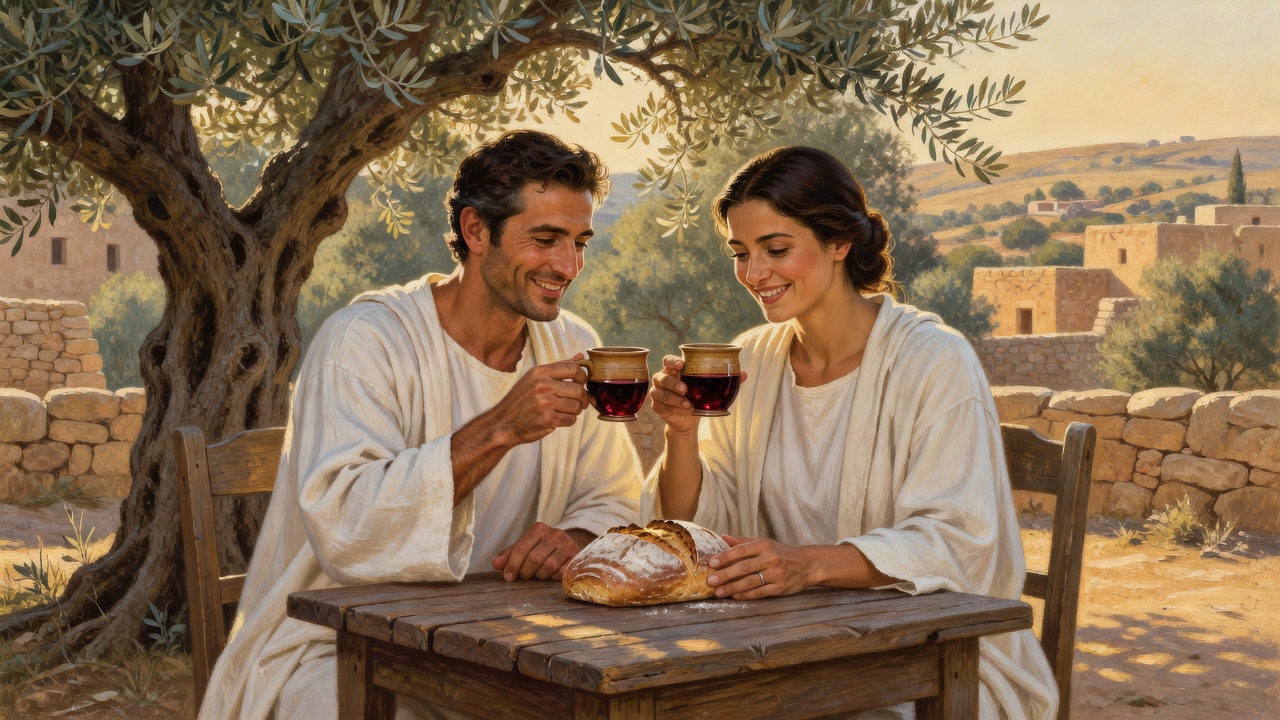
7Go thy way, eat thy lechem with simchah, and drink thy yayin with a lev tov; for HaElohim now accepteth thy ma'asim.
8Let thy garments be always white; and let thy head lack no shemen (ointment).
9Live joyfully with the isha whom thou lovest all the days of thy chayyei hevel, which he hath given thee under the shemesh, all the days of thy hevel; for that is thy chelek in this life, and in thy amal (toil) which thou laborest under the shemesh. 10Whatsoever thy hand findeth to do, do it with thy koach; for there is no ma'aseh, nor cheshbon, nor da'as, nor chochmah in Sheol, whither thou goest.
11I returned, and saw under the shemesh, that the race is not to the swift, nor the battle to the gibborim, neither yet lechem to the chachamim, nor yet osher to the intelligent, nor yet chen (favor) to the experts; but et (time) and pega (chance) happeneth to them all. 12For haAdam also hath no da'as of his et (time, hour); as the dagim that are caught in a metzodah rah (evil net), and as the birds that are trapped in the pach (snare), so are the Bnei HaAdam snared in an et ra'ah (evil time), when it falleth suddenly upon them.
Wisdom Is Better than Strength
13This chochmah have I seen also under the shemesh, and it seemed gedolah (great) unto me: 14There was an ir ketanah (little city), and few men within it; and there came a melech gadol against it, and besieged it, and built metzorim gedolim (huge siegeworks) against it.
15Now there was found in it a poor chacham, and he by his chochmah delivered the city; yet no man remembered that same poor man. 16Then said I, Chochmah is better than gevurah (strength); nevertheless the poor manʼs chochmah is despised, and his devarim are not heard.
17Divrei chachamim in quiet are more to be heeded than the shouting of the moshel (one ruling) among kesilim. 18Chochmah is better than weapons of war, but one choteh destroyeth much good.
¿Sabías que…?
Un destino común y el valor de la vida
- El autor aconseja celebrar la vida cotidiana mediante expresiones antiguas de alegría y honor: comer pan, beber vino, vestir ropas blancas y ungir la cabeza con aceite.Fuentes: el propio texto bíblico
- El pasaje alude al Seol como el reino de los muertos, describiéndolo como un estado donde cesan el trabajo, los planes, el conocimiento y la sabiduría, lo que subraya la urgencia de vivir activamente en el presente.Fuentes: el propio texto bíblico
- La guerra de asedio antigua se ilustra mediante el relato de un rey poderoso que construye grandes rampas de asedio contra una ciudad pequeña, la cual es liberada por la sabiduría de un hombre pobre y no por la fuerza militar.Fuentes: el propio texto bíblico
Notas escritas con ayuda de IA a partir de fuentes abiertas (Theographic Bible Metadata, CC BY-SA 4.0; Easton’s Bible Dictionary, dominio público) y revisadas antes de publicarse.
Créditos y licencia de esta traducción
The Orthodox Jewish Bible
The Orthodox Jewish Bible - Tanakh and Orthodox Jewish Brit Chadasha - The Holy Bible
copyright © 2002-2011, 2021, 2024 Artists for Israel International
Language: English
Contributor: Artists for Israel International
THE ORTHODOX JEWISH TANAKH
Artists For Israel Intl Inc.
This version also appears with the Orthodox Yiddish Triglot which presents the Hebrew Yiddish script in Latin script and an English word for word translation, available at afii.org/Torah
To donate PayPal.Me
This translation is made available to you under the terms of the
Creative Commons Attribution license 4.0.
You may share and redistribute this Bible translation or extracts from it in any format, provided that:
You include the above copyright and source information.
If you make any changes to the text, you must indicate that you did so in a way that makes it clear that the original licensor is not necessarily endorsing your changes.
Pictures included with Scriptures and other documents on this site are licensed just for use with those Scriptures and documents.
For other uses, please contact the respective copyright owners.
Note that in addition to the rules above, revising and adapting God's Word involves a great responsibility to be true to God's Word. See Revelation 22:18-19.
2026-01-06
Títulos de sección adaptados de la Berean Standard Bible (dominio público); no forman parte del texto bíblico de esta traducción.
Fuente: http://ebible.org/engojb/ · eBible.org