Hechos 15
The Orthodox Jewish Bible · Toca un versículo para ver sus referencias cruzadas.
The Dispute over Circumcision
1And some men came down from Yehudah to Syrian Antioch and were teaching the Achim b'Moshiach that if you lack the bris milah as prescribed by Moshe Rabbenu, it is impossible for you to come to Yeshu'at Eloheinu. 2Now this brought them into a dispute and a debate of no little proportion with Rav Sha'ul and Bar-Nabba, who were appointed to go up with some others from them to bring this she'elah (question) before the Moshiachʼs Shlichim and Zekenim in Yerushalayim. 3Then having been sent on their way by the Kehillah, they were passing through both Phoenicia and Shomron telling in detail how the Nations were turning to Hashem and they were bringing great simcha to all the Achim b'Moshiach. 4And having come to Yerushalayim, they were there received by Moshiachʼs Kehillah and the Moshiachʼs Shlichim and the Zekenim, and they reported what things Hashem had done with them.
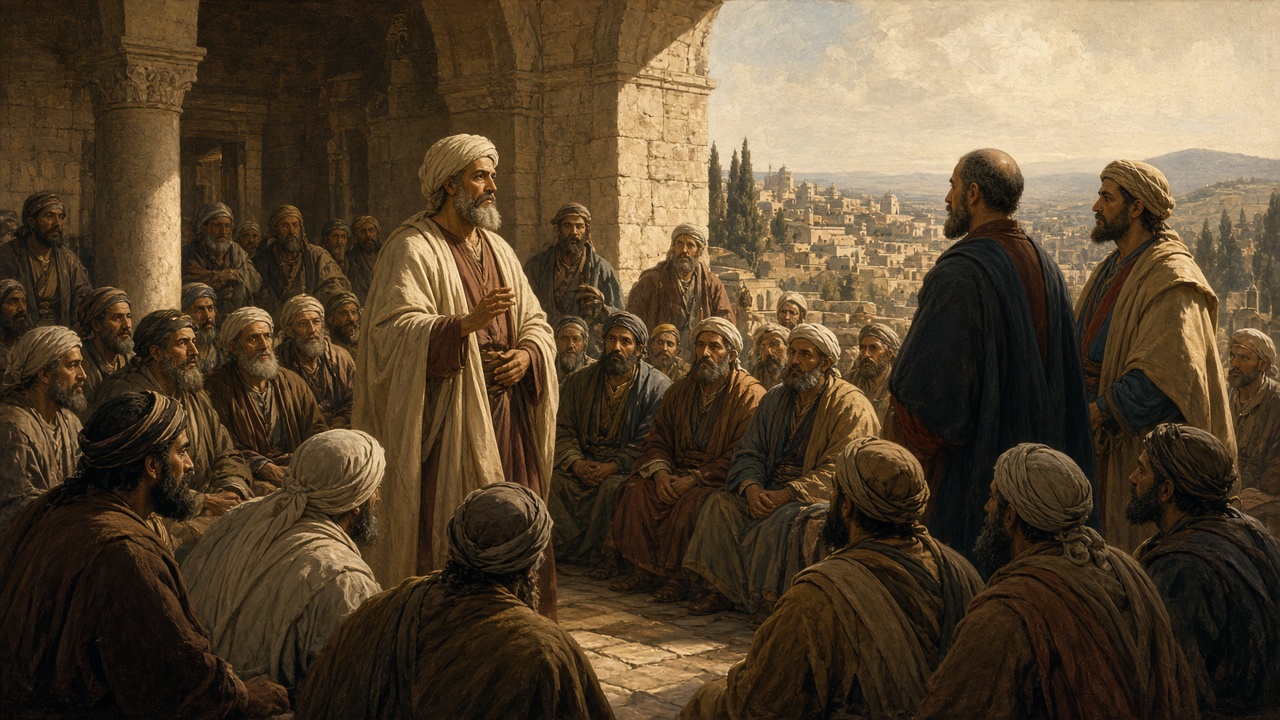
The Council at Jerusalem
5But some of the ma'aminim hameshichiyim from the kat of the Perushim rose up, saying, It is necessary to give the Goyim the bris milah and to command them to be shomer mitzvot, keeping the Torah of Moshe Rabbenu.
6And the Moshiachʼs Shlichim and the Zekenim were gathered together as a council to consider this matter. 7And after much deliberation had taken place, Moshiachʼs Shliach Shim'on Kefa got up. Kefa said to them, Anashim, Achim b'Moshiach, you have da'as that in the early days Hashem chose that among you I would be the one and through my mouth the Goyim would hear the dvar Hashem of the Besuras HaGeulah and would come to emunah. 8And the One who has da'as of levavot, Hashem, bore solemn edut and stood as their witness, having given the non-Jews the Ruach Hakodesh just as Hashem did also to us Jews. 9And in making tehorot their levavot by emunah, in this respect Hashem did not differentiate between us Jews and those non-Jews. 10Therefore, now why are you testing Hashem by laying an ol (yoke) upon the neck of the talmidim which neither Avoteinu nor we were able to bear? 11On the contrary, Anu Ma'aminim (We believe) that we Jews come to Yeshu'at Eloheinu by the Chen v'Chesed Hashem of the Rebbe, Melech HaMoshiach Adoneinu in the same Derech Hashem as those non-Jews do also.
12And then all the multitude was silent and they were listening to Bar-Nabba and Rav Sha'ul describing what otot and moftim Hashem did among the Nations through them. 13And after Rav Sha'ul and Bar-Nabba fell silent, Moshiachʼs Shliach Ya'akov responded, saying, Anashim, Achim b'Moshiach, listen to me. 14Shim'on explained how Hashem first concerned Himself to receive from the Nations a people for SHMO. 15And this is in agreement with the devarim of the Nevi'im, just as it has been written, 16After these things I will return and AKIM ES SUKKAT DOVID HANOFELET VHARISOTAV AKIM U'VENITIHA (I will restore the tent of Dovid which has fallen and the things having been torn down of it I will rebuild and I will restore it), 17So that the she'erit (remnant) of anashim might seek Hashem and all the GOYIM who are called by my Name, 18Says the L-rd, who makes these things known from long ago. 19Therefore, it is my judgment not to trouble the ones from the Goyim turning in teshuva to Hashem, 20But to write to them to keep away from the pollution of elilim and of zenut and of the thing strangled and of dahm. 21For Moshe Rabbenu from ancient dorot in every shtetl has his maggidim and in the shuls every Shabbos he has been read.
The Letter to the Gentile Believers
22Then it was mekabel (received) by the Moshiachʼs Shlichim and the Zekenim with the entire Kehillah to choose anashim from them to send to Syrian Antioch with Rav Sha'ul and Bar-Nabba, also Yehudah called Bar-Sabba, and Sila, all manhigim among the Achim b'Moshiach, 23With the following iggeret: From the Achim b'Moshiach, Moshiachʼs Shlichim and the Zekenim: to the Achim b'Moshiach throughout Antioch and Syria and Cilicia, to those from among the Nations, Shalom! 24Vi-bahlt (since) we heard that certain men had gone out from us, though not having any directives from us, and have given you mitzvot with devarim unsettling your nefashot (souls), 25It was mekabel to us, having come to achdus in mind and having chosen anashim to send to you, along with our beloved chaverim Bar-Nabba and Sha'ul, 26Anashim who have imperiled their lives for haShem of Moshiach Adoneinu Yehoshua. 27Therefore we have sent Yehudah and Sila, and they too will confirm us in person by word of mouth. 28For it was mekabel to the Ruach Hakodesh and to us to lay no heavier burden upon you who are from the Nations except these necessary things: 29That you non-Jewish ma'aminim hameshichiyim keep away from meat sacrificed to elilim, and dahm, and what is strangled, and zenut. If you are shomer to avoid these, you will do well. Shalom!
The Believers at Antioch Rejoice
30Therefore, having been dismissed, they went down to Syrian Antioch, and having gathered together the multitude, they delivered the iggeret. 31And having read it, there was a response of simcha gedolah at the exhortation. 32Both Yehudah and Sila, being themselves nevi'im hameshichiyim also, with many devarim comforted the Achim b'Moshiach and gave them chizzuk. 33And after they had spent considerable time, they were dismissed with shalom from the Achim b'Moshiach and sent back to the ones having dispatched them. [ 34Notwithstanding it seemed tov to Sila to remain there.] 35And Rav Sha'ul and Bar-Nabba were staying in Syrian Antioch saying shiurim and drashot with also many others, the content of these being the dvar Hashem.
Paul’s Second Missionary Journey Begins
36And after some yamim Rav Sha'ul said to Bar-Nabba, Letʼs return, then, and visit the Achim b'Moshiach throughout every city in which we proclaimed the dvar Hashem to see how they are doing. 37And Bar-Nabba was deciding to take along also Yochanan called Markos. 38But Rav Sha'ul was insisting not to take along this one, the one having withdrawn from them from Pamphylia, not having gone with them to the avodas kodesh ministry of the Moshiachʼs Shlichus. 39And there was a sharp disagreement so that they were separated from one another, and Bar-Nabba took Markos and sailed away to Cyprus. 40And Rav Sha'ul chose Sila and departed, having been commended to the Chen v'Chesed Hashem by the Achim b'Moshiach. 41And they were traveling through Syria and Cilicia strengthening the Moshiachʼs Kehillot.
¿Sabías que…?
El concilio sobre los creyentes gentiles
- La controversia comenzó en Antioquía, a orillas del Orontes, unas trescientas millas al norte de Jerusalén, ciudad que entonces ocupaba el tercer lugar entre las ciudades del Imperio romano, después de Roma y Alejandría. De camino al concilio, Pablo y Bernabé pasaron por Fenicia, una franja costera de unas ciento veinte millas, y por Samaria. Una nota cronológica fecha el Concilio de Jerusalén en el año 46 d. C.Fuentes: Antioch (Syria) · Phenicia · el propio texto bíblico · Jerusalem Council
- El Easton's Bible Dictionary (1897) afirma que Santiago, a quien llama hermano o pariente cercano de Jesús, dirigía la iglesia en Jerusalén y presidió el concilio sobre los gentiles. La carta que siguió iba dirigida a los creyentes gentiles de Antioquía, Siria y Cilicia. Cilicia, provincia de origen de Pablo y provincia marítima romana en el sureste de Asia Menor desde el 67 a. C., incluía su ciudad natal, Tarso.Fuentes: James (Brother of Jesus) · el propio texto bíblico · Cilicia · Paul
- Judas, llamado Barsabás, y Silas, también conocido como Silvano, eran profetas y hombres destacados de la iglesia de Jerusalén, enviados para confirmar en persona la decisión del concilio. Un desacuerdo posterior y agudo por Juan Marcos, primo de Bernabé, separó a los dos misioneros: Bernabé se llevó a Marcos y zarpó hacia Chipre, mientras Pablo eligió a Silas. Una nota cronológica fecha esa separación en el año 47 d. C.Fuentes: el propio texto bíblico · Silas · John Mark · Paul and Barnabas part ways
Notas escritas con ayuda de IA a partir de fuentes abiertas (Theographic Bible Metadata, CC BY-SA 4.0; Easton’s Bible Dictionary, dominio público) y revisadas antes de publicarse.
Lugares de este capítulo
- Antioch · Hoy: Antioch on the Orontes · 36.227, 36.172 · versículos 1, 22, 23, 30, 35
- Judea · Hoy: Judea 1 · 31.777, 35.234 · versículo 1
- Jerusalem · 31.777, 35.234 · versículos 2, 3, 4, 22, 23, 33
- Phoenicia · 33.271, 35.196 · versículo 3
- Samaria · Hoy: Samaria 2 · 32.276, 35.195 · versículo 3
- Cilicia · 36.913, 34.892 · versículos 23, 41
- Syria · Hoy: Syria 2 · 33.511, 36.306 · versículos 23, 41
- Pamphylia · 37.000, 31.000 · versículo 38
- Cyprus · 35.000, 33.000 · versículo 39
Solo aparecen lugares identificados con alta confianza (90 % o más según las fuentes académicas reunidas por OpenBible). Mapa de la época: DARE (Digital Atlas of the Roman Empire), CC BY 4.0; mapa actual: © colaboradores de OpenStreetMap; lugares: OpenBible.info (CC BY 4.0).
Créditos y licencia de esta traducción
The Orthodox Jewish Bible
The Orthodox Jewish Bible - Tanakh and Orthodox Jewish Brit Chadasha - The Holy Bible
copyright © 2002-2011, 2021, 2024 Artists for Israel International
Language: English
Contributor: Artists for Israel International
THE ORTHODOX JEWISH TANAKH
Artists For Israel Intl Inc.
This version also appears with the Orthodox Yiddish Triglot which presents the Hebrew Yiddish script in Latin script and an English word for word translation, available at afii.org/Torah
To donate PayPal.Me
This translation is made available to you under the terms of the
Creative Commons Attribution license 4.0.
You may share and redistribute this Bible translation or extracts from it in any format, provided that:
You include the above copyright and source information.
If you make any changes to the text, you must indicate that you did so in a way that makes it clear that the original licensor is not necessarily endorsing your changes.
Pictures included with Scriptures and other documents on this site are licensed just for use with those Scriptures and documents.
For other uses, please contact the respective copyright owners.
Note that in addition to the rules above, revising and adapting God's Word involves a great responsibility to be true to God's Word. See Revelation 22:18-19.
2026-01-06
Títulos de sección adaptados de la Berean Standard Bible (dominio público); no forman parte del texto bíblico de esta traducción.
Fuente: http://ebible.org/engojb/ · eBible.org