2 Corintios 4
The Orthodox Jewish Bible · Toca un versículo para ver sus referencias cruzadas.
The Light of the Gospel
1Therefore, since it is by the chesed of Hashem that we have this Sherut avodas kodesh (ministry), we are undaunted. 2But we renounced the hidden things of bushah (shame), not going about with remiyah (deceit) nor falsifying the dvar Hashem. Rather by the manifestation of HaEmes we present ourselves to every manʼs matzpun in the sight of Hashem. 3But if indeed our Besuras HaGeulah is nistar (hidden), it is nistar among the ones perishing, 4In whose case the g-d of the Olam Hazeh blinded the minds of the ones without emunah, so the illumination of the Besuras HaGeulah of the kavod of Moshiach, who is the demut of Hashem, would not shine on them. 5For we preach not ourselves but Rebbe, Melech HaMoshiach Adoneinu Yehoshua and ourselves as your avadim (servants) for Yehoshuaʼs sake. 6Because Hashem is the One who said, “Let Ohr shine out of choshech” who shone in our levavot for an illumination of the da'as of the kavod of Hashem in the face of Rebbe, Melech HaMoshiach Yehoshua.
Treasure in Jars of Clay
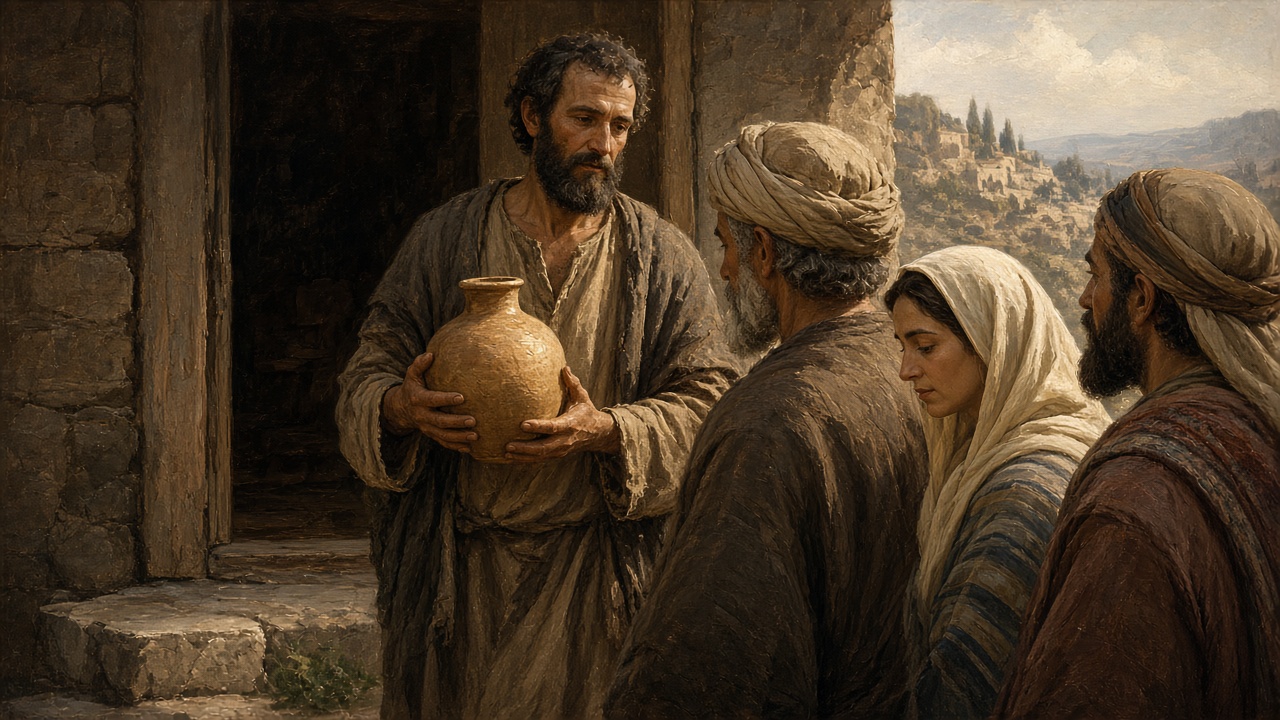
7Now we have this otzar (treasure) in earthen vessels that the excellence of the ko'ach may be of Hashem and not of us. 8Being oppressed on every side but not being crushed, being perplexed but not in ye'ush (despair, atzvut), 9Being persecuted but not forsaken, being cast down but not destroyed, 10Always bearing about the dying of Rebbe, Melech HaMoshiach in my basar that also the Chayyim of Moshiach in geviyyateinu might be manifested. 11For always we, the ones living, are being given over to mavet because of Moshiach that also the Chayyim of Moshiach may be manifested in our mortal basar. 12So then Mavet works in us but Chayyim in you.
13And having the same Ruach Hakodesh of emunah that is in accordance with the Kitvei Hakodesh, HE'EMANITI KI ADABER (I believed, therefore I speak), we both believed and therefore we speak, 14Having da'as that the One who made to stand up alive Adoneinu Rebbe, Melech HaMoshiach Yehoshua will make us also with Yehoshua stand up alive and will present us with you. 15For all things are because of you that the Chen v'Chesed Hashem, having increased through the many, may increase the hodayah (thanksgiving) to the kavod of Hashem.
16Therefore we are undaunted and do not lose chozek (strength). For, indeed, even if our outward man is becoming old and atrophied, yet our inward man is yom yom being renewed. 17For our present momentary tzoros is preparing us for an eternal weight of kavod (glory) utterly beyond measure, 18While we continue to look not at the visible things but the invisible; for the things visible are zemanniyim (temporary) but the things invisible are for l'olamim.
¿Sabías que…?
Tesoro en vasijas de barro
- En este capítulo, quienes hablan dicen que, porque Dios en su misericordia les ha dado este ministerio, no se desaniman. Han renunciado a caminos secretos y vergonzosos: no practican el engaño ni distorsionan la palabra de Dios, sino que, mediante la proclamación abierta de la verdad, se recomiendan a la conciencia de cada persona delante de Dios.Fuentes: el propio texto bíblico
- Su mensaje se presenta como un tesoro guardado en vasijas de barro, para que se muestre que este poder incomparablemente grande viene de Dios y no de ellos. El mismo contraste recorre sus dificultades: presionados por todos lados, pero no aplastados; perplejos, pero no desesperados; perseguidos, pero no abandonados; derribados, pero no destruidos.Fuentes: el propio texto bíblico
- La luz es la otra imagen central del capítulo. Dios, que dijo: "Que la luz brille desde las tinieblas", es presentado como quien hizo brillar su luz en el corazón de ellos, para dar la luz del conocimiento de la gloria de Dios en el rostro de Jesucristo. No se proclaman a sí mismos, sino a Jesucristo como Señor, y a sí mismos como siervos de aquellos a quienes se dirigen, por causa de Jesús; si el evangelio está velado, el texto dice que está velado para los que perecen, cuyas mentes ha cegado "el dios de esta era".Fuentes: el propio texto bíblico
Notas escritas con ayuda de IA a partir de fuentes abiertas (Theographic Bible Metadata, CC BY-SA 4.0; Easton’s Bible Dictionary, dominio público) y revisadas antes de publicarse.
Créditos y licencia de esta traducción
The Orthodox Jewish Bible
The Orthodox Jewish Bible - Tanakh and Orthodox Jewish Brit Chadasha - The Holy Bible
copyright © 2002-2011, 2021, 2024 Artists for Israel International
Language: English
Contributor: Artists for Israel International
THE ORTHODOX JEWISH TANAKH
Artists For Israel Intl Inc.
This version also appears with the Orthodox Yiddish Triglot which presents the Hebrew Yiddish script in Latin script and an English word for word translation, available at afii.org/Torah
To donate PayPal.Me
This translation is made available to you under the terms of the
Creative Commons Attribution license 4.0.
You may share and redistribute this Bible translation or extracts from it in any format, provided that:
You include the above copyright and source information.
If you make any changes to the text, you must indicate that you did so in a way that makes it clear that the original licensor is not necessarily endorsing your changes.
Pictures included with Scriptures and other documents on this site are licensed just for use with those Scriptures and documents.
For other uses, please contact the respective copyright owners.
Note that in addition to the rules above, revising and adapting God's Word involves a great responsibility to be true to God's Word. See Revelation 22:18-19.
2026-01-06
Títulos de sección adaptados de la Berean Standard Bible (dominio público); no forman parte del texto bíblico de esta traducción.
Fuente: http://ebible.org/engojb/ · eBible.org