2 Corintios 10
The Orthodox Jewish Bible · Toca un versículo para ver sus referencias cruzadas.
Paul’s Apostolic Authority
1Now I myself, Sha'ul, appeal to you gently in Moshiach and in his anavah (humility) I who am peh el peh (panim el panim, face to face) “lowly” among you but have “chutzpah” with you when absent. 2Now I beg of you that when I am present I may not have to show enough chutzpah to oppose certain persons, the ones considering us to act according to the standards of the basar of the Olam Hazeh. 3For though walking in basar, we war not according to the basar, 4For the weapons of our warfare are not of the basar, but full of ko'ach through Hashem to the overthrowing of strongholds, reasonings, 5And every high minded thing rising up against the da'as of Hashem, and leading captive every machshavah (thought) into the mishma'at of Rebbe, Melech HaMoshiach, 6And prepared to discipline all disobedience whenever your mishma'at (obedience) is completed.
7You look at things according to outward appearance. If anyone has persuaded himself that he belongs to Moshiach, have zikaron (recollection) of this: as he is of Moshiach, so also are we. 8Now even if I should glory a little too much in our samchut (authority) [as Shlichim of Moshiach] which Rebbe, Melech HaMoshiach Adoneinu gave for building you up and not for tearing you down, I will make good my claim. 9I did not intend to seem as if my iggrot were meant to frighten you. 10For they say, “His iggrot indeed are weighty and strong but his physical presence is weak and his shprach (diction), as far as rhetoric is concerned, is despicable.” 11Let such a one consider this: that the dvar we speak through iggrot when absent will become action we will very well do when present! 12For we dare not to make a geder (classification) for ourselves or to compare ourselves with some of the ones commending themselves, but when they measure themselves by the standard of one another or compare themselves with one another, they do not show seichel.
13But we will not boast out of our depth, but will be shomer to keep within the sadeh (field) Hashem has apportioned to us which reached out even as far as you. 14For we were not getting out of our depth when we reached even as far as you. We were the chalutzim (pioneers) who came with the Besuras HaGeulah of Rebbe, Melech HaMoshiach. 15We do not boast out of our depth, that is, in the labor of others; but tikvateinu is that, as your emunah grows, our sphere of Shlichus (Divine mission) among you will also be enlarged, 16So that we may abundantly proclaim the Besuras HaGeulah to the regions beyond you, without boasting in someone elseʼs Messianic chalutz accomplishments. 17But HAMMIT HALLELYIT HALLEL (“The one boasting let him boast” in the L-rd); 18For it is not the one commending himself that has the haskama (approval), but it is the one to whom [Moshiach] Adoneinu gives the haskama.
¿Sabías que…?
Cartas, presencia y una guerra que no es de este mundo
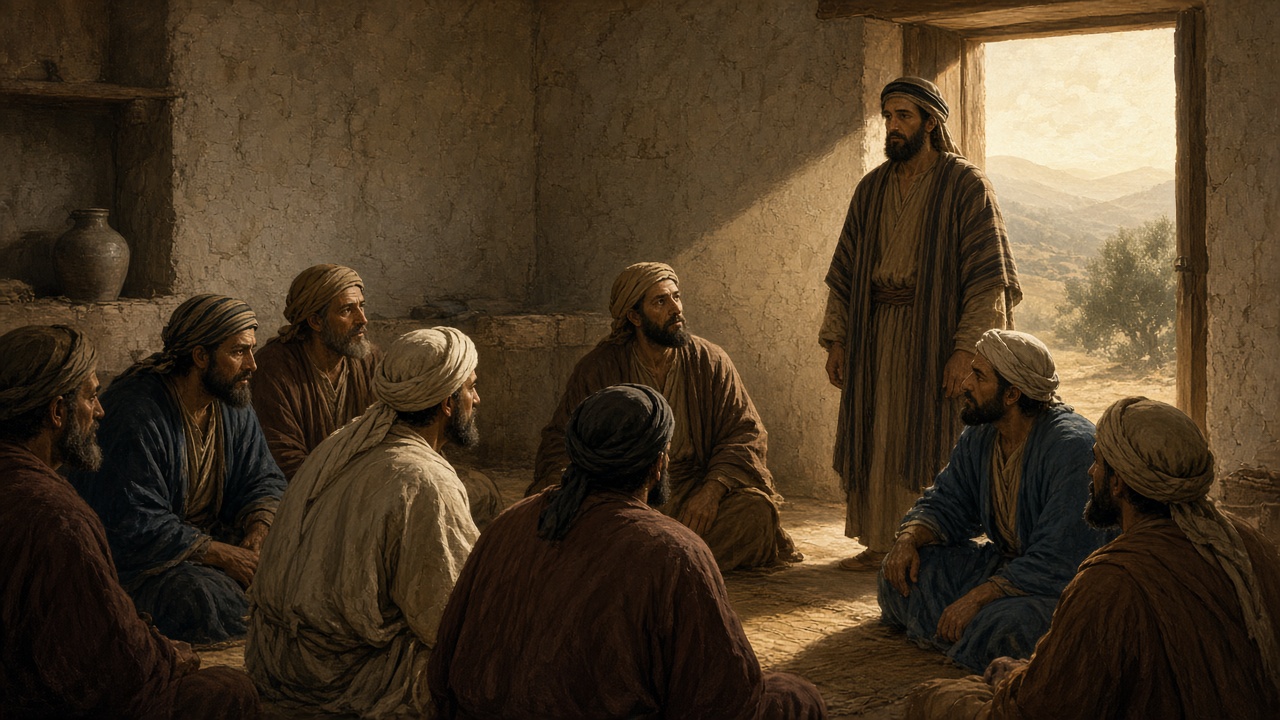
- Algunas personas juzgaban a Pablo por la apariencia y por su manera de hablar. Admitían que sus cartas eran pesadas y enérgicas, pero decían que su presencia física no impresionaba y que su hablar no tenía valor. Él responde que lo que es en las cartas cuando está ausente, lo será también en sus acciones cuando esté presente.Fuentes: el propio texto bíblico
- Describe el conflicto en términos militares, pero no como una lucha ordinaria. Vivir en la carne, dice, no significa hacer la guerra según la carne. Las armas de las que habla no son las del mundo; tienen poder divino para derribar fortalezas, deshacer argumentos y toda pretensión levantada contra el conocimiento de Dios, y llevar todo pensamiento a la obediencia a Cristo.Fuentes: el propio texto bíblico
- Pablo no quiere gloriarse más allá del campo de influencia que Dios le ha asignado, un campo que ya incluye a sus lectores, pues fue el primero en llegar a ellos con el evangelio de Cristo. Quien se gloríe, dice, debe gloriarse en el Señor; la aprobación no es de quien se recomienda a sí mismo, sino de aquel a quien el Señor recomienda.Fuentes: el propio texto bíblico
Notas escritas con ayuda de IA a partir de fuentes abiertas (Theographic Bible Metadata, CC BY-SA 4.0; Easton’s Bible Dictionary, dominio público) y revisadas antes de publicarse.
Lugares de este capítulo
- Corinth · 37.906, 22.879 · versículo 14
Solo aparecen lugares identificados con alta confianza (90 % o más según las fuentes académicas reunidas por OpenBible). Mapa de la época: DARE (Digital Atlas of the Roman Empire), CC BY 4.0; mapa actual: © colaboradores de OpenStreetMap; lugares: OpenBible.info (CC BY 4.0).
Créditos y licencia de esta traducción
The Orthodox Jewish Bible
The Orthodox Jewish Bible - Tanakh and Orthodox Jewish Brit Chadasha - The Holy Bible
copyright © 2002-2011, 2021, 2024 Artists for Israel International
Language: English
Contributor: Artists for Israel International
THE ORTHODOX JEWISH TANAKH
Artists For Israel Intl Inc.
This version also appears with the Orthodox Yiddish Triglot which presents the Hebrew Yiddish script in Latin script and an English word for word translation, available at afii.org/Torah
To donate PayPal.Me
This translation is made available to you under the terms of the
Creative Commons Attribution license 4.0.
You may share and redistribute this Bible translation or extracts from it in any format, provided that:
You include the above copyright and source information.
If you make any changes to the text, you must indicate that you did so in a way that makes it clear that the original licensor is not necessarily endorsing your changes.
Pictures included with Scriptures and other documents on this site are licensed just for use with those Scriptures and documents.
For other uses, please contact the respective copyright owners.
Note that in addition to the rules above, revising and adapting God's Word involves a great responsibility to be true to God's Word. See Revelation 22:18-19.
2026-01-06
Títulos de sección adaptados de la Berean Standard Bible (dominio público); no forman parte del texto bíblico de esta traducción.
Fuente: http://ebible.org/engojb/ · eBible.org