2 Crónicas 31
The Orthodox Jewish Bible · Toca un versículo para ver sus referencias cruzadas.
The Destruction of Idols
1Now when all this was completed, kol Yisroel that were present went out to the towns of Yehudah, and smashed the matzevot, and cut down the Asherim, and threw down the high places and the mizbechot throughout kol Yehudah and Binyamin, in Ephrayim also and Menasheh, until they had utterly destroyed them all. Then all the Bnei Yisroel returned, every ish to his achuzzah, into their own towns.
2And Chizkiyahu (Yechizkiyahu) appointed the machlekot of the Kohanim and the Levi'im after their divisions, every ish according to his avodas service, the Kohanim and Levi'im for olah and for shelamim, to minister, to give thanks, to praise in the Sh'arei Machanot Hashem.
Contributions for Worship
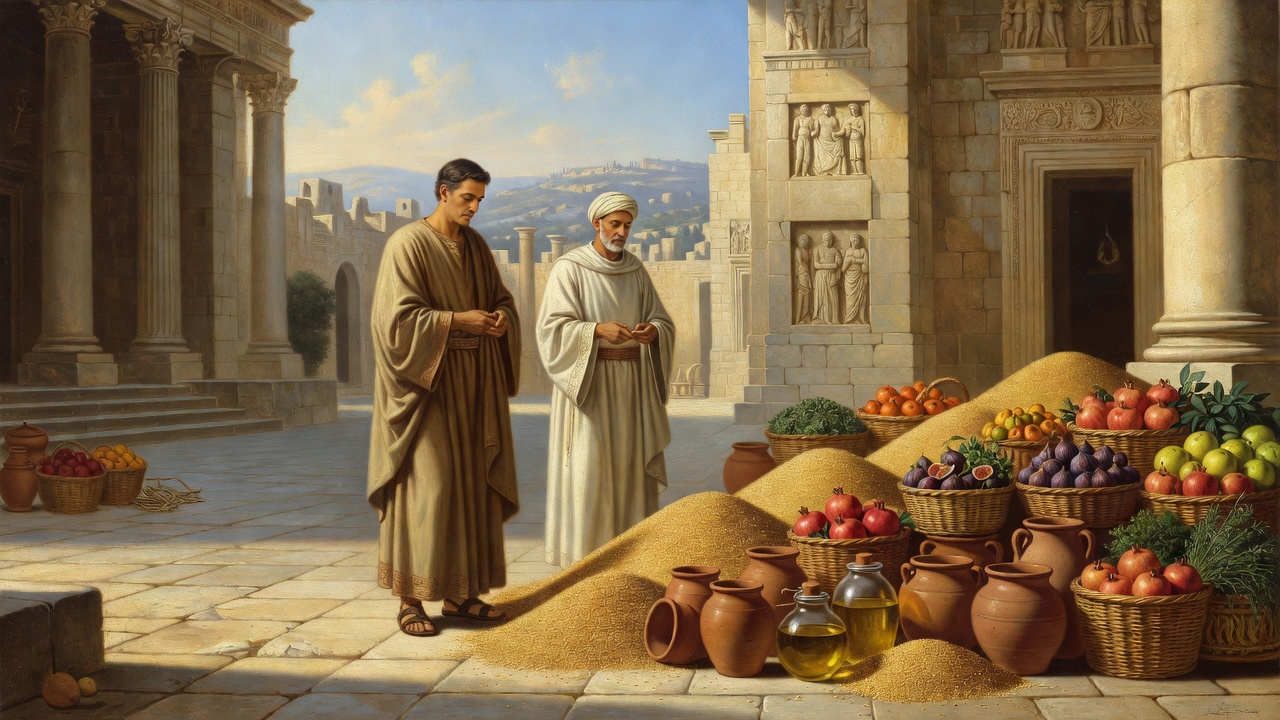
3A gift from HaMelech, from his own possessions, was for the olot, for the boker and erev olot, and the olot for the Shabbatot, and for Rosh Chodesh, and for the Mo'adim, as it is written in the Torat Hashem. 4Moreover he commanded HaAm that dwelt in Yerushalayim to give the menat HaKohanim v'HaLevi'im (support of the Kohanim and the Levi'im), that they might strengthen themselves in the Torat Hashem. 5And as soon as the devar went out, the Bnei Yisroel brought in abundance the reshit of dagan, tirosh, and yitzhar (pure olive oil), and devash, and of all the increase of the sadeh; and the ma'aser (tithe) of all things they brought in abundantly. 6And concerning the Bnei Yisroel and Yehudah, that dwelt in the towns of Yehudah, they also brought in the ma'aser of bakar and tzon, and the ma'aser of kadashim which were hamekudashim (consecrated, set apart as kodesh) unto Hashem Eloheihem, and piled them in heaps. 7In the chodesh hashelishi they began to lay foundations for the heaps, and completed them in the chodesh hashevi'i. 8And when Chizkiyahu (Yechizkiyahu) and the sarim came and saw the heaps, they blessed Hashem, and His Am Yisroel. 9Then Chizkiyahu (Yechizkiyahu) questioned the Kohanim and the Levi'im concerning the heaps. 10And Azaryahu HaKohen HaRosh of the Bais Tzadok answered him, and said, Since the people began to bring the terumah into the Beis Hashem, we have had enough to eat, and have plenty to spare, for Hashem hath blessed His people; and that which is notar (left over) is this great amount.
Hezekiah Organizes the Priests
11Then Chizkiyahu (Yechizkiyahu) commanded to prepare leshakhot (storerooms) in the Beis Hashem; and they prepared them, 12And brought in the terumah and the ma'aser and the kadashim be'emunah (faithfully), over which Konanyah the Levi was Nagid, and Shime'i his brother was mishneh (second). 13And Yechiel, and Azazyahu, and Nachat, and Asahel, and Yerimot, and Yozavad, and Eliel, and Yismachyahu, and Machat, and Benayahu, were pekidim (overseers) under the yad Konanyah and Shime'i his brother, by the command of Chizkiyahu (Yechizkiyahu) HaMelech, and Azaryahu the nagid of the Beis HaElohim. 14And Kore ben Yimnah the Levi, the sho'er (gatekeeper) at the east, was over the nidvot HaElohim (freewill offerings of G-d), to distribute the terumat Hashem, and the kadshei hakadashim. 15And next to him be'emunah were Eden, and Minyamin, and Yeshua, and Shema'yahu, Amaryahu, and Shekanyahu, in the towns of the Kohanim, to give to their achim by machlekot, to the gadol as well as the katan. 16This was besides those males who were recorded in the genealogical records, from three years old and upward, even unto every one that entereth into the Beis Hashem for its daily duty for their avodas service in their mishmerot (watches, shifts) according to their machlekot, 17Both to the genealogy of the Kohanim by the Bais Avoteihem, and the Levi'im from twenty years old and upward, in their mishmerot by their machlekot (divisions); 18And to the genealogy of all their little ones, their nashim, and their banim, and their banot, throughout kol Kahal, for be'emunah (in faithfulness) they set themselves apart as kodesh in kodesh (holiness); 19Also of the Bnei Aharon the Kohanim, which were in the pasture lands of their towns, in each town, the men that were designated by name to give manot to every zachar among the Kohanim, and to all that were reckoned by genealogies among the Levi'im.
20And thus did Chizkiyahu (Yechizkiyahu) throughout kol Yehudah, and wrought that which was tov and yashar and emes before Hashem Elohav. 21And in every ma'aseh that he began in the Avodas Beis HaElohim, and in the Torah, and in the Mitzvah, to seek Elohav, he did it with all his heart, and prospered.
¿Sabías que…?
Ezequías organiza a los sacerdotes y las ofrendas
- Tras la celebración, los israelitas destruyeron los lugares de culto idólatra en Judá, Benjamín, Efraín y Manasés. El rey Ezequías reorganizó a los sacerdotes y levitas en sus turnos, aportó de sus propios bienes para los holocaustos regulares y ordenó al pueblo entregar los diezmos para que los ministros pudieran dedicarse a la Ley del SEÑOR.Fuentes: el propio texto bíblico · Hezekiah
- El pueblo trajo diezmos y primicias tan generosos de grano, vino nuevo, aceite, miel y ganado que se acumularon grandes montones entre el tercer y el séptimo mes. Azarías, el sumo sacerdote de la casa de Sadoc, informó que sobraba en abundancia, lo que llevó a Ezequías a ordenar la preparación de almacenes en el templo.Fuentes: el propio texto bíblico · Azariah · Zadok
- Oficiales como los levitas Conanías, su hermano Simei y Coré, guardia de la Puerta Oriental, fueron designados para administrar y repartir fielmente las contribuciones. Las raciones se entregaban tanto a los ministros en el templo de Jerusalén como a los sacerdotes, levitas y sus familias en las ciudades circundantes, según las genealogías registradas.Fuentes: el propio texto bíblico · Cononiah · Shimei
Notas escritas con ayuda de IA a partir de fuentes abiertas (Theographic Bible Metadata, CC BY-SA 4.0; Easton’s Bible Dictionary, dominio público) y revisadas antes de publicarse.
Lugares de este capítulo
- Jerusalem · 31.777, 35.234 · versículo 4
- East Gate · Hoy: in Jerusalem · 31.777, 35.234 · versículo 14
Solo aparecen lugares identificados con alta confianza (90 % o más según las fuentes académicas reunidas por OpenBible). Mapa de la época: DARE (Digital Atlas of the Roman Empire), CC BY 4.0; mapa actual: © colaboradores de OpenStreetMap; lugares: OpenBible.info (CC BY 4.0).
Créditos y licencia de esta traducción
The Orthodox Jewish Bible
The Orthodox Jewish Bible - Tanakh and Orthodox Jewish Brit Chadasha - The Holy Bible
copyright © 2002-2011, 2021, 2024 Artists for Israel International
Language: English
Contributor: Artists for Israel International
THE ORTHODOX JEWISH TANAKH
Artists For Israel Intl Inc.
This version also appears with the Orthodox Yiddish Triglot which presents the Hebrew Yiddish script in Latin script and an English word for word translation, available at afii.org/Torah
To donate PayPal.Me
This translation is made available to you under the terms of the
Creative Commons Attribution license 4.0.
You may share and redistribute this Bible translation or extracts from it in any format, provided that:
You include the above copyright and source information.
If you make any changes to the text, you must indicate that you did so in a way that makes it clear that the original licensor is not necessarily endorsing your changes.
Pictures included with Scriptures and other documents on this site are licensed just for use with those Scriptures and documents.
For other uses, please contact the respective copyright owners.
Note that in addition to the rules above, revising and adapting God's Word involves a great responsibility to be true to God's Word. See Revelation 22:18-19.
2026-01-06
Títulos de sección adaptados de la Berean Standard Bible (dominio público); no forman parte del texto bíblico de esta traducción.
Fuente: http://ebible.org/engojb/ · eBible.org