1 Timoteo 4
The Orthodox Jewish Bible · Toca un versículo para ver sus referencias cruzadas.
A Warning against Apostasy
1Now the Ruach HaKodesh says befeirush (explicitly) that in the acharit hayamim some will become meshummad (apostate) from the emunah, giving heed to deceitful ruchot (spirits) and teachings of shedim, 2Through the tzevi'ut (hypocrisy) of ones speaking sheker, the matzpun of whom is seared as with a branding iron. 3Such will forbid nisu'im (marriage), commanding an issur (prohibition) against that ma'akhal which Hashem created for partaking with hodayah by the ma'aminim in Moshiach and by the ones who have da'as of HaEmes, 4Because the whole Bri'ah (Creation) that Hashem has created is tov and nothing is to be rejected that is received with hodayah. 5For it is being set apart as kodesh through the dvar Hashem and tefillos and brachot.
A Good Servant of Jesus Christ
6By presenting these things to the Achim you will be a good k'li kodesh (minister) of Rebbe, Melech HaMoshiach Yehoshua, you will be one nourished with the divrei haemunah and the torah yeshara (good, straight Orthodox Jewish teaching) which you have followed. 7But the worldly aggadot and bubbemeises (old wives tales), refuse. Rather, train yourself for chasidus. 8For hitammelut (bodily exercise or training) is kedai (profitable) a bissle, but chasidus is profitable in every way, holding havtachah (promise) of Chayyim now in the Olam Hazeh, and, later, of Olam Habah. 9This dvar torah is trustworthy and worthy of all acceptance. 10For to this end we labor and strive at the melachah (task), because we have set tikvateynu in the EL CHAI who is Moshi'a (Savior) of kol Bnei Adam, that is, the ma'aminim.
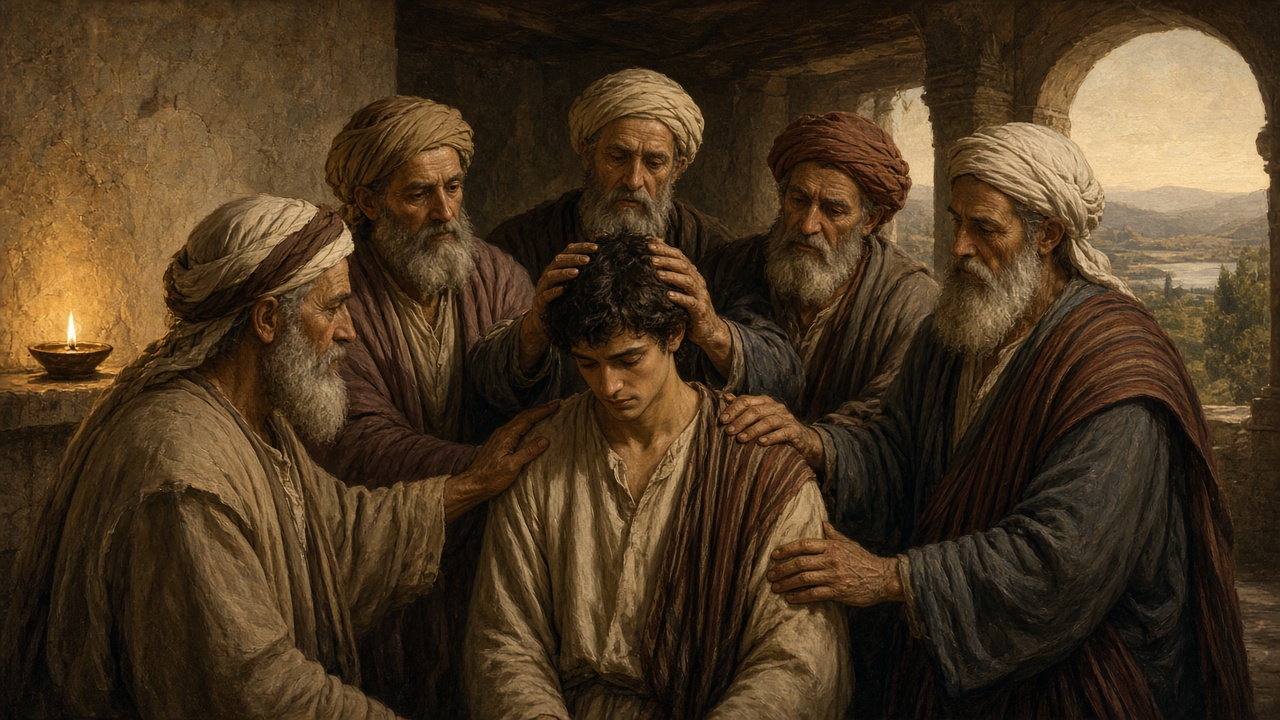
11On these things insist and say shiurim. 12Let no one regard with contempt your tza'irut (youth), but become a mofet (example) for the ma'aminim in loshon (speech), in hitnahagut (conduct), in ahavah, in emunah, and in lev tahor. 13Until I come, attend to the kri'ah betzibbur (congregational public reading) of the Kitvei Hakodesh, attend to the Messianic hatafah (preaching) and to the Messianic hora'ah (instruction, teaching). 14Do not neglect the matanah (gift) in you which was given to you by means of dvar hanevu'ah (prophecy) with the s'michah administered by the Ziknei HaKehillah. 15Put these things into practice, that your progress in shomer masoret (religious devotion) may be manifest to all. 16Be shomer both toward yourself and toward your Messianic hora'ah (instruction), and be arain getun (engrossed), torud (completely absorbed and involved) in them. For by so doing this, you will come to Yeshu'at Eloheynu, and this means not only you yourself but also those who hear your hatafah.
¿Sabías que…?
Falsa enseñanza y entrenamiento en la piedad
- El capítulo dice que el Espíritu declara expresamente que, en tiempos posteriores, algunos abandonarán la fe para seguir espíritus engañosos y enseñanzas de demonios. Estarán influidos por la hipocresía de mentirosos, cuya conciencia ha sido cauterizada con un hierro candente, y prohibirán el matrimonio y exigirán abstenerse de ciertos alimentos.Fuentes: el propio texto bíblico
- La carta responde a esas exigencias diciendo que Dios creó esos alimentos para que los reciban con acción de gracias quienes creen y conocen la verdad. Toda creación de Dios es buena, y nada de lo que se recibe con acción de gracias debe rechazarse, porque es santificado por la palabra de Dios y la oración.Fuentes: el propio texto bíblico
- El autor exhorta al joven a quien se dirige a no dejar que nadie menosprecie su juventud, sino a ser ejemplo en el habla, en la conducta, en el amor, en la fe y en la pureza. Hasta que el autor llegue, debe dedicarse a la lectura pública de las Escrituras, a la exhortación y a la enseñanza, y no descuidar el don que le fue dado mediante profecía, cuando los ancianos le impusieron las manos. El ejercicio físico, añade la carta, tiene un valor limitado, mientras que la piedad es valiosa en todo sentido y encierra promesa para la vida presente y para la venidera, un dicho que la carta llama digno de confianza y de plena aceptación.Fuentes: el propio texto bíblico
Notas escritas con ayuda de IA a partir de fuentes abiertas (Theographic Bible Metadata, CC BY-SA 4.0; Easton’s Bible Dictionary, dominio público) y revisadas antes de publicarse.
Créditos y licencia de esta traducción
The Orthodox Jewish Bible
The Orthodox Jewish Bible - Tanakh and Orthodox Jewish Brit Chadasha - The Holy Bible
copyright © 2002-2011, 2021, 2024 Artists for Israel International
Language: English
Contributor: Artists for Israel International
THE ORTHODOX JEWISH TANAKH
Artists For Israel Intl Inc.
This version also appears with the Orthodox Yiddish Triglot which presents the Hebrew Yiddish script in Latin script and an English word for word translation, available at afii.org/Torah
To donate PayPal.Me
This translation is made available to you under the terms of the
Creative Commons Attribution license 4.0.
You may share and redistribute this Bible translation or extracts from it in any format, provided that:
You include the above copyright and source information.
If you make any changes to the text, you must indicate that you did so in a way that makes it clear that the original licensor is not necessarily endorsing your changes.
Pictures included with Scriptures and other documents on this site are licensed just for use with those Scriptures and documents.
For other uses, please contact the respective copyright owners.
Note that in addition to the rules above, revising and adapting God's Word involves a great responsibility to be true to God's Word. See Revelation 22:18-19.
2026-01-06
Títulos de sección adaptados de la Berean Standard Bible (dominio público); no forman parte del texto bíblico de esta traducción.
Fuente: http://ebible.org/engojb/ · eBible.org