1 Crónicas 7
The Orthodox Jewish Bible · Toca un versículo para ver sus referencias cruzadas.
The Descendants of Issachar
1Now the Bnei Yissakhar were Tola, Puah, Yashuv, Shimrom, 4. 2And the Bnei Tola: Uzzi, Refayah, Yeriel, Yachmai, Yivsam, and Shmuel, heads of their bais avot, namely, of Tola; they were gibborei chayil (warriors of valor) in their toldot (generations), whose number was in the days of Dovid 22,600. 3And the Bnei Uzzi: Yizrachyah; and the Bnei Yizrachyah: Micha'el, and Ovadyah, and Yoel, Yishiyah, 5, all of them rashim (leaders). 4And with them, by their toldot, after their bais avot, were bands of soldiers for milchamah, 36,000, for they had many nashim and banim. 5And their brethren among all the mishpekhot of Yissakhar were gibborei chayil, reckoned in all by their genealogies 87,000.
The Descendants of Benjamin
6The Bnei Binyamin: Bela, and Becher, and Yedia'el, 3. 7And the Bnei Bela: Etzbon, and Uzzi, and Uzziel, and Yerimot, and Iri, 5; heads of their bais avot, gibborei chayalim (warriors of valor); and were reckoned by their genealogies 22,034. 8And the Bnei Becher: Zemirah, and Yoash, and Eli'ezer, and Elyo'einai, and Omri, and Yeremot, and Aviyah, and Anatot, and Alemet. All these are the Bnei Becher. 9And the number of them, listed by their toldot, heads of their bais avot, gibborei chayil, was twenty elef and two hundred. 10The Bnei Yedia'el: Bilhan; and the Bnei Bilhan; Ye'ush, and Binyamin, and Ehud, and Kena'anah, and Zeitan, and Tarshish, and Achishachar.
11All these the Bnei Yedia'el, by the heads of families, gibborei chayalim, were seventeen elef and two hundred soldiers, fit to go forth for milchamah. 12Shuppim also, and Chuppim, the Bnei Ir, and Chushim, the Bnei Acher.
The Descendants of Naphtali
13The Bnei Naphtali: Yachtziel, and Guni, and Yetzer, and Shallum, the Bnei Bilhah.
The Descendants of Manasseh
14The Bnei Menasheh: Asriel, whom his Aramean pilegesh bore; she bore Machir avi Gil'ad; 15And Machir took an isha from the Chuppim and Shuppim, whose achotʼs shem was Ma'achah; and the shem of the second was Tzelophechad, and Tzelophechad had banot. 16And Ma'achah eshet Machir bore ben, and she called shmo Peresh; and the shem of his brother was Sheresh; and his banim were Ulam and Rakem. 17And the Bnei Ulam: Bedan. These were the Bnei Gil'ad Ben Machir Ben Menasheh. 18And his achot Hammolekhet bore Ishhod, and Avi'ezer, and Machlah. 19And the Bnei Shemida were Achyan, and Shechem, and Likchi, and Ani'am.
The Descendants of Ephraim
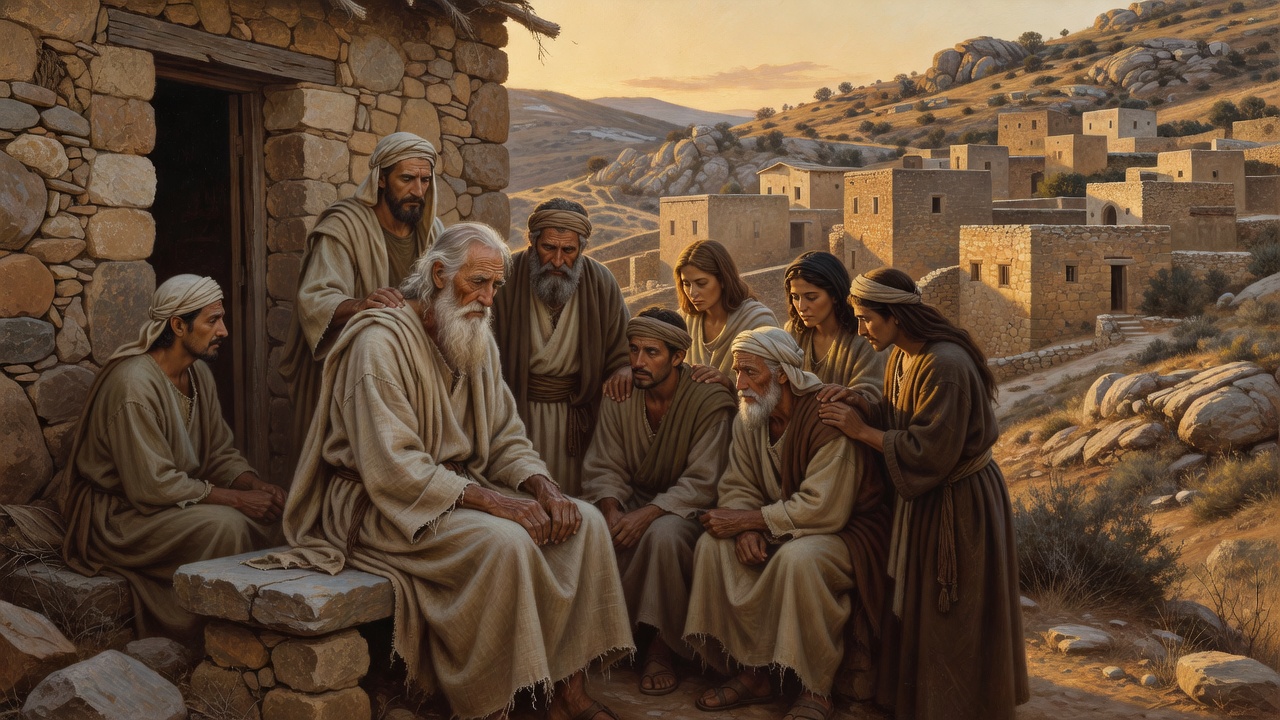
20And the Bnei Ephrayim: Shutelach, and Bered bno, and Tachat bno, and El'adah bno, and Tachat bno, 21And Zavad bno, and Shutelach bno, and Ezer, and El'ad, whom the anashim of Gat that were born in that land slaughtered, because they came down to take away their mikneh (livestock). 22And Ephrayim avihem mourned many days, and his achim came to comfort him. 23And when he went in to his isha, she conceived, and bore ben, and he called shmo Beri'ah, because it went in ra'ah (evil, disaster, misfortune) with his bais. 24(And his bat was She'erah, who built Lower Beit-Choron, and the Upper, and Uzein She'erah.) 25And Refach was bno, also Resheph, and Telach bno, and Tachan bno, 26La'dan bno, Ammihud bno, Elishama bno, 27Non (Nun) bno, Yehoshua bno. 28And their possessions and settlements were Beit-El and the villages thereof, and to the east Na'aran, and to the west Gezer, with the villages thereof; Shechem also and the villages thereof, unto Ayah and the villages thereof; 29And by the borders of the Bnei Menasheh, Beit-She'an and her villages, Ta'nakh and her villages, Megiddo and her villages, Dor and her villages. In these dwelt the Bnei Yosef Ben Yisroel.
The Descendants of Asher
30The Bnei Asher: Yimnah, and Yishvah, and Yishvi, and Beri'ah, and Serach their achot. 31And the Bnei Beri'ah: Chever, and Malki'el, who is avi Birzayit. 32And Chever fathered Yaphlet, Shomer, Chotam, and Shu'a their achot. 33And the Bnei Yaphlet: Pasach, Bimhal, Ashvat. These are the Bnei Yaphlet. 34And the Bnei Shemer: Achi, Rohgah, Chubbah, and Aram. 35And the Ben Helem his brother: Tzophach, Yimna, Shelesh, and Amal. 36The Bnei Tzophach: Suach, Charnepher, Shu'al, Beri, and Yimrah, 37Betzer, Hod, Shamma, Shilshah, Yitran, and Be'era. 38And the Bnei Yeter: Yephunneh, Pispah, Ara. 39And the Bnei Ulla: Arach, Channi'el, Ritzya. 40All these were the Bnei Asher, heads of their bais avot, choice gibborim chayalim, outstanding of the nasi'im. And the number throughout the genealogy of them that were battle-ready was twenty and six elef anashim.
¿Sabías que…?
Genealogías de las tribus del norte
- La genealogía de Efraín destaca a una mujer llamada Seera, a quien se atribuye la edificación de Bet-horón la de arriba y la de abajo, así como de Uzén-seera. Estos asentamientos estratégicos se ubicaban a lo largo del paso montañoso que descendía hacia la llanura costera.Fuentes: Beth-horon · Uzzen-sheerah · el propio texto bíblico
- Una breve narración relata que los hijos de Efraín, Ézer y Elead, fueron asesinados por los habitantes de Gat durante un intento de apoderarse de ganado. Efraín guardó luto por muchos días antes de que sus parientes fueran a consolarlo, y a su siguiente hijo le puso por nombre Bería a causa de la tragedia.Fuentes: Gath · el propio texto bíblico
- El capítulo rastrea la línea de descendencia de Efraín hasta Josué, hijo de Nun, ubicando al destacado líder de la conquista dentro de su ascendencia tribal junto a figuras como Elisama y Amiud.Fuentes: el propio texto bíblico
Notas escritas con ayuda de IA a partir de fuentes abiertas (Theographic Bible Metadata, CC BY-SA 4.0; Easton’s Bible Dictionary, dominio público) y revisadas antes de publicarse.
Lugares de este capítulo
- Lower Beth-horon · Hoy: Beit Ur al Tahta · 31.895, 35.084 · versículo 24
- Upper Beth-horon · Hoy: Beit Ur al Fauqa · 31.886, 35.114 · versículo 24
- Gezer · Hoy: Tel Gezer · 31.859, 34.919 · versículo 28
- Shechem · Hoy: Tell Balatah · 32.214, 35.282 · versículo 28
- Megiddo · Hoy: Tel Megiddo · 32.585, 35.184 · versículo 29
- Taanach · Hoy: Tell Ta’anakh · 32.522, 35.219 · versículo 29
Solo aparecen lugares identificados con alta confianza (90 % o más según las fuentes académicas reunidas por OpenBible). Mapa de la época: DARE (Digital Atlas of the Roman Empire), CC BY 4.0; mapa actual: © colaboradores de OpenStreetMap; lugares: OpenBible.info (CC BY 4.0).
Créditos y licencia de esta traducción
The Orthodox Jewish Bible
The Orthodox Jewish Bible - Tanakh and Orthodox Jewish Brit Chadasha - The Holy Bible
copyright © 2002-2011, 2021, 2024 Artists for Israel International
Language: English
Contributor: Artists for Israel International
THE ORTHODOX JEWISH TANAKH
Artists For Israel Intl Inc.
This version also appears with the Orthodox Yiddish Triglot which presents the Hebrew Yiddish script in Latin script and an English word for word translation, available at afii.org/Torah
To donate PayPal.Me
This translation is made available to you under the terms of the
Creative Commons Attribution license 4.0.
You may share and redistribute this Bible translation or extracts from it in any format, provided that:
You include the above copyright and source information.
If you make any changes to the text, you must indicate that you did so in a way that makes it clear that the original licensor is not necessarily endorsing your changes.
Pictures included with Scriptures and other documents on this site are licensed just for use with those Scriptures and documents.
For other uses, please contact the respective copyright owners.
Note that in addition to the rules above, revising and adapting God's Word involves a great responsibility to be true to God's Word. See Revelation 22:18-19.
2026-01-06
Títulos de sección adaptados de la Berean Standard Bible (dominio público); no forman parte del texto bíblico de esta traducción.
Fuente: http://ebible.org/engojb/ · eBible.org