Salmos 64
George Noyes Bible · Toca un versículo para ver sus referencias cruzadas.
The Hurtful Tongue
1“For the leader of the music. A psalm of David.” Hear my voice, O God! when I pray! Preserve my life from the terrors of the enemy! 2Hide me from the assembly of the wicked, From the brawling crowd of evil-doers! 3For like a sword they sharpen their tongues, Like arrows they aim their poisoned words, 4To shoot in secret at the upright; Suddenly do they shoot at him without fear. 5They prepare themselves for an evil deed; They commune of laying secret snares: “Who,” say they, “will see them?” 6They meditate crimes: “We have finished,” say they, “our plans!” The heart and bosom of every one of them are deep. 7But God will shoot an arrow at them; Suddenly shall they be wounded. 8Thus their own tongues shall bring them down; All who see them will flee away. 9Then will all men stand in awe, And declare what God hath done, And attentively consider his work. 10The righteous shall rejoice, and trust in the LORD; All the upright in heart shall glory.
¿Sabías que…?
Protección contra tramas ocultas
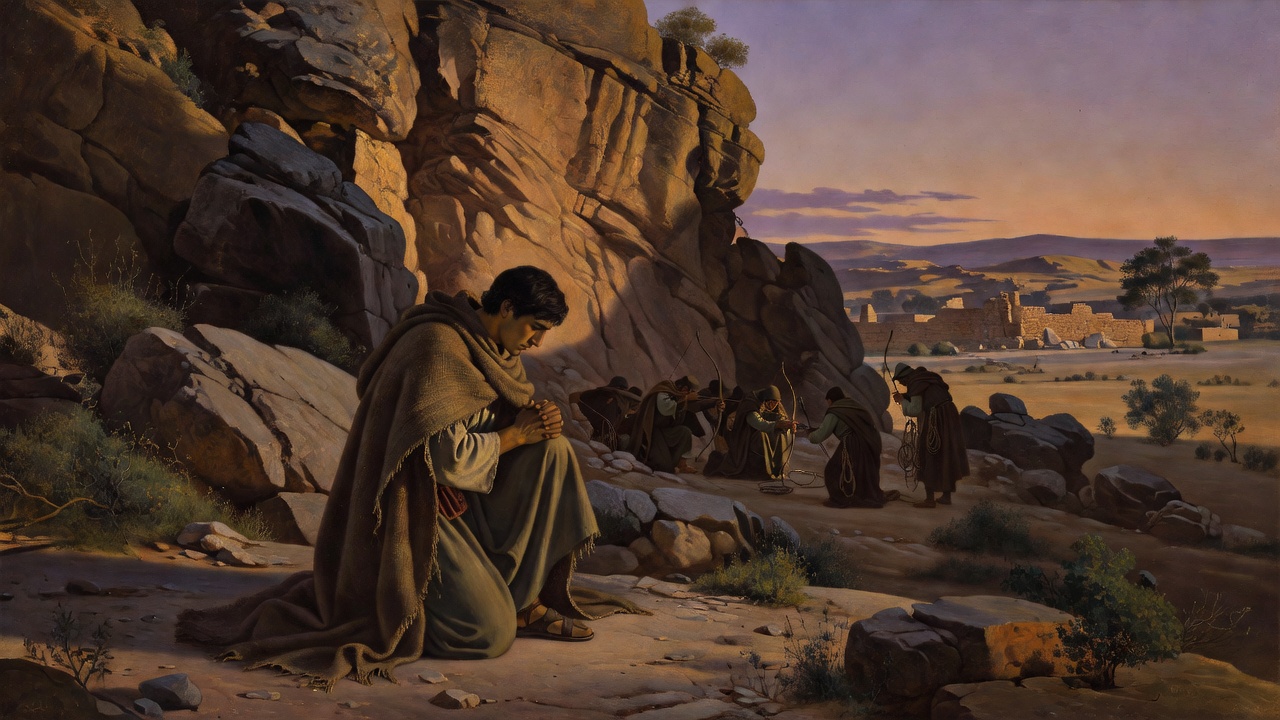
- El salmo retrata las palabras maliciosas mediante imágenes bélicas, comparando el lenguaje destructivo y las calumnias con espadas afiladas y flechas disparadas desde emboscadas secretas contra los inocentes.Fuentes: el propio texto bíblico
- El texto presenta una inversión poética: mientras los malvados conspiran en secreto y disparan flechas verbales, Dios interviene hiriéndolos con flechas repentinas y volviendo sus propias palabras contra ellos.Fuentes: el propio texto bíblico
Notas escritas con ayuda de IA a partir de fuentes abiertas (Theographic Bible Metadata, CC BY-SA 4.0; Easton’s Bible Dictionary, dominio público) y revisadas antes de publicarse.
Créditos y licencia de esta traducción
George Noyes Bible
The Holy Bible, translated into English by George Noyes (1869)
Public Domain
Language: English
Dialect: archaic British
Translation by: George Noyes
2019-10-24
Títulos de sección adaptados de la Berean Standard Bible (dominio público); no forman parte del texto bíblico de esta traducción.
Fuente: http://ebible.org/engnoy/ · eBible.org