Job 5
George Noyes Bible · Toca un versículo para ver sus referencias cruzadas.
Eliphaz Continues: God Blesses those Who Seek Him
1Call now, see if any will answer thee! And to which of the holy ones wilt thou look? 2Verily grief destroyeth the fool, And wrath consumeth the weak man. 3I have seen an impious man taking root, But soon I cursed his habitation. 4His children are far from safety; They are oppressed at the gate, and there is none to deliver them. 5His harvest the hungry devour, Carrying it even through the thorns; And a snare gapeth after his substance. 6For affliction cometh not from the dust, Nor doth trouble spring up from the ground; 7Behold, man is born to trouble, As the sparks fly upward. 8I would look to God, And to God would I commit my cause, 9Who doeth great things and unsearchable; Yea, marvellous things without number; 10Who giveth rain upon the earth, And sendeth water upon the fields; 11Who placeth the lowly in high places, And restoreth the afflicted to prosperity; 12Who disappointeth the devices of the crafty, So that their hands cannot perform their enterprises; 13Who taketh the wise in their own craftiness, And bringeth to nought the counsel of the artful. 14They meet with darkness in the daytime; They grope at noon as if it were night. 15So he saveth the persecuted from their mouth; The oppressed from the hand of the mighty. 16So the poor hath hope, And iniquity stoppeth her mouth. 17Behold, happy is the man whom God correcteth; Therefore despise not thou the chastening of the Almighty. 18For he bruiseth, and bindeth up; He woundeth, and his hands make whole. 19In six troubles will he deliver thee; Yea, in seven shall no evil touch thee. 20In famine he will redeem thee from death, And in war from the power of the sword. 21Thou shalt be safe from the scourge of the tongue, And shalt not be afraid of destruction, when it cometh. 22At destruction and famine thou shalt laugh, And of the wild beasts of the land shalt thou not be afraid. 23For thou shalt be in league with the stones of the field; Yea, the beasts of the forest shall be at peace with thee. 24Thou shalt find that thy tent is in peace; Thou shalt visit thy dwelling, and not be disappointed. 25Thou shalt see thy descendants numerous, And thine offspring as the grass of the earth. 26Thou shalt come to thy grave in full age, As a shock of corn gathered in its season. 27Lo! this we have searched out; so it is: Hear it, and lay it up in thy mind!
¿Sabías que…?
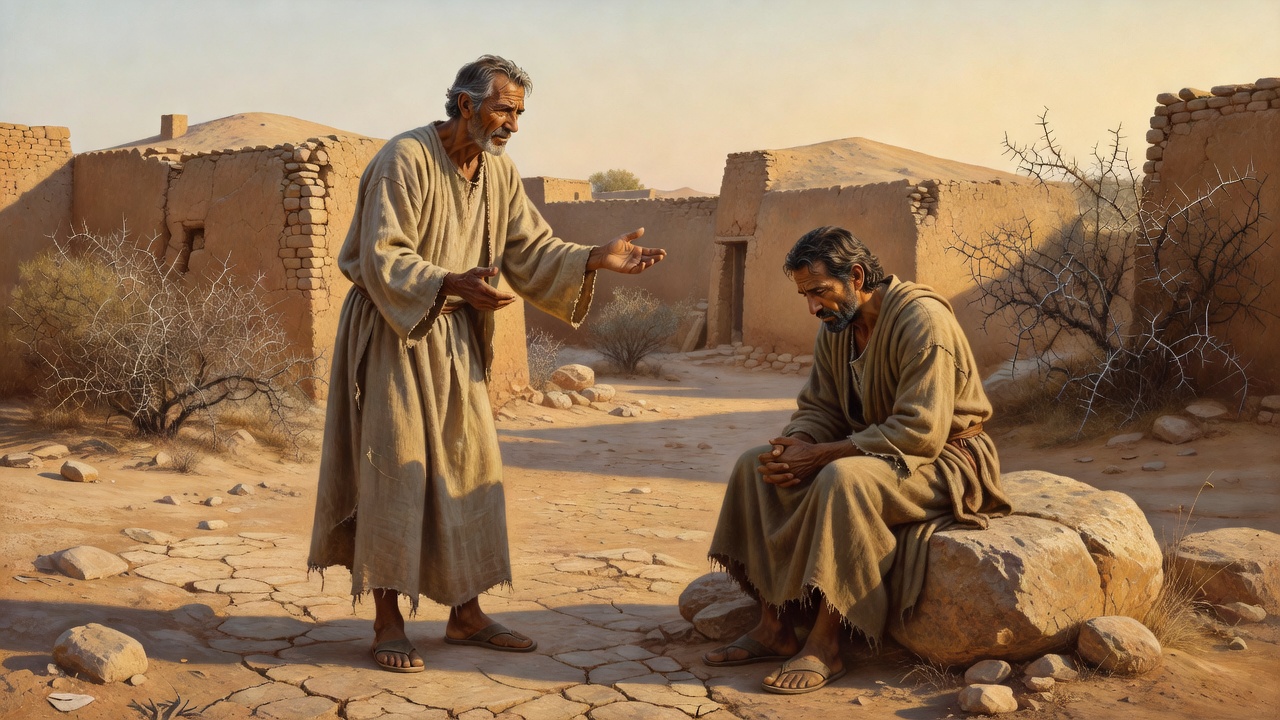
El Consejo de Elifaz sobre el Sufrimiento y la Corrección Divina
- Elifaz presenta el sufrimiento como una disciplina divina con propósito y no como una calamidad arbitraria, afirmando que la aflicción no brota del suelo sin causa. Por ello, exhorta a Job a no despreciar la corrección del Todopoderoso, quien hiere solo para vendar y sanar.Fuentes: el propio texto bíblico
- Al prometer rescate de seis calamidades e incluso de siete, Elifaz recurre a una fórmula poética tradicional de paralelismo numérico gradual. Este recurso, habitual en la literatura sapiencial del Antiguo Oriente Próximo, añade énfasis para expresar una protección cabal y absoluta.Fuentes: el propio texto bíblico
- Elifaz describe la restauración plena mediante imágenes agrícolas y pastoriles, imaginando una existencia en la que los animales del campo y las piedras del suelo dejan de ser hostiles. Anticipa una muerte en la vejez con vigor, semejante a una gavilla de grano recogida a su debido tiempo.Fuentes: el propio texto bíblico
Notas escritas con ayuda de IA a partir de fuentes abiertas (Theographic Bible Metadata, CC BY-SA 4.0; Easton’s Bible Dictionary, dominio público) y revisadas antes de publicarse.
Créditos y licencia de esta traducción
George Noyes Bible
The Holy Bible, translated into English by George Noyes (1869)
Public Domain
Language: English
Dialect: archaic British
Translation by: George Noyes
2019-10-24
Títulos de sección adaptados de la Berean Standard Bible (dominio público); no forman parte del texto bíblico de esta traducción.
Fuente: http://ebible.org/engnoy/ · eBible.org