Job 21
George Noyes Bible · Toca un versículo para ver sus referencias cruzadas.
Job: God Will Punish the Wicked
1But Job answered and said: 2Hear attentively my words, And let this be your consolation. 3Bear with me, that I may speak; And after I have spoken, mock on! 4Is my complaint concerning man? Why then should I not be angry? 5Look upon me, and be astonished, And lay your hand upon your mouth! 6When I think of it, I am confounded; Trembling taketh hold of my flesh. 7Why is it that the wicked live, Grow old, yea, become mighty in substance? 8Their children are established in their sight with them, And their offspring before their eyes. 9Their houses are in peace, without fear, And the rod of God cometh not upon them. 10Their bull gendereth, and faileth not; Their cow calveth, and casteth not her calf. 11They send forth their little ones like a flock, And their children dance. 12They sing to the timbrel and harp, And rejoice at the sound of the pipe. 13They spend their days in prosperity, And in a moment go down to the under-world. 14And yet they say unto God, “Depart from us! We desire not the knowledge of thy ways! 15Who is the Almighty, that we should serve him? And what will it profit us, if we pray to him?” 16[[Ye say,]] “Lo! their prosperity is not secure in their hands! Far from me be the conduct of the wicked!” 17How often is it, that the lamp of the wicked is put out? And that destruction cometh upon them, And that He dispenseth to them tribulations in his anger? 18How often are they as stubble before the wind, Or as chaff, which the whirlwind carrieth away? 19“But” [[say ye]] “God layeth up his iniquity for his children.” Let him requite the offender, and let him feel it! 20Let his own eyes see his destruction, And let him drink of the wrath of the Almighty! 21For what concern hath he for his household after him, When the number of his own months is completed? 22Who then shall impart knowledge to God,—To him that judgeth the highest? 23One dieth in the fulness of his prosperity, Being wholly at ease and quiet; 24His sides are full of fat, And his bones moist with marrow. 25Another dieth in bitterness of soul, And hath not tasted pleasure. 26Alike they lie down in the dust, And the worms cover them. 27Behold, I know your thoughts, And the devices by which ye wrong me. 28For ye say, “Where is the house of the oppressor, And where the dwelling-places of the wicked?” 29Have ye never inquired of travellers, And do ye not know their tokens, 30That the wicked is spared in the day of destruction, And that he is borne to his grave in the day of wrath? 31Who will charge him with his conduct to his face, And who will requite him for the evil he hath done? 32Even this man is borne with honor to the grave; Yea, he watcheth over his tomb. 33Sweet to him are the sods of the valley: And all men move after him, As multitudes without number before him. 34Why then do ye offer your vain consolations? Your answers continue false.
¿Sabías que…?
La prosperidad de los impíos
- Job refuta la creencia de sus amigos de que los malvados siempre sufren en esta vida. Señala que muchas personas impías envejecen, aumentan su poder, ven a sus hijos prosperar al son de liras y flautas, y mueren en pacífica tranquilidad.Fuentes: el propio texto bíblico
- Frente a la noción de que Dios reserva el castigo de una persona para sus descendientes, Job argumenta que la verdadera justicia exige que el propio transgresor reciba la retribución personalmente y experimente la ira del Todopoderoso durante su vida.Fuentes: el propio texto bíblico
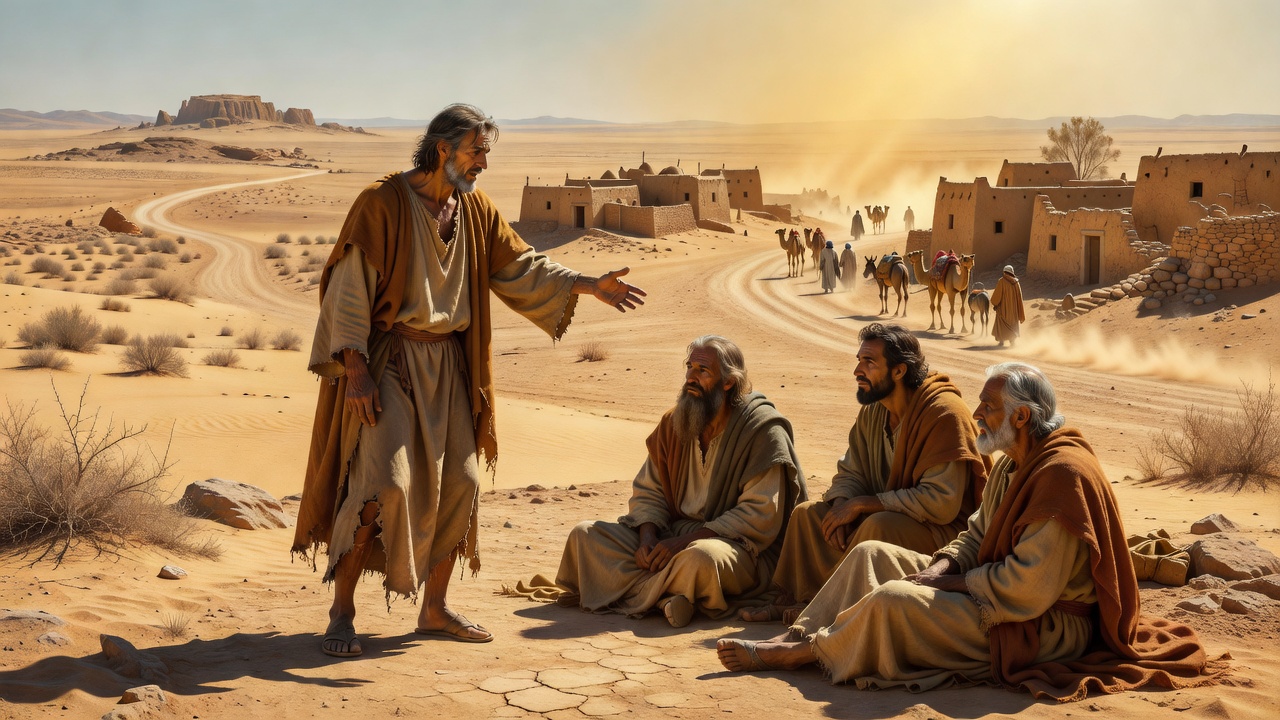
- Job insta a sus compañeros a consultar a los viajeros sobre la realidad en los caminos. Observa que, ya sea que una persona viva con vigorosa riqueza o muera en amarga pobreza, ambas comparten el mismo fin terrenal al descansar juntas en el polvo.Fuentes: el propio texto bíblico
Notas escritas con ayuda de IA a partir de fuentes abiertas (Theographic Bible Metadata, CC BY-SA 4.0; Easton’s Bible Dictionary, dominio público) y revisadas antes de publicarse.
Créditos y licencia de esta traducción
George Noyes Bible
The Holy Bible, translated into English by George Noyes (1869)
Public Domain
Language: English
Dialect: archaic British
Translation by: George Noyes
2019-10-24
Títulos de sección adaptados de la Berean Standard Bible (dominio público); no forman parte del texto bíblico de esta traducción.
Fuente: http://ebible.org/engnoy/ · eBible.org