Malaquías 1
NET Bible · Toca un versículo para ver sus referencias cruzadas.
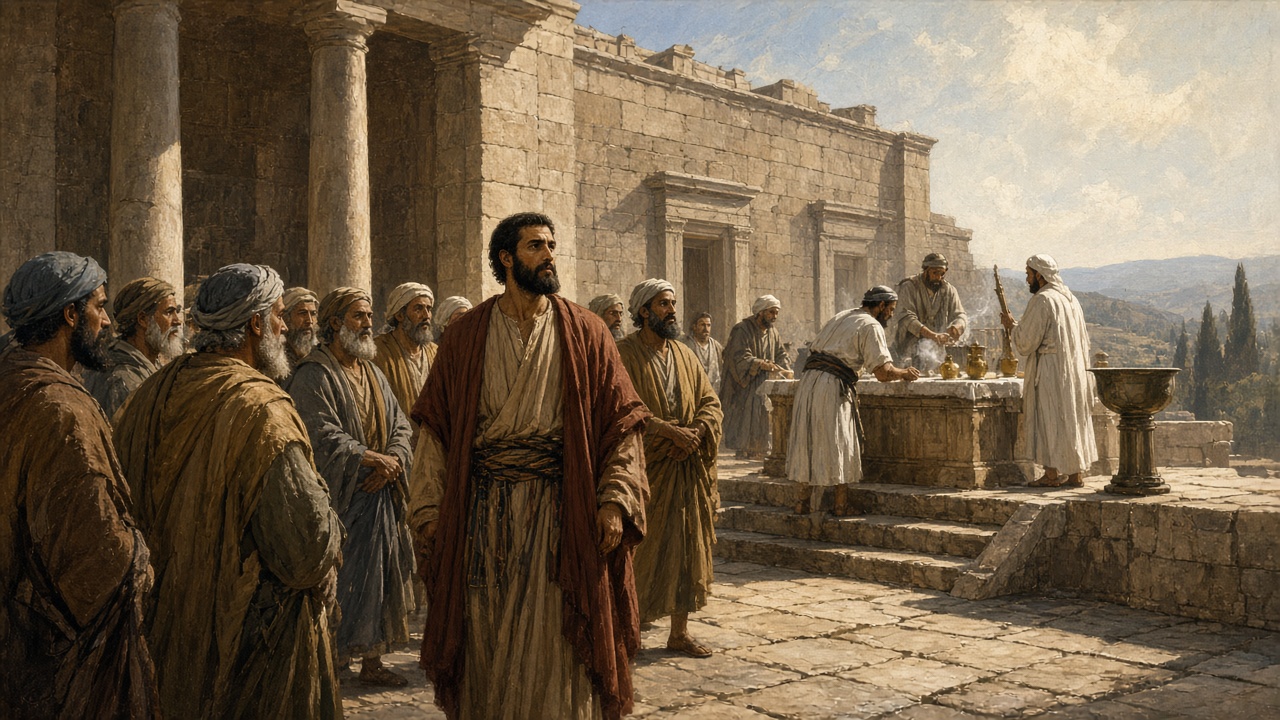
Acerca de este libro
Sobre Malaquías
- El Easton's Bible Dictionary (1897) presenta a Malaquías, nombre que significa "mensajero" o "ángel", como el último de los profetas menores y el autor del último libro del canon del Antiguo Testamento. No se sabe nada de él más allá de lo que contiene su libro de profecías.Fuentes: Easton: Malachi · Malachi
- Algunos han supuesto que el nombre es simplemente un título para un mensajero de Jehová, y no un nombre propio. El Easton's Bible Dictionary (1897), sin embargo, concluye que hay razón para considerar que Malaquías era el nombre habitual del profeta.Fuentes: Easton: Malachi · Malachi
- El Easton's Bible Dictionary (1897) fecha las profecías hacia 420 a. C., después del segundo regreso de Nehemías desde Persia, o posiblemente antes de ese regreso. Como Esdras no lo menciona y él no habla de la restauración del templo, el diccionario infiere que profetizó después de Hageo y Zacarías.Fuentes: Easton: Malachi
- El Easton's Bible Dictionary (1897) trata a Malaquías como contemporáneo de Nehemías, al comparar Malaquías 2:8 con Nehemías 13:15 y Malaquías 2:10-16 con Nehemías 13:23. También señala que los servicios del templo aún existían, citando Malaquías 1:10, 3:1 y 3:10.Fuentes: Easton: Malachi
Notas escritas con ayuda de IA a partir de fuentes abiertas (Theographic Bible Metadata, CC BY-SA 4.0; Easton’s Bible Dictionary, dominio público) y revisadas antes de publicarse.
Introduction and God’s Election of Israel
1What follows is divine revelation. The word of the Lord came to Israel through Malachi:
2“I have shown love to you,” says the Lord, but you say, “How have you shown love to us?”
“Esau was Jacob’s brother,” the Lord explains, “yet I chose Jacob 3and rejected Esau. I turned Esau’s mountains into a deserted wasteland and gave his territory to the wild jackals.”
4Edom says, “Though we are devastated, we will once again build the ruined places.” So the Lord who rules over all responds, “They indeed may build, but I will overthrow. They will be known as the land of evil, the people with whom the Lord is permanently displeased. 5Your eyes will see it, and then you will say, ‘May the Lord be magnified even beyond the border of Israel!’”
The Sacrilege of Priestly Service
6“A son naturally honors his father and a slave respects his master. If I am your father, where is my honor? If I am your master, where is my respect? The Lord who rules over all asks you this, you priests who make light of my name! But you reply, ‘How have we made light of your name?’ 7You are offering improper sacrifices on my altar, yet you ask, ‘How have we offended you?’ By treating the table of the Lord as if it is of no importance! 8For when you offer blind animals as a sacrifice, is that not wrong? And when you offer the lame and sick, is that not wrong as well? Indeed, try offering them to your governor! Will he be pleased with you or show you favor?” asks the Lord who rules over all. 9But now plead for God’s favor that he might be gracious to us. “With this kind of offering in your hands, how can he be pleased with you?” asks the Lord who rules over all.
10“I wish that one of you would close the temple doors, so that you no longer would light useless fires on my altar. I am not pleased with you,” says the Lord who rules over all, “and I will no longer accept an offering from you. 11For from the east to the west my name will be great among the nations. Incense and pure offerings will be offered in my name everywhere, for my name will be great among the nations,” says the Lord who rules over all. 12“But you are profaning it by saying that the table of the Lord is common and its offerings despicable. 13You also say, ‘How tiresome it is.’ You turn up your nose at it,” says the Lord who rules over all, “and instead bring what is stolen, lame, or sick. You bring these things for an offering! Should I accept this from you?” asks the Lord. 14“There will be harsh condemnation for the hypocrite who has a valuable male animal in his flock but vows and sacrifices something inferior to the Lord. For I am a great king,” says the Lord who rules over all, “and my name is awesome among the nations.”
¿Sabías que…?
La honra a Dios y los sacrificios defectuosos
- El nombre Malaquías significa mensajero o ángel. Aunque algunos han sugerido que se trataba de un título en vez de un nombre propio, la tradición lo considera el nombre del profeta, ubicando su ministerio en la época de Nehemías, después de Hageo y Zacarías.Fuentes: Malachi
- El mensaje inicial evoca a los hermanos gemelos Jacob y Esaú, antepasados de Israel y Edom. El texto contrasta el amor del pacto con Israel frente a la desolación que sobrevendría sobre la región montañosa de Edom.Fuentes: Esau (Edom) · Jacob (Israel) · Edom · el propio texto bíblico
- Los sacerdotes son reprendidos por presentar sobre el altar animales ciegos, cojos y enfermos en lugar de animales sanos. Malaquías evidencia su falta de respeto preguntando si acaso un gobernador aceptaría tales ofrendas defectuosas.Fuentes: el propio texto bíblico
Notas escritas con ayuda de IA a partir de fuentes abiertas (Theographic Bible Metadata, CC BY-SA 4.0; Easton’s Bible Dictionary, dominio público) y revisadas antes de publicarse.
Lugares de este capítulo
- Edom · 30.746, 35.604 · versículo 4
Solo aparecen lugares identificados con alta confianza (90 % o más según las fuentes académicas reunidas por OpenBible). Mapa de la época: DARE (Digital Atlas of the Roman Empire), CC BY 4.0; mapa actual: © colaboradores de OpenStreetMap; lugares: OpenBible.info (CC BY 4.0).
Créditos y licencia de esta traducción
NET Bible
NET Bible®, New English Translation (NET)
copyright © 1996-2016 Biblical Studies Press, L. L. C.
Please see https://netbible.com/copyright/ for full NET Bible copyright and permissions information. You can also read the NET Bible at http://NETBible.org .
Language: English
Dialect (if applicable): American
Language in English: English
Translation by:
Please see https://netbible.com/copyright/ for full NET Bible copyright and permissions information. You can also read the NET Bible at http://NETBible.org .
The NET Bible (New English Translation) is a completely new translation of the Bible with 58,506 translators’ notes ! It was completed by more than 25 scholars – experts in the original biblical languages – who worked directly from the best currently available Hebrew, Aramaic, and Greek texts. Turn the pages and see the breadth of the translators’ notes, documenting their decisions and choices as they worked.
The translators’ notes make the original languages far more accessible, allowing you to look over the translator’s shoulder at the very process of translation. This level of documentation is a first for a Bible translation, making transparent the textual basis and the rationale for key renderings (including major interpretive options and alternative translations).
This unparalleled level of detail helps connect people to the Bible in the original languages in a way never before possible without years of study of Hebrew, Aramaic, and Greek. It unlocks the riches of the Bible’s truth from entirely new perspectives.
A donation is appreciated. Donate at Bible.org/donations_form so we can continue to provide our material for free for our 16,000+ articles on Bible.org and our world class Bible Study tool at lumina.bible.org .
2026-10-02
Fuente: http://ebible.org/engnet/ · eBible.org