Levítico 17
NET Bible · Toca un versículo para ver sus referencias cruzadas.
1The Lord spoke to Moses: 2“Speak to Aaron, his sons, and all the Israelites, and tell them: ‘This is the word that the Lord has commanded: 3“Blood guilt will be accounted to any man from the house of Israel who slaughters an ox or a lamb or a goat inside the camp or outside the camp, 4but has not brought it to the entrance of the Meeting Tent to present it as an offering to the Lord before the tabernacle of the Lord. He has shed blood, so that man will be cut off from the midst of his people. 5This is so that the Israelites will bring their sacrifices that they are sacrificing in the open field to the Lord at the entrance of the Meeting Tent to the priest and sacrifice them there as peace offering sacrifices to the Lord. 6The priest is to splash the blood on the altar of the Lord at the entrance of the Meeting Tent, and offer the fat up in smoke for a soothing aroma to the Lord. 7So they must no longer offer their sacrifices to the goat demons, acting like prostitutes by going after them. This is to be a perpetual statute for them throughout their generations.
8“You are to say to them: ‘Any man from the house of Israel or from the foreigners who reside in their midst, who offers a burnt offering or a sacrifice 9but does not bring it to the entrance of the Meeting Tent to offer it to the Lord – that person will be cut off from his people.
Prohibition against Eating Blood
10“‘Any man from the house of Israel or from the foreigners who reside in their midst who eats any blood, I will set my face against that person who eats the blood, and I will cut him off from the midst of his people, 11for the life of every living thing is in the blood. So I myself have assigned it to you on the altar to make atonement for your lives, for the blood makes atonement by means of the life. 12Therefore, I have said to the Israelites: No person among you is to eat blood, and no resident foreigner who lives among you is to eat blood.
13“‘Any man from the Israelites or from the foreigners who reside in their midst who hunts a wild animal or a bird that may be eaten must pour out its blood and cover it with soil, 14for the life of all flesh is its blood. So I have said to the Israelites: You must not eat the blood of any living thing because the life of every living thing is its blood – all who eat it will be cut off.
Regulations for Eating Carcasses
15“‘Any person who eats an animal that has died of natural causes or an animal torn by beasts, whether a native citizen or a foreigner, must wash his clothes, bathe in water, and be unclean until evening; then he becomes clean. 16But if he does not wash his clothes and does not bathe his body, he will bear his punishment for iniquity.’”
¿Sabías que…?
El sacrificio de animales y la santidad de la sangre
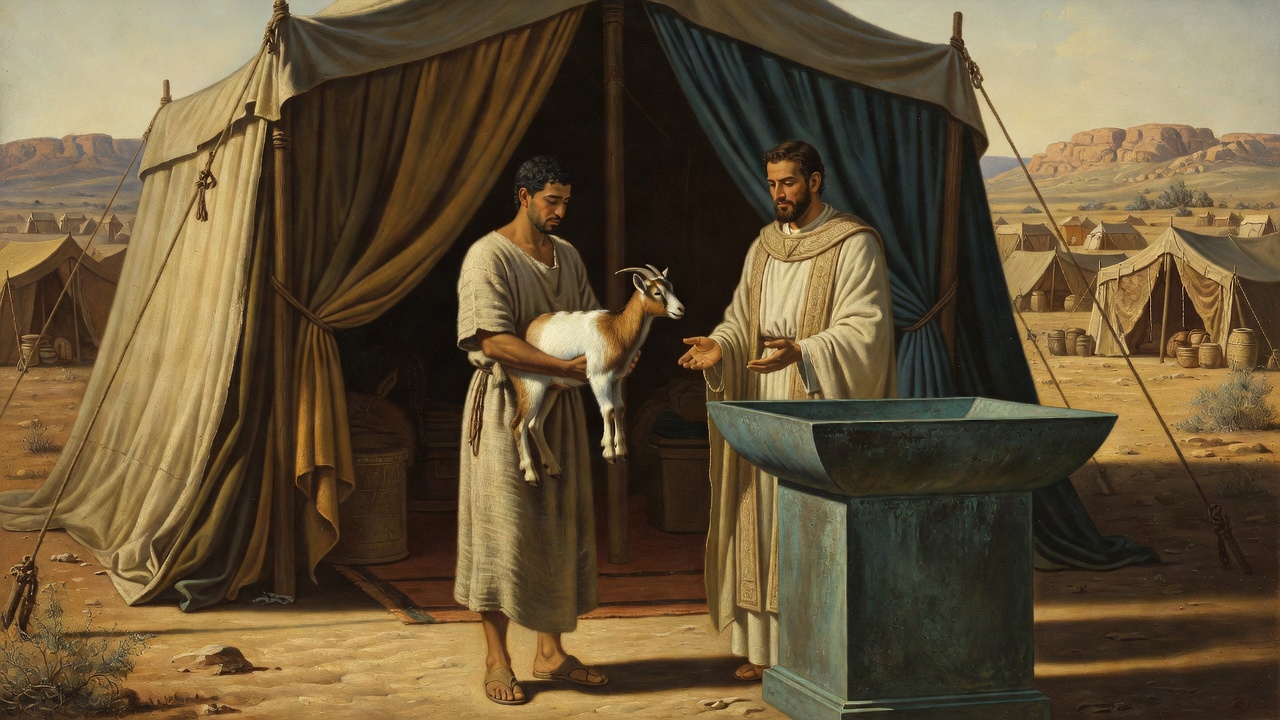
- Levítico ordena que los animales domésticos como bueyes, corderos y cabras sean llevados directamente a la entrada de la Tienda de Reunión en lugar de ser sacrificados en campo abierto. Esta regla aseguraba que los sacrificios se ofrecieran exclusivamente como ofrendas de paz al SEÑOR y ponía fin a los sacrificios ilícitos a demonios en forma de cabra.Fuentes: el propio texto bíblico
- Tanto a los israelitas nativos como a los extranjeros residentes se les prohibía estrictamente comer sangre, bajo pena de ser cortados de su pueblo. El texto fundamenta esta ley en el principio teológico de que la vida de la carne está en la sangre, la cual Dios dispuso específicamente para hacer expiación sobre el altar.Fuentes: el propio texto bíblico
- Al cazar animales salvajes o aves permitidas para el consumo, los israelitas y extranjeros debían drenar la sangre sobre el suelo y cubrirla con tierra. Esta instrucción reforzaba que la vida pertenece a Dios y preservaba la santidad de la sangre fuera del santuario sacrificial.Fuentes: el propio texto bíblico
Notas escritas con ayuda de IA a partir de fuentes abiertas (Theographic Bible Metadata, CC BY-SA 4.0; Easton’s Bible Dictionary, dominio público) y revisadas antes de publicarse.
Créditos y licencia de esta traducción
NET Bible
NET Bible®, New English Translation (NET)
copyright © 1996-2016 Biblical Studies Press, L. L. C.
Please see https://netbible.com/copyright/ for full NET Bible copyright and permissions information. You can also read the NET Bible at http://NETBible.org .
Language: English
Dialect (if applicable): American
Language in English: English
Translation by:
Please see https://netbible.com/copyright/ for full NET Bible copyright and permissions information. You can also read the NET Bible at http://NETBible.org .
The NET Bible (New English Translation) is a completely new translation of the Bible with 58,506 translators’ notes ! It was completed by more than 25 scholars – experts in the original biblical languages – who worked directly from the best currently available Hebrew, Aramaic, and Greek texts. Turn the pages and see the breadth of the translators’ notes, documenting their decisions and choices as they worked.
The translators’ notes make the original languages far more accessible, allowing you to look over the translator’s shoulder at the very process of translation. This level of documentation is a first for a Bible translation, making transparent the textual basis and the rationale for key renderings (including major interpretive options and alternative translations).
This unparalleled level of detail helps connect people to the Bible in the original languages in a way never before possible without years of study of Hebrew, Aramaic, and Greek. It unlocks the riches of the Bible’s truth from entirely new perspectives.
A donation is appreciated. Donate at Bible.org/donations_form so we can continue to provide our material for free for our 16,000+ articles on Bible.org and our world class Bible Study tool at lumina.bible.org .
2026-10-02
Fuente: http://ebible.org/engnet/ · eBible.org