Levítico 11
NET Bible · Toca un versículo para ver sus referencias cruzadas.
1The Lord spoke to Moses and Aaron, saying to them, 2“Tell the Israelites: ‘This is the kind of creature you may eat from among all the animals that are on the land. 3You may eat any among the animals that has a divided hoof (the hooves are completely split in two ) and that also chews the cud. 4However, you must not eat these from among those that chew the cud and have divided hooves: The camel is unclean to you because it chews the cud even though its hoof is not divided. 5The rock badger is unclean to you because it chews the cud even though its hoof is not divided. 6The hare is unclean to you because it chews the cud even though its hoof is not divided. 7The pig is unclean to you because its hoof is divided (the hoof is completely split in two ), even though it does not chew the cud. 8You must not eat from their meat and you must not touch their carcasses; they are unclean to you.
Clean and Unclean Water Creatures
9“‘These you can eat from all creatures that are in the water: Any creatures in the water that have both fins and scales, whether in the seas or in the streams, you may eat. 10But any creatures that do not have both fins and scales, whether in the seas or in the streams, from all the swarming things of the water and from all the living creatures that are in the water, are detestable to you. 11Since they are detestable to you, you must not eat their meat and their carcass you must detest. 12Any creature in the water that does not have both fins and scales is detestable to you.
Clean and Unclean Birds
13“‘These you are to detest from among the birds – they must not be eaten, because they are detestable: the griffon vulture, the bearded vulture, the black vulture, 14the kite, the buzzard of any kind, 15every kind of crow, 16the eagle owl, the short-eared owl, the long-eared owl, the hawk of any kind, 17the little owl, the cormorant, the screech owl, 18the white owl, the scops owl, the osprey, 19the stork, the heron of any kind, the hoopoe, and the bat.
Clean and Unclean Insects
20“‘Every winged swarming thing that walks on all fours is detestable to you. 21However, this you may eat from all the winged swarming things that walk on all fours, which have jointed legs to hop with on the land. 22These you may eat from them: the locust of any kind, the bald locust of any kind, the cricket of any kind, the grasshopper of any kind. 23But any other winged swarming thing that has four legs is detestable to you.
Carcass Uncleanness
24“‘By these you defile yourselves; anyone who touches their carcass will be unclean until the evening, 25and anyone who carries their carcass must wash his clothes and will be unclean until the evening.
Inedible Land Quadrupeds
26“‘All animals that divide the hoof but it is not completely split in two and do not chew the cud are unclean to you; anyone who touches them becomes unclean. 27All that walk on their paws among all the creatures that walk on all fours are unclean to you. Anyone who touches their carcass will be unclean until the evening, 28and the one who carries their carcass must wash his clothes and be unclean until the evening; they are unclean to you.
Creatures that Swarm on the Land
29“‘Now this is what is unclean to you among the swarming things that swarm on the land: the rat, the mouse, the large lizard of any kind, 30the Mediterranean gecko, the spotted lizard, the wall gecko, the skink, and the chameleon. 31These are the ones that are unclean to you among all the swarming things. Anyone who touches them when they die will be unclean until evening. 32Also, anything they fall on when they die will become unclean – any wood vessel or garment or article of leather or sackcloth. Any such vessel with which work is done must be immersed in water and will be unclean until the evening. Then it will become clean. 33As for any clay vessel they fall into, everything in it will become unclean and you must break it. 34Any food that may be eaten which becomes soaked with water will become unclean. Anything drinkable in any such vessel will become unclean. 35Anything their carcass may fall on will become unclean. An oven or small stove must be smashed to pieces; they are unclean, and they will stay unclean to you. 36However, a spring or a cistern which collects water will be clean, but one who touches their carcass will be unclean. 37Now, if such a carcass falls on any sowing seed which is to be sown, it is clean, 38but if water is put on the seed and such a carcass falls on it, it is unclean to you.
Edible Land Quadrupeds
39“‘Now if an animal that you may eat dies, whoever touches its carcass will be unclean until the evening. 40One who eats from its carcass must wash his clothes and be unclean until the evening, and whoever carries its carcass must wash his clothes and be unclean until the evening. 41Every swarming thing that swarms on the land is detestable; it must not be eaten. 42You must not eat anything that crawls on its belly or anything that walks on all fours or on any number of legs of all the swarming things that swarm on the land, because they are detestable. 43Do not make yourselves detestable by any of the swarming things. You must not defile yourselves by them and become unclean by them, 44for I am the Lord your God and you are to sanctify yourselves and be holy because I am holy. You must not defile yourselves by any of the swarming things that creep on the ground, 45for I am the Lord who brought you up from the land of Egypt to be your God, and you are to be holy because I am holy. 46This is the law of the land animals, the birds, all the living creatures that move in the water, and all the creatures that swarm on the land, 47to distinguish between the unclean and the clean, between the living creatures that may be eaten and the living creatures that must not be eaten.’”
¿Sabías que…?
Animales Limpios e Inmundos
- Las leyes dietéticas de Levítico establecen criterios dobles claros para los animales terrestres y acuáticos: los animales de la tierra debían tanto rumiar como tener la pezuña hendida para ser aptos para el consumo, mientras que los animales acuáticos requerían tanto aletas como escamas.Fuentes: el propio texto bíblico
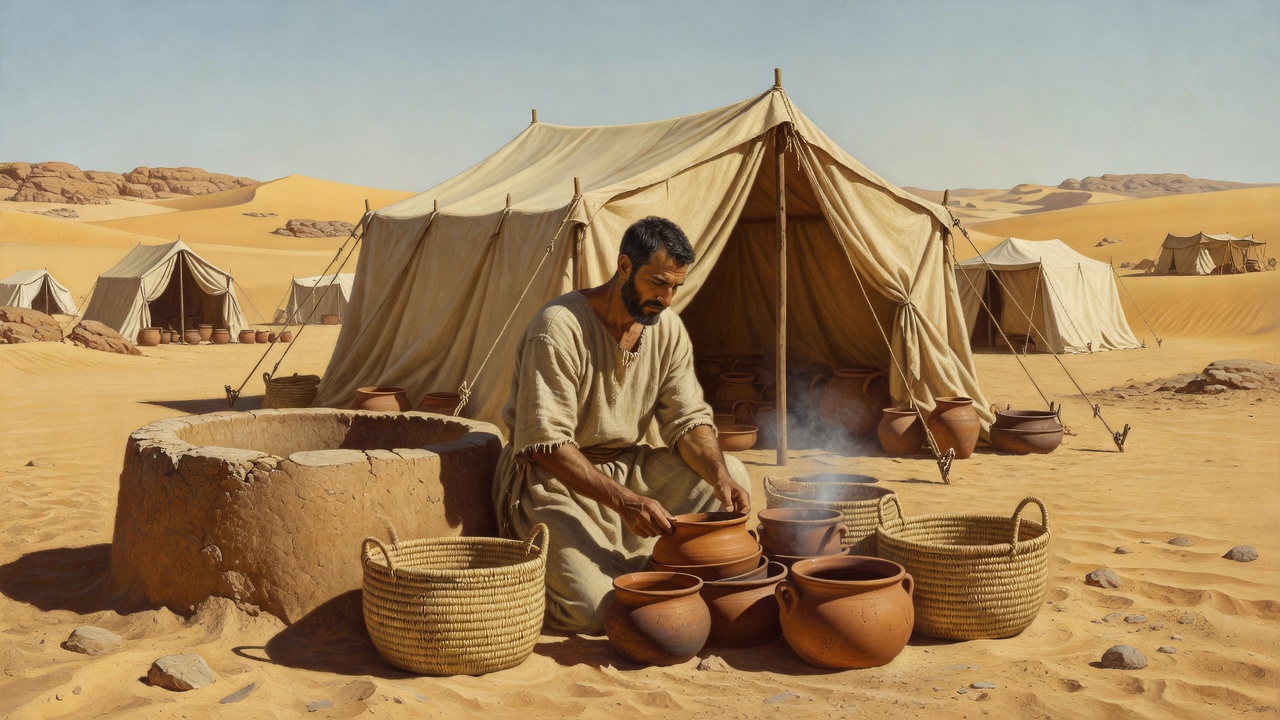
- Las normas de pureza abarcaban también los utensilios del hogar: las vasijas de barro y los hornos contaminados por el cadáver de un animal que se arrastra no podían lavarse como los objetos de madera o tela, sino que debían romperse por completo.Fuentes: el propio texto bíblico
- El propósito teológico declarado para distinguir entre lo limpio y lo inmundo era la consagración de Israel a Dios, quien los sacó de Egipto y los llamó a ser santos porque Él es santo.Fuentes: el propio texto bíblico · Egypt
Notas escritas con ayuda de IA a partir de fuentes abiertas (Theographic Bible Metadata, CC BY-SA 4.0; Easton’s Bible Dictionary, dominio público) y revisadas antes de publicarse.
Lugares de este capítulo
- Egypt · 30.129, 31.308 · versículo 45
Solo aparecen lugares identificados con alta confianza (90 % o más según las fuentes académicas reunidas por OpenBible). Mapa de la época: DARE (Digital Atlas of the Roman Empire), CC BY 4.0; mapa actual: © colaboradores de OpenStreetMap; lugares: OpenBible.info (CC BY 4.0).
Créditos y licencia de esta traducción
NET Bible
NET Bible®, New English Translation (NET)
copyright © 1996-2016 Biblical Studies Press, L. L. C.
Please see https://netbible.com/copyright/ for full NET Bible copyright and permissions information. You can also read the NET Bible at http://NETBible.org .
Language: English
Dialect (if applicable): American
Language in English: English
Translation by:
Please see https://netbible.com/copyright/ for full NET Bible copyright and permissions information. You can also read the NET Bible at http://NETBible.org .
The NET Bible (New English Translation) is a completely new translation of the Bible with 58,506 translators’ notes ! It was completed by more than 25 scholars – experts in the original biblical languages – who worked directly from the best currently available Hebrew, Aramaic, and Greek texts. Turn the pages and see the breadth of the translators’ notes, documenting their decisions and choices as they worked.
The translators’ notes make the original languages far more accessible, allowing you to look over the translator’s shoulder at the very process of translation. This level of documentation is a first for a Bible translation, making transparent the textual basis and the rationale for key renderings (including major interpretive options and alternative translations).
This unparalleled level of detail helps connect people to the Bible in the original languages in a way never before possible without years of study of Hebrew, Aramaic, and Greek. It unlocks the riches of the Bible’s truth from entirely new perspectives.
A donation is appreciated. Donate at Bible.org/donations_form so we can continue to provide our material for free for our 16,000+ articles on Bible.org and our world class Bible Study tool at lumina.bible.org .
2026-10-02
Fuente: http://ebible.org/engnet/ · eBible.org